
Geopolitical Fault Lines: Navigating Disrupted Cargo Flows in a Fractured World
Global supply chains face unprecedented challenges as geopolitical events redraw trade routes, restrict airspace, imperil waterways, and weaponize tariffs and sanctions. This brief explores the profound consequences for cargo movement and the critical role of real-time visibility.
Introduction
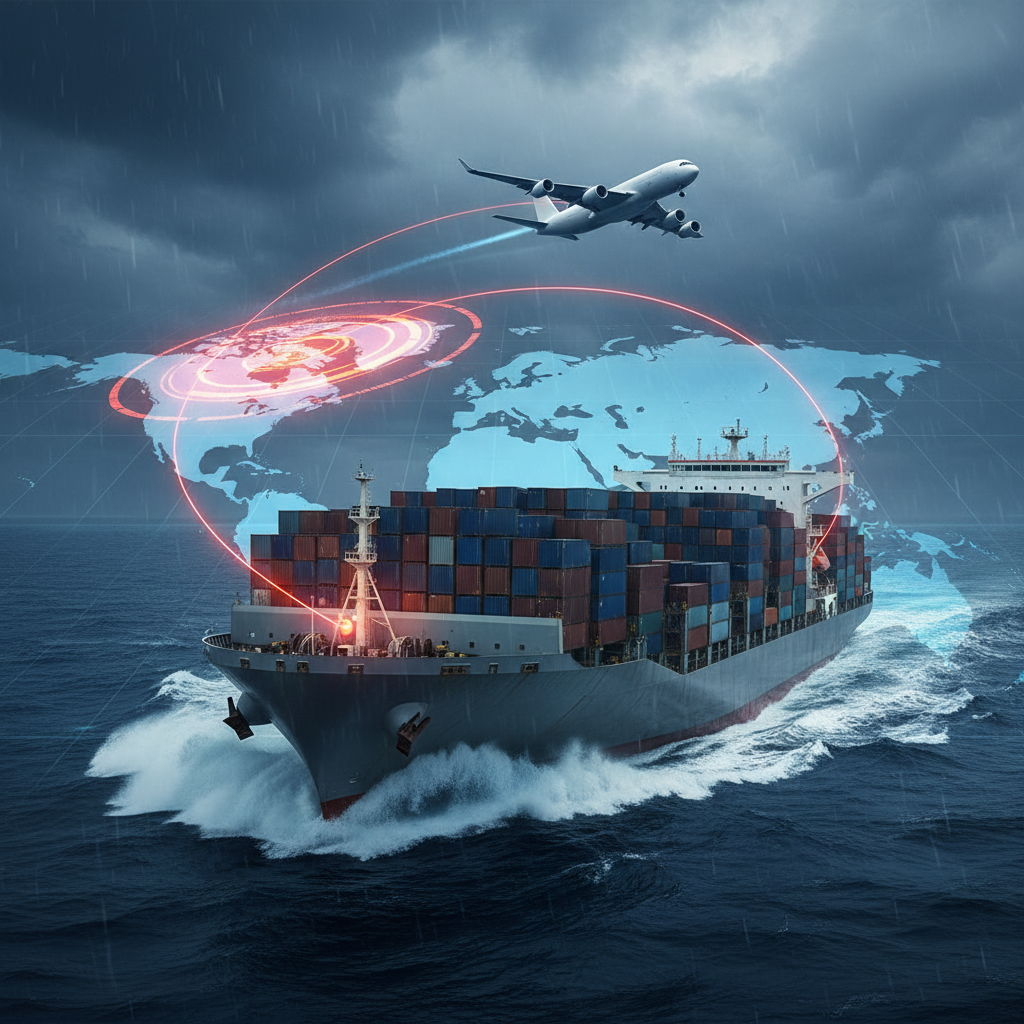
The global supply chain, once a finely tuned network optimized for efficiency, now navigates an increasingly turbulent geopolitical landscape. Regional conflicts, shifting alliances, and economic statecraft are not just headlines; they are direct drivers of disruption, forcing a fundamental re-evaluation of how goods move across the planet. For logistics professionals, the focus has shifted from predictable flows to dynamic adaptability, as traditional routes become inaccessible, transit times lengthen, and the cost of doing business escalates. This brief examines the multifaceted impact of these geopolitical tremors on cargo movement – from the skies above to the seas below, and through the complex web of international trade regulations – highlighting the imperative for robust, data-driven solutions in an era of constant change.
Redrawing the Global Logistics Map: Routes and Airspace
Geopolitical events frequently lead to the immediate closure or restriction of critical airspaces and maritime corridors. When conflicts erupt, entire regions can become no-fly zones, compelling air freight carriers to undertake significant detours. These reroutes are not merely minor adjustments; they often add thousands of kilometers to journeys, translating directly into increased fuel consumption, longer transit times, and higher operational costs. For instance, the avoidance of certain national airspaces by commercial flights has reshaped established East-West air corridors, impacting everything from express parcel delivery to high-value manufacturing components. Similarly, land-based transit routes, particularly those traversing conflict-adjacent territories, face heightened security risks, border delays, and infrastructure damage, pushing cargo onto less efficient or more expensive alternatives. The cumulative effect is a reduction in overall capacity, as aircraft and trucks spend more time in transit, and a corresponding surge in freight rates. Businesses must now factor in not just the direct cost of transport, but also the indirect costs of extended lead times and potential inventory stockouts resulting from these unforeseen route changes.
Chokepoints and Blockades: Waterway Vulnerabilities
The world's maritime chokepoints – narrow passages like straits and canals – are particularly vulnerable to geopolitical tensions. These arteries of global trade, through which a significant portion of the world's cargo passes, can become flashpoints for disruption. Naval activities, heightened security alerts, or even outright blockades in conflict zones can severely impede the free movement of commercial vessels. The consequences are immediate and far-reaching: ships are forced to reroute around entire continents, adding weeks to transit times and significantly increasing fuel costs. This not only drives up the price of goods but also strains vessel capacity, leading to port congestion at alternative hubs and further delays. Moreover, the perceived risk associated with navigating certain waterways can skyrocket insurance premiums for both vessels and their cargo, making trade through these regions prohibitively expensive. The ripple effect extends to manufacturing schedules, inventory management, and consumer prices, underscoring the delicate balance of maritime trade in an unstable world. The ability to monitor these critical waterways in real-time and assess alternative routes becomes paramount for maintaining supply chain continuity.
Economic Warfare: Tariffs and Sanctions as Trade Barriers
Beyond physical disruptions to routes, geopolitical events increasingly manifest as economic warfare through the imposition of tariffs and sanctions. These measures, while intended to exert political pressure, have profound and complex consequences for global trade and transport. Sanctions can prohibit trade with specific entities, sectors, or entire nations, forcing companies to divest, re-source materials, or cease operations in affected regions. This leads to fractured supply chains, as established supplier relationships are severed and new, often less efficient or more costly, networks must be established. Tariffs, on the other hand, act as direct taxes on imported goods, making them more expensive and less competitive. Both sanctions and tariffs necessitate rigorous compliance checks, adding layers of administrative complexity and legal risk to every shipment. Companies must navigate a labyrinth of regulations, ensuring that their goods are not sourced from, transshipped through, or ultimately destined for sanctioned entities. This economic fragmentation not only increases the cost of goods but also incentivizes companies to reconsider their global manufacturing and sourcing strategies, potentially leading to a shift towards near-shoring or re-shoring to mitigate geopolitical exposure.
Supply Chain Resilience: The Imperative for Visibility
In this era of pervasive geopolitical disruption, the traditional, static supply chain model is no longer viable. Businesses require dynamic, adaptive capabilities to navigate constant change. This is where a robust shipment-visibility control tower, like MGS, becomes not just an advantage, but a fundamental necessity. Such a platform provides real-time, end-to-end visibility across the entire logistics network, from raw material sourcing to final delivery. When airspace is closed or a waterway becomes perilous, an MGS control tower can immediately flag affected shipments, identify alternative routes, and assess the impact on estimated times of arrival (ETAs). It allows logistics teams to proactively communicate delays to stakeholders, re-allocate resources, and even switch carriers or modes of transport on the fly. Furthermore, in the context of tariffs and sanctions, a control tower can integrate compliance data, helping to ensure that all shipments adhere to the latest regulations, minimizing legal risks and avoiding costly penalties. By aggregating data from multiple sources – carriers, customs, weather, and geopolitical intelligence feeds – an MGS platform empowers decision-makers with the insights needed to mitigate risks, optimize operations, and build true supply chain resilience in the face of unpredictable global events.
Conclusion
The geopolitical landscape has irrevocably altered the operating environment for global trade and transport. From rerouted flights and imperiled shipping lanes to the complexities of sanctions and tariffs, the consequences for cargo movement are profound and multifaceted. These disruptions demand more than reactive measures; they necessitate a proactive, data-driven approach to supply chain management. The ability to anticipate, monitor, and respond swiftly to geopolitical shifts is paramount for maintaining continuity, controlling costs, and preserving competitive advantage. As the world continues to grapple with evolving geopolitical challenges, investing in advanced visibility and control tower solutions will be critical for businesses aiming to build resilient, adaptable, and future-proof supply chains.
Source: Atlantic Council — https://www.atlanticcouncil.org/blogs/ukrainealert/europe-must-weigh-rising-cost-of-supporting-ukraine-against-far-higher-price-of-russian-victory/