
Geopolitical Fault Lines: How Inland Threats Are Reshaping Global Cargo Movement
Geopolitical tensions are increasingly disrupting global supply chains, extending beyond traditional maritime chokepoints to expose vulnerabilities in inland infrastructure. Recent events illustrate how once-reliable bypass routes are now operating with significantly reduced margins, forcing a re-evaluation of trade strategies and underscoring the critical need for real-time shipment visibility.
The Shifting Sands of Global Trade
The intricate web of global supply chains, meticulously constructed over decades to optimize efficiency and cost, now finds itself perpetually navigating a landscape reshaped by escalating geopolitical tensions. Far from being isolated incidents, these events are systematically redrawing the maps of cargo movement, impacting everything from major shipping lanes and strategic air corridors to the very tariffs and sanctions that govern international commerce. For supply chain professionals, the challenge is no longer merely anticipating market fluctuations or natural disasters, but rather understanding and adapting to a dynamic environment where political instability translates directly into operational disruption. The consequences extend far beyond immediate delays, fundamentally altering risk profiles, increasing operational costs, and demanding a paradigm shift in how goods traverse the globe. The notion of a truly 'safe' or 'neutral' passage is increasingly being challenged, compelling businesses to confront a new reality where every route carries an inherent geopolitical premium.
Inland Vulnerabilities and Maritime Repercussions
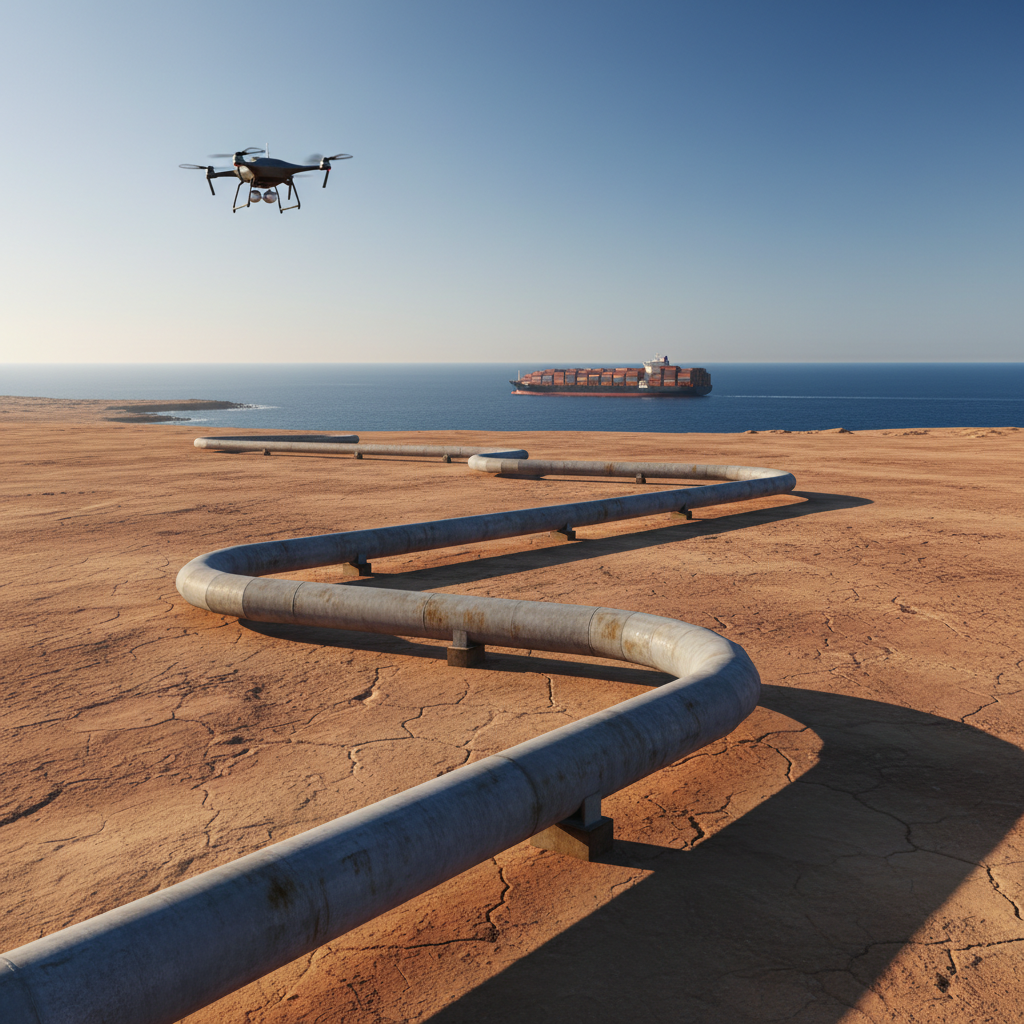
Recent incidents underscore a critical evolution in the nature of geopolitical disruption: the extension of threats from traditional maritime chokepoints to vital inland infrastructure. What was once considered a secure alternative to a high-risk maritime passage can now be rendered vulnerable through unconventional means, hundreds of kilometers from any coastline. The attack on Saudi Arabia’s Red Sea lifeline, a critical bypass route designed to circumvent the Strait of Hormuz, serves as a stark illustration. This infrastructure, intended as a strategic redundancy for oil shipments, was compromised by drones launched from a considerable distance inland. The subsequent restart of this bypass route, described as operating "into a narrower margin," signifies a profound shift. It implies that the capacity, security, or efficiency of this alternative has been permanently diminished. For cargo movement, this means that even established "escape routes" from major chokepoints are no longer guarantees of uninterrupted flow. The ripple effect on maritime transport is immediate: increased pressure on remaining viable routes, heightened security concerns for all infrastructure, and a re-evaluation of the entire risk matrix for energy and other critical commodity shipments originating from or transiting the region. This vulnerability of inland assets directly translates into increased uncertainty and potential delays for sea-bound cargo, as the upstream supply of commodities becomes inherently less reliable.
The Erosion of Redundancy
The concept of "narrower margins" directly speaks to the erosion of redundancy within global supply chains. For years, strategic planners have advocated for diversified routes and alternative transport modalities to mitigate risks associated with single points of failure. The incident involving Saudi Arabia's bypass demonstrates that even these carefully constructed redundancies are now susceptible to disruption, often from unexpected vectors. When a critical alternative route, like the Red Sea lifeline for oil, is compromised and subsequently operates with reduced capacity or heightened risk, the global system loses a vital pressure valve. This reduction in operational margin means less flexibility to absorb shocks, leading to amplified consequences when new disruptions occur. For global trade, this translates into increased transit times as vessels may be forced onto longer, less efficient routes, or face delays due to heightened security checks and rerouting protocols. Shipping costs inevitably climb due driven by higher fuel consumption, increased insurance premiums for perceived high-risk areas, and potential surcharges for navigating complex geopolitical landscapes. Furthermore, the diminished reliability of bypasses can lead to a concentration of traffic on remaining "safer" routes, creating new chokepoints and exacerbating congestion. This erosion of redundancy forces businesses to confront a future where every link in the supply chain, even those designed as alternatives, must be continuously assessed for emerging threats.
Economic Ripple Effects on Transport
The direct consequences of such geopolitical disruptions manifest profoundly in the economics of global transport. The "narrower margin" of critical bypass routes, coupled with the increased vulnerability of infrastructure, translates into tangible financial impacts across the entire supply chain. Firstly, increased insurance premiums become a significant factor. As risk assessments for specific regions or routes escalate, underwriters adjust their rates, directly impacting carriers and, subsequently, shippers. Secondly, higher operational costs are inevitable. Rerouting vessels to avoid perceived danger zones means longer voyages, consuming more fuel and extending crew time. Furthermore, enhanced security measures, whether on vessels or at terminals, add to the overhead. Thirdly, supply chain volatility increases dramatically. Unpredictable delays, sudden route closures, or the imposition of new tariffs and sanctions create an environment of uncertainty that makes forecasting and inventory management exceedingly difficult. This can lead to stockouts, missed delivery windows, and ultimately, lost sales. For commodities like oil, any disruption to key transport infrastructure can trigger immediate price spikes, impacting manufacturing costs and consumer prices globally. The cumulative effect is a global trading environment characterized by higher costs, reduced predictability, and a constant need for agile adaptation, placing immense pressure on profit margins for businesses reliant on international trade.
Building Resilience Through Real-time Visibility
In this era of heightened geopolitical volatility and shrinking operational margins, the role of a robust shipment-visibility control tower platform, such as MGS, becomes not just beneficial but absolutely critical. When traditional bypass routes are compromised and new threats emerge from unexpected directions, real-time visibility offers the intelligence needed to navigate uncertainty. An MGS platform provides end-to-end transparency across the entire supply chain, from the point of origin to the final destination. This means that when an incident like the attack on an inland pipeline occurs, or a maritime route becomes suddenly high-risk, MGS users are immediately aware of which shipments are affected, their precise location, and their estimated time of arrival. This granular data empowers supply chain managers to make rapid, informed decisions. They can identify alternative routes, assess the impact on downstream operations, communicate proactive updates to customers, and even initiate rerouting or expedited shipping options where feasible. The ability to monitor cargo movement across diverse modes – sea, air, rail, and road – and integrate real-time threat intelligence allows businesses to anticipate disruptions rather than merely react to them. In a world where "narrower margins" are the new normal, MGS provides the essential agility and insight to maintain continuity, minimize financial losses, and uphold customer commitments amidst unprecedented geopolitical challenges.
Navigating an Unpredictable Future
The incidents highlighting the vulnerability of critical infrastructure, even far inland, serve as a potent reminder that the global supply chain is a living, breathing entity, constantly susceptible to external pressures. The era of predictable, optimized routes operating with ample redundancy is giving way to a more complex reality where geopolitical events can swiftly and unexpectedly reshape the flow of goods. The "narrower margins" now characterizing once-reliable bypasses demand a fundamental re-evaluation of risk, resilience, and operational strategy. Businesses must move beyond traditional risk assessments, embracing a holistic view that integrates geopolitical intelligence with real-time operational data. The emphasis must shift from simply reacting to disruptions to proactively building adaptive and transparent supply chains. The future of global trade will undoubtedly be defined by its ability to absorb shocks, pivot rapidly, and leverage advanced technologies like shipment-visibility control towers to maintain an uninterrupted flow of goods, even as the geopolitical landscape continues its unpredictable evolution.
Source: Container News — https://container-news.com/saudi-arabias-bypass-restarts-into-a-narrower-margin/