
Geopolitical Currents: Navigating Disruption in Global Cargo Movement
Geopolitical events are fundamentally reshaping the landscape of global cargo movement, extending far beyond immediate route closures to impact schedules, equipment positioning, and delivery expectations. This brief analyzes the cascading effects on maritime routes, airspace, tariffs, and operational stability, underscoring the critical role of real-time visibility in building supply chain resilience.
Disruption to Global Maritime Routes
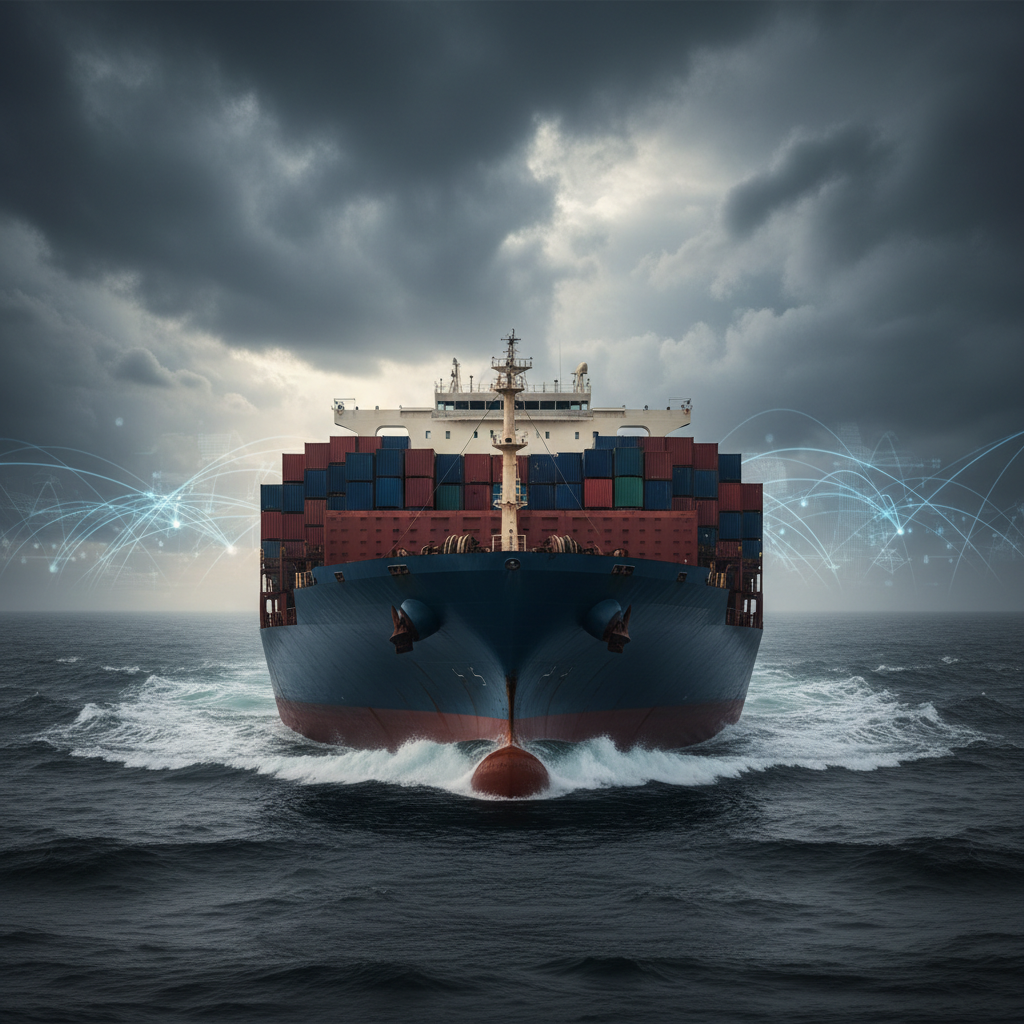
Geopolitical instability has consistently proven to be a primary catalyst for significant upheaval in global maritime trade. The recent situation concerning the Suez Canal, where services are returning but full operational normalization remains elusive, exemplifies this dynamic. When critical waterways are compromised or perceived as high-risk, carriers are compelled to reroute vessels, often opting for longer, more costly journeys around continents. This dramatically extends transit times, sometimes by weeks, leading to increased fuel consumption, higher operational expenses, and elevated insurance premiums. The ripple effect is profound: fewer vessel rotations mean tighter capacity across the entire network, contributing to potential port congestion at alternative hubs struggling to absorb diverted traffic. Furthermore, the unpredictability of these disruptions severely impacts schedule reliability, making it challenging for shippers to forecast arrival times and manage inventory effectively. Even as a route reopens, the residual effects on vessel positioning, container availability, and port fluidity can linger for extended periods, preventing a swift return to pre-disruption efficiency. For an MGS shipment-visibility control tower, real-time tracking of vessel positions and projected arrival times becomes paramount, enabling proactive communication with consignees and the exploration of alternative logistics strategies.
Airspace Restrictions and Their Ripple Effects
Beyond the seas, geopolitical tensions frequently manifest as airspace closures or restrictions, directly impacting air cargo operations. When specific air corridors become inaccessible due to conflict or political mandates, airlines must reroute flights, often adding thousands of kilometers to their journeys. These extended flight paths necessitate higher fuel consumption, which translates into increased operating costs and, consequently, higher freight rates for shippers. Moreover, longer flights can require additional fuel stops or impose payload restrictions to accommodate the extra fuel, effectively reducing available cargo capacity on affected routes. This can lead to delays for time-sensitive goods and push some cargo, particularly less urgent or bulkier items, towards alternative modes like sea freight. This shift, in turn, can add further strain to already congested maritime networks, creating a cascading effect across different transport modalities. An MGS platform, with its ability to monitor air freight movements and provide real-time alerts on flight diversions or delays, becomes indispensable for managing expectations and initiating contingency plans for critical shipments.
The Expanding Reach of Tariffs and Sanctions
Geopolitical events are increasingly accompanied by the deployment of economic tools such as tariffs and sanctions, which have far-reaching consequences for global trade flows. Tariffs, essentially taxes on imported goods, directly increase the cost of products, impacting consumer prices, demand, and ultimately, the competitiveness of goods in target markets. This can lead to shifts in sourcing strategies as companies seek to avoid punitive duties. Sanctions, on the other hand, impose direct restrictions on trade with specific countries, entities, or individuals, often prohibiting certain goods or financial transactions. For supply chains, this means a forced re-evaluation of supplier relationships, market access, and compliance protocols. Companies must navigate complex regulatory landscapes, ensuring their operations do not inadvertently violate sanctions, which carries significant legal and financial risks. The cumulative effect is a fragmentation of global supply chains, encouraging diversification of sourcing, nearshoring, or reshoring initiatives to mitigate geopolitical risk. While an MGS platform doesn't directly manage tariffs or sanctions, its comprehensive data on supplier locations, origin/destination pairs, and trade lane activity can provide crucial intelligence for identifying exposure and supporting compliance efforts.
Operational Normalization and Supply Chain Volatility
Even when a specific geopolitical disruption, such as a waterway closure, begins to subside, the journey back to 'normal' is rarely straightforward or swift. The source material highlights that operational normalization extends far beyond simply a vessel transiting a route; it encompasses the intricate dance of schedules, port rotations, cargo sequencing, equipment positioning, and the recalibration of delivery expectations. When schedules are thrown into disarray, vessels arrive off-cycle, leading to potential port congestion as facilities struggle to process irregular volumes. This, in turn, impacts port calls for subsequent vessels, perpetuating delays. Cargo sequencing becomes a nightmare, with goods arriving out of order, complicating inventory management and production planning. Crucially, equipment positioning—the availability of containers and chassis where and when they are needed—is severely compromised, leading to equipment imbalances and further delays in cargo movement. The cumulative effect is a highly volatile supply chain environment where predictability is low and disruptions propagate rapidly. MGS control towers offer a critical advantage here, providing the granular visibility needed to track individual containers, monitor equipment availability, and adjust delivery expectations in real-time, helping to mitigate the 'bullwhip effect' of volatility.
Leveraging Visibility for Resilience
In an era defined by persistent geopolitical volatility, the ability to anticipate, react, and adapt quickly is paramount for supply chain resilience. This is precisely where a shipment-visibility control tower platform like MGS proves invaluable. By aggregating real-time data from across the entire logistics ecosystem—including vessel tracking, flight status, port conditions, and even weather patterns—MGS provides an unparalleled, end-to-end view of cargo movement. This comprehensive visibility allows analysts to proactively identify potential disruptions, whether it's a rerouted vessel due to a waterway closure, a delayed air freight shipment due to airspace restrictions, or an impending port backlog. Armed with this intelligence, supply chain teams can make informed, dynamic decisions: exploring alternative routes, expediting critical shipments, re-sequencing production, or communicating revised delivery timelines to customers and partners. Beyond reactive measures, the data collected by an MGS platform can be leveraged for predictive analytics, helping organizations to model potential geopolitical impacts and build more robust, diversified supply chain strategies that are less susceptible to future shocks. In essence, visibility transforms uncertainty into actionable insight, enabling businesses to navigate the complex and ever-changing currents of global trade with greater confidence and control.
Source: Container News — https://container-news.com/the-suez-route-is-returning-the-voyage-is-not-yet-normal/