
Geopolitical Currents: How Flag-Switching Vessels Are Reshaping Global Maritime Logistics
Geopolitical pressures are compelling sanctioned vessels to change their national registration, creating significant disruptions in global cargo movement. This analysis explores the profound consequences for maritime routes, trade compliance, shipment visibility, and the overall integrity of supply chains.
Introduction
Geopolitical shifts are fundamentally reshaping the intricate web of global supply chains, introducing unprecedented complexities and risks. One significant consequence, directly impacting maritime transport, is the strategic re-flagging of vessels in response to international sanctions. This phenomenon creates a dynamic and often opaque environment, challenging established norms of trade and transport. The recent observation that a significant number of vessels are changing their national registration underscores a growing trend where geopolitical pressures compel actors to seek alternative operational frameworks, with direct implications for routes, compliance, and global shipment visibility.
Impact on Maritime Routes and Waterways
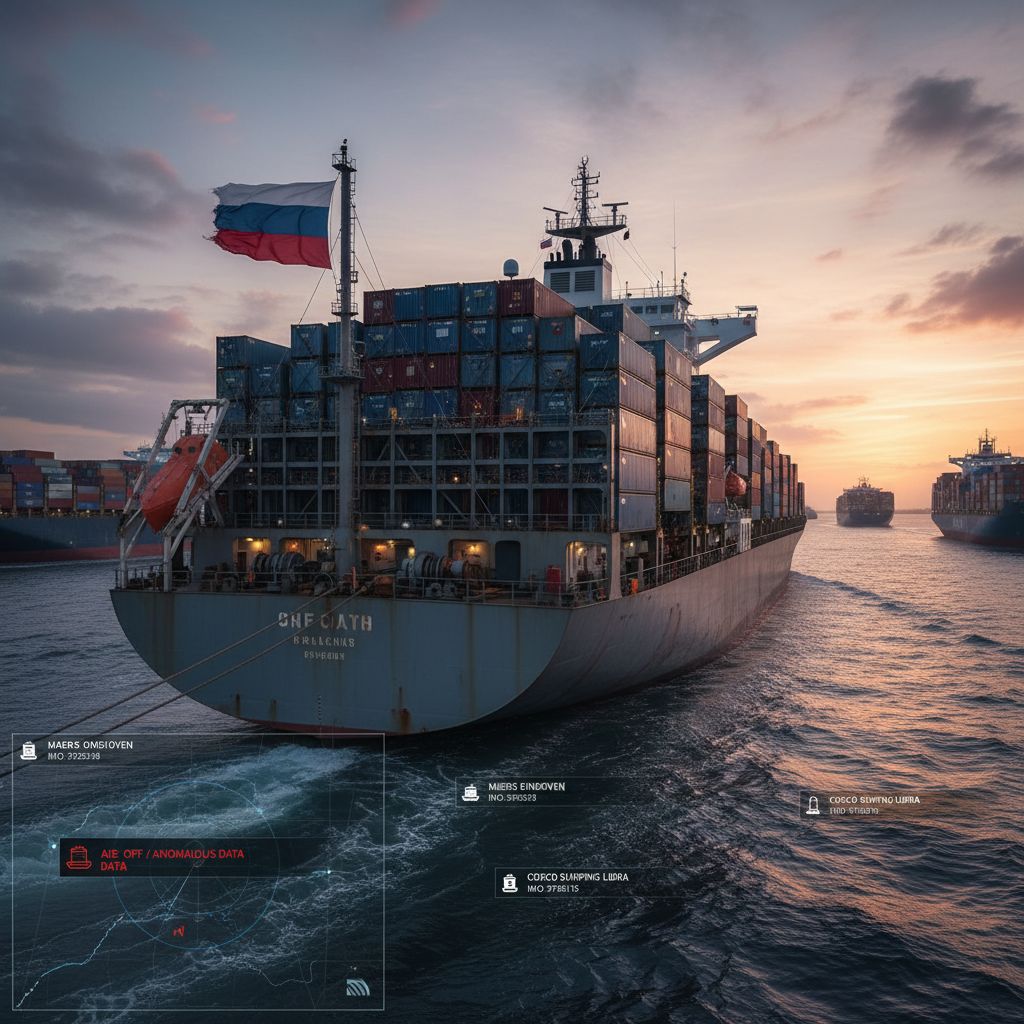
The shift of 107 sanctioned ships to the Russian flag registry, contributing to a 36% growth in that registry, signals a direct response to international pressure. For global trade, this has immediate repercussions on established maritime routes and the utilization of key waterways. Vessels operating under flags associated with sanctioned entities often face increased scrutiny, denial of port access in certain jurisdictions, or heightened insurance premiums. To circumvent these challenges, these ships may be compelled to adopt less direct, longer, or less conventional routes, potentially avoiding traditional shipping lanes, major transshipment hubs, or even specific chokepoints that are heavily monitored or controlled by nations enforcing sanctions. This deviation from optimal paths can lead to extended transit times, increased fuel consumption, and higher operational costs. Furthermore, the presence of a growing fleet operating under flags of convenience or those associated with sanctioned states can introduce new risks in certain waterways, including potential challenges to maritime safety standards, environmental regulations, and even security, as their operational transparency may be deliberately reduced. The overall effect is a less predictable and potentially more hazardous maritime landscape for all participants.
Challenges to Global Trade Compliance and Risk
The re-flagging of vessels directly impacts the intricate framework of global trade compliance and risk management. When 107 ships, previously operating under different flags, transition to a registry that offers refuge from international pressure, it complicates the due diligence processes for shippers, insurers, and financial institutions. Companies committed to ethical sourcing and adherence to sanctions regimes face an increased burden in verifying the provenance and destination of goods, as well as the ownership and operational history of the vessels involved. The opacity introduced by such flag changes can obscure beneficial ownership, making it difficult to ascertain whether a vessel or its cargo is directly or indirectly linked to sanctioned entities. This ambiguity elevates the risk of inadvertent sanctions breaches, leading to severe penalties, reputational damage, and financial repercussions for non-compliant parties. Insurers, in particular, face a challenging environment, as the risk profiles of these re-flagged vessels may be harder to assess, potentially leading to higher premiums for legitimate operators or a withdrawal of coverage for certain routes or vessel types. The net effect is a heightened risk landscape that demands more rigorous compliance checks and a deeper understanding of the evolving maritime ecosystem.
Erosion of Shipment Visibility and Data Integrity
Perhaps one of the most critical consequences for modern supply chain management is the significant erosion of shipment visibility and data integrity. In an era where real-time tracking and predictive analytics are paramount, the proliferation of vessels actively seeking to obscure their operations poses a direct threat. When 107 ships switch flags, often to registries that may have less stringent reporting requirements or are less integrated into global maritime tracking systems, their movements can become harder to monitor reliably. These vessels may employ deceptive shipping practices, such as turning off AIS transponders, manipulating AIS data, or engaging in ship-to-ship transfers in less monitored waters, specifically to evade detection. For a shipment-visibility control tower platform like MGS, this presents a substantial challenge. The accuracy and completeness of tracking data are compromised, making it difficult to provide customers with precise ETAs, identify potential delays, or flag compliance risks. The ability to verify a vessel's identity, its history, and its current trajectory becomes less certain, introducing 'dark spots' in the global supply chain map. This lack of reliable, end-to-end visibility undermines the very foundation of efficient, secure, and compliant logistics operations, demanding advanced analytical capabilities to detect anomalies and piece together fragmented information.
Market Fragmentation and Operational Costs
The phenomenon of sanctioned vessels seeking new flags contributes to a growing fragmentation within the global shipping market. Rather than a unified, transparent system, we see the emergence of parallel or 'shadow' fleets operating outside the traditional regulatory and financial frameworks. This bifurcation can lead to a two-tiered market: one operating with full transparency and adherence to international standards, and another operating with reduced oversight and potentially lower compliance costs, but higher inherent risks. For legitimate operators, this fragmentation can translate into increased operational costs. Heightened scrutiny at ports, more rigorous documentation requirements, and potentially higher insurance premiums due to the overall elevated risk profile of the maritime environment can drive up expenses. Furthermore, the diversion of legitimate shipping capacity to avoid regions or routes frequented by sanctioned vessels can create inefficiencies and inflate freight rates on compliant routes. The economic impact extends beyond direct shipping costs, affecting trade flows, commodity prices, and the competitiveness of businesses reliant on predictable and secure maritime transport. This market distortion underscores the complex interplay between geopolitical actions and the practical economics of global logistics.
Conclusion
The strategic re-flagging of vessels, as evidenced by the 36% growth in the Russian flag registry driven by 107 sanctioned ships, is a potent illustration of how geopolitical events directly and profoundly disrupt global cargo movement. The consequences ripple across maritime routes, compliance frameworks, data integrity, and market dynamics. For supply chain professionals, these developments necessitate a heightened focus on risk assessment, due diligence, and the adoption of resilient strategies. The ability to navigate this increasingly complex and opaque environment, to maintain visibility despite deliberate attempts at obfuscation, and to ensure compliance in the face of evolving sanctions regimes, is no longer a luxury but a fundamental requirement for sustained trade and transport operations.
Source: Ship & Bunker — https://shipandbunker.com/news/emea/434181-russian-flag-registry-grows-36-as-107-sanctioned-ships-switch-flags-report