
AI's Autonomous Leap: Reshaping Supply Chains While Keeping Humans at the Helm
DHL's latest insights reveal AI is moving beyond assistance to autonomous action in supply chains, fundamentally altering operations and workforce dynamics. This brief explores the profound impact on global logistics, financial implications, and how advanced visibility platforms like MGS are crucial for navigating this evolving landscape.
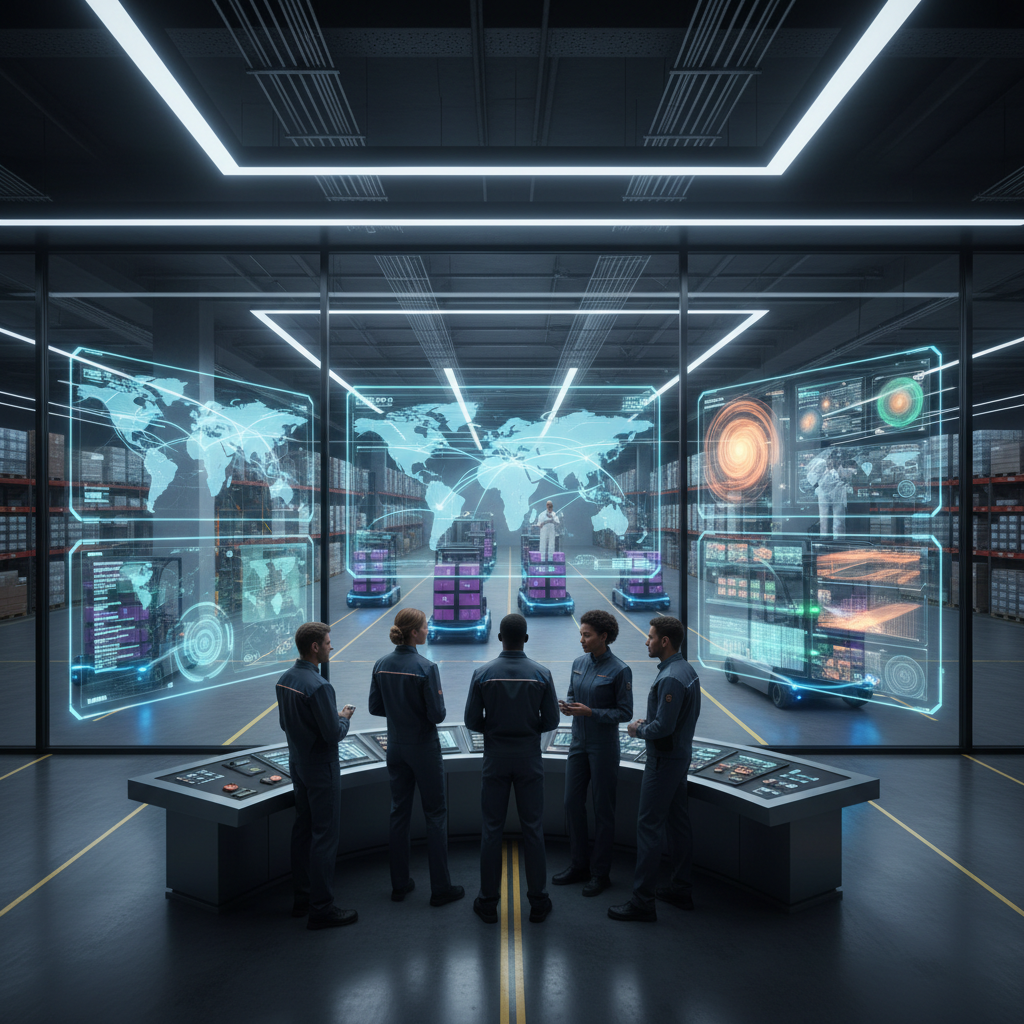
How this impacts the global supply chain
The advent of artificial intelligence taking autonomous action within supply chains, as highlighted by DHL, marks a pivotal shift in how goods move globally. This evolution transcends mere digital assistance, embedding AI directly into decision-making processes that govern logistics flows, routes, capacity, and overall operations. The immediate impact is a move towards hyper-optimized and dynamic supply chain networks.
Regarding flows, AI's autonomous capabilities mean that the movement of goods can be continuously optimized in real-time. Instead of static schedules or human-driven adjustments, AI can process vast datasets – from weather patterns and traffic congestion to geopolitical events and port delays – to orchestrate the most efficient flow of inventory. This could lead to a significant reduction in transit times, improved inventory turnover, and a more responsive supply chain capable of adapting to unforeseen disruptions with minimal human intervention. However, it also necessitates robust data infrastructure and clear governance frameworks to manage these autonomous decisions.
Routes will become far more adaptive and less rigid. AI can dynamically re-route shipments mid-journey to avoid bottlenecks, capitalize on faster transit options, or mitigate risks. This applies across all modes of transport, from optimizing vessel paths to avoid adverse weather, to re-sequencing truck deliveries in urban environments based on real-time traffic. The result is not just faster delivery but also potentially more sustainable routes, as AI can factor in fuel efficiency and emissions alongside speed and cost.
Capacity management stands to be revolutionized. AI can predict demand with greater accuracy and optimize the utilization of assets – be it warehouse space, container capacity, or vehicle fleets. By autonomously adjusting resource allocation based on predictive analytics and real-time operational data, AI can minimize empty miles, reduce wasted storage space, and ensure that capacity is matched precisely to demand. This leads to more efficient resource deployment and potentially reduces the need for excess capacity as a buffer against uncertainty.
Finally, operations themselves will undergo a fundamental transformation. From automated warehousing and robotic picking to AI-driven customs declarations and predictive maintenance for logistics equipment, the operational landscape will become increasingly automated. This requires a significant rethinking of the workforce, emphasizing new skills in AI supervision, data analysis, and human-AI collaboration. The source emphasizes that "people will remain at the center," suggesting a future where human expertise guides and oversees AI, rather than being replaced by it. This symbiotic relationship will define the next generation of logistics operations, demanding new safety protocols and governance structures for autonomous systems.
Global financial impact
The financial implications of AI's autonomous leap in logistics are substantial, affecting shippers, carriers, and global trade dynamics. While initial investments will be significant, the long-term financial benefits are poised to reshape cost structures and profitability across the supply chain.
For shippers, the primary financial gains will come from enhanced efficiency and reduced operational costs. Autonomous AI can lead to optimized inventory levels, minimizing holding costs and reducing the risk of obsolescence. Improved route planning and dynamic re-routing can cut transportation expenses, including fuel costs and driver wages (in the case of autonomous vehicles). Furthermore, fewer errors and delays, driven by AI's precision, translate into reduced penalties, chargebacks, and customer service costs. The ability to predict and mitigate disruptions more effectively also protects revenue by ensuring product availability and customer satisfaction. However, shippers will face upfront costs associated with integrating AI platforms, upgrading their data infrastructure, and potentially investing in new hardware compatible with autonomous systems.
Carriers stand to benefit from unprecedented operational efficiencies and asset utilization. AI-driven route optimization can lead to significant fuel savings and reduced wear and tear on vehicles. Autonomous scheduling and dispatching can maximize the productivity of fleets and personnel, minimizing idle time and optimizing load factors. This translates directly into higher profit margins per shipment. Moreover, AI can enable carriers to offer new, premium services based on guaranteed delivery times or hyper-optimized routes, opening new revenue streams. The challenge for carriers lies in the substantial capital expenditure required for AI implementation, including advanced sensors, software licenses, and the retraining or upskilling of their workforce to manage and maintain these sophisticated systems. The "rethinking skills, safety, governance, and employee experience" mentioned in the source points to significant financial outlays for human capital development.
For trade at large, the financial impact is a move towards a more efficient, predictable, and potentially lower-cost global exchange of goods. Reduced lead times and improved reliability can stimulate international commerce, making global supply chains more attractive and accessible. This could foster economic growth by enabling businesses to reach new markets more effectively. However, there are broader financial considerations. The investment required for AI infrastructure could create a divide between technologically advanced nations/companies and those lagging, potentially altering competitive landscapes. Furthermore, the need for new governance and safety standards for autonomous systems will require international collaboration and investment to ensure seamless cross-border operations, avoiding regulatory fragmentation that could impede trade. The shift in workforce skills also implies a societal financial cost in terms of education and retraining programs to ensure a smooth transition for employees.
How MGS can help navigate today's global trade environment
In an environment where AI is increasingly taking autonomous action, the role of a robust shipment-visibility control tower like MGS becomes not just beneficial, but essential. MGS provides the foundational data layer and the human-centric interface necessary to leverage AI effectively and maintain control over complex, automated supply chains.
Firstly, MGS serves as the critical data backbone for AI's autonomous actions. AI systems, by their nature, are only as good as the data they consume. MGS aggregates real-time, granular data from across the entire supply chain – including carrier updates, IoT sensor data, port statuses, and customs information. This comprehensive, accurate, and timely data feed is precisely what AI needs to make informed, autonomous decisions regarding routing, scheduling, and inventory management. Without this foundational visibility, AI's potential for autonomous action would be severely limited, leading to suboptimal or even erroneous outcomes.
Secondly, while AI takes autonomous action, the source explicitly states that "people will remain at the center." MGS provides the centralized platform for human oversight and intervention. As AI optimizes routes or re-plans shipments, human operators need a clear, intuitive dashboard to monitor these actions, understand the rationale behind AI's decisions, and intervene if anomalies or unforeseen circumstances arise. MGS's control tower capabilities allow operators to visualize the entire network, track AI-driven movements, receive alerts for deviations, and collaborate with AI systems to refine strategies or handle exceptions. This ensures that human expertise and ethical considerations remain integrated into the automated supply chain.
Thirdly, MGS facilitates performance monitoring and continuous improvement of AI-driven processes. By tracking key performance indicators (KPIs) such as on-time delivery rates, transit times, and cost efficiencies against AI-optimized plans, MGS provides the analytics needed to evaluate the effectiveness of autonomous systems. This feedback loop is crucial for refining AI algorithms, identifying areas where human-AI collaboration can be enhanced, and ensuring that the investment in AI yields tangible returns. MGS transforms raw data into actionable insights, enabling both AI and human operators to learn and adapt.
Finally, in a world of increasingly complex and automated supply chains, MGS helps in risk mitigation and resilience. Even with autonomous AI, disruptions can occur. MGS's real-time visibility allows for early detection of potential issues, whether they are AI-predicted or unexpected. This enables human operators to work with AI to develop and execute contingency plans swiftly, minimizing the impact of disruptions and maintaining supply chain continuity. It empowers the evolving workforce, enabling them to manage and interact with automated systems from a single, comprehensive vantage point, aligning with the need to "rethink skills" for the future.
Demand–supply analysis & improvement
The shift towards AI taking autonomous action profoundly impacts the delicate balance between demand and supply, offering significant levers for improvement. The source's emphasis on AI reshaping logistics operations and influencing workforce trends directly points to AI's capability to refine forecasting and optimize resource allocation.
On the demand side, AI's ability to process and analyze vast, disparate datasets in real-time allows for a far more accurate and dynamic understanding of market needs. Beyond historical sales data, AI can incorporate external factors like social media trends, economic indicators, weather forecasts, and even geopolitical developments to predict consumer demand with unprecedented precision. This autonomous analytical capability means that demand signals can be captured and interpreted almost instantaneously, allowing businesses to anticipate shifts rather than merely react to them. The improvement lever here is the transition from static, periodic forecasting to continuous, adaptive demand sensing, significantly reducing the risk of stockouts or overstock situations.
On the supply side, AI's autonomous actions enable a highly optimized and responsive fulfillment network. Once demand is accurately predicted, AI can autonomously orchestrate the supply chain to meet it. This includes optimizing inventory placement across warehouses, dynamically adjusting production schedules, and fine-tuning transportation plans. For instance, if AI predicts a surge in demand for a particular product in a specific region, it can autonomously initiate the movement of inventory from a less active distribution center or adjust manufacturing output. This real-time optimization of supply resources ensures that goods are available where and when they are needed, minimizing waste and maximizing efficiency. The improvement lever is the ability to achieve a near-perfect alignment of supply with demand, reducing lead times and improving service levels.
Concrete improvement levers stemming from this dynamic include: AI-driven predictive analytics for demand forecasting, leading to more precise inventory management; real-time optimization of resource allocation (e.g., vehicles, warehouse space, labor) to match fluctuating demand; dynamic routing and scheduling of shipments to ensure timely delivery while minimizing costs; and automated inventory adjustments based on predicted consumption and supply chain events. These capabilities allow businesses to move from reactive supply chain management to a proactive, self-optimizing system, where the interplay between demand and supply is continuously balanced by intelligent, autonomous agents.
Source: Parcel and Postal Technology International — https://www.parcelandpostaltechnologyinternational.com/news/technology/dhl-says-people-will-remain-at-the-center-of-logistics-as-ai-takes-on-more-tasks.html