
Geopolitical Crosscurrents: Navigating Disrupted Global Cargo Flows
Geopolitical events are fundamentally reshaping global cargo movement, forcing re-routing, impacting airspace and waterways, and introducing complex tariffs and sanctions. This analysis explores the consequences for trade and transport, highlighting the critical role of real-time visibility and strategic infrastructure investments in building resilient supply chains.
Disruption of Established Routes
Geopolitical tensions are fundamentally reshaping the arteries of global trade. Once-predictable sea lanes, air corridors, and overland routes are increasingly subject to disruption, forcing supply chain planners to navigate a complex and often volatile landscape. This manifests as sudden re-routing requirements, leading to significantly extended transit times and escalating operational costs. For instance, disruptions in key maritime passages or land bridges necessitate longer voyages around continents, increasing fuel consumption and demanding greater vessel or truck capacity. Air freight, while faster, faces similar challenges with airspace closures, pushing flights onto longer, less direct paths. The cumulative effect is a reduction in schedule reliability and an increase in inventory holding costs as lead times become less certain. For an MGS shipment-visibility control tower, this environment underscores the critical need for real-time, multi-modal tracking capabilities. Our platform provides the granular data necessary to identify affected shipments, calculate revised estimated times of arrival (ETAs), and explore alternative routing options instantaneously. This proactive insight allows businesses to communicate effectively with stakeholders, manage customer expectations, and mitigate financial penalties associated with delays, transforming potential chaos into actionable intelligence.
Airspace and Waterway Restrictions
Direct restrictions on airspace and vital maritime waterways represent some of the most immediate and impactful consequences of geopolitical events. Conflicts or heightened tensions can result in the sudden closure of air corridors, forcing commercial aircraft to undertake lengthy detours, significantly increasing flight durations and fuel expenditure. Similarly, critical maritime chokepoints – narrow straits or canals essential for global shipping – become vulnerable to blockades, increased security risks, or congestion. Such scenarios compel shipping lines to divert vessels, often adding weeks to transit times and dramatically increasing operational costs due to longer distances and higher insurance premiums. The ripple effect on global trade is profound, impacting everything from perishable goods to just-in-time manufacturing schedules. An MGS control tower becomes indispensable in this context, offering real-time alerts on restricted zones and providing alternative route simulations. By continuously monitoring vessel and aircraft movements against dynamic geopolitical overlays, our platform enables logistics teams to anticipate potential disruptions, re-plan routes on the fly, and maintain comprehensive visibility over assets that might otherwise disappear into the operational void created by these restrictions. This capability is vital for maintaining cargo flow and minimizing the economic fallout.
Tariffs, Sanctions, and Trade Policies
Geopolitical events frequently translate into a complex web of tariffs, sanctions, and evolving trade policies, creating significant compliance hurdles and economic pressures for global supply chains. Sanctions, whether targeted at specific entities, sectors, or entire nations, can abruptly sever established trade relationships, compelling businesses to re-evaluate their sourcing strategies and market access. The imposition of new tariffs or changes in existing trade agreements directly impacts the cost of goods, influencing pricing strategies and potentially shifting production bases. Navigating this intricate regulatory landscape requires meticulous attention to detail and up-to-date information, as non-compliance can lead to severe financial penalties and reputational damage. An MGS platform, while not a compliance engine itself, plays a crucial supporting role by providing unparalleled visibility into the origin, transit, and destination of every shipment. This granular data empowers businesses to verify compliance with evolving regulations, identify potential risks associated with specific trade lanes or partners, and make informed decisions about inventory placement and supply chain diversification. By offering a clear, auditable trail of goods movement, MGS helps organizations adapt to dynamic trade policies and maintain integrity in their global operations.
Supply Chain Resilience and Adaptability
In an era defined by geopolitical volatility, the imperative for supply chain resilience and adaptability has never been greater. Businesses are increasingly moving away from lean, single-source strategies towards more diversified and robust models. This includes strategies like multi-sourcing from different geographic regions, exploring nearshoring or friendshoring initiatives to reduce geopolitical exposure, and strategically building buffer stocks for critical components to absorb shocks. The ability to quickly pivot and adapt to unforeseen disruptions – whether a sudden route closure or a new trade barrier – is paramount for maintaining continuity of operations. This requires not only strategic foresight but also the operational agility to execute changes rapidly. An MGS shipment-visibility control tower is a foundational tool for building this resilience. By providing end-to-end transparency across the entire supply chain, it enables organizations to identify vulnerabilities, assess the impact of potential disruptions in real-time, and evaluate the effectiveness of mitigation strategies. The platform's analytical capabilities allow for scenario planning, helping businesses understand the implications of various geopolitical eventualities and proactively adjust their networks to minimize risk and capitalize on emerging opportunities.
The Role of Strategic Infrastructure Investment
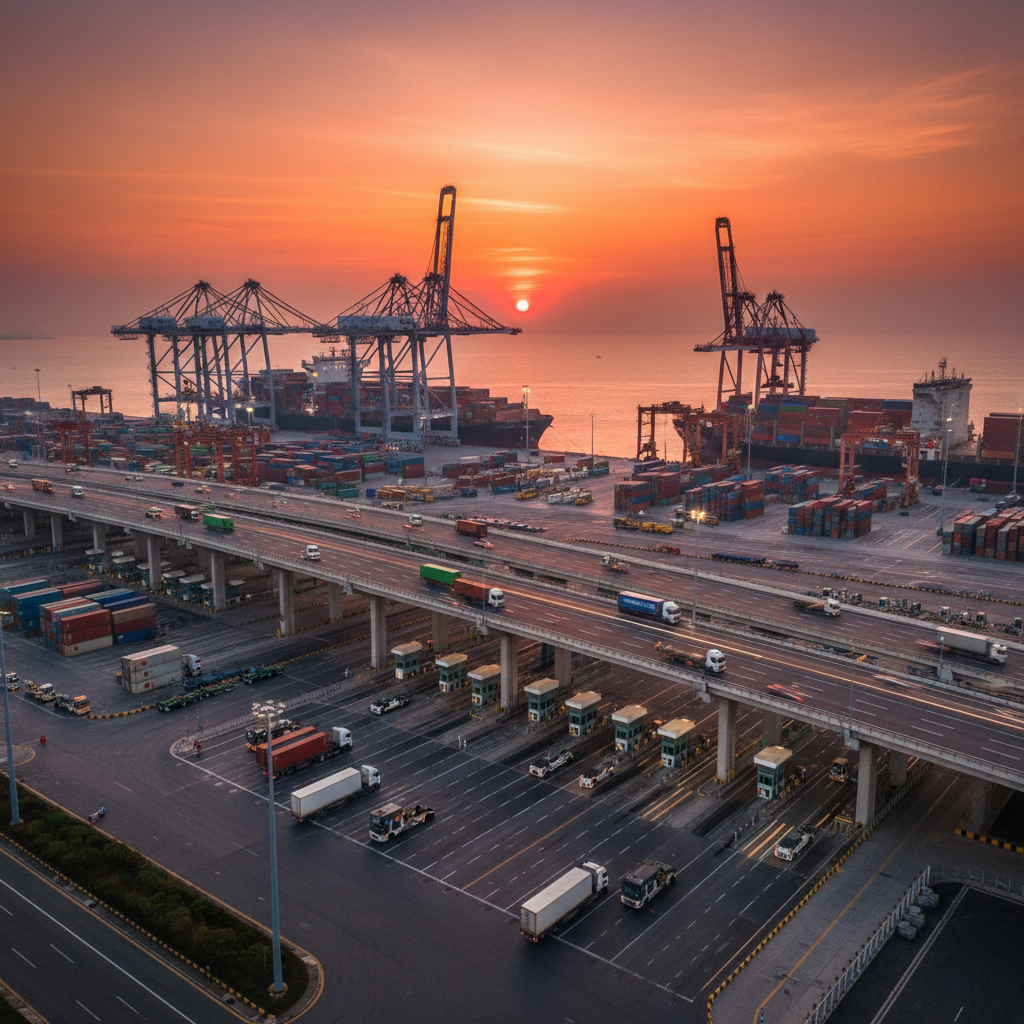
Amidst the pervasive challenges posed by geopolitical disruptions, strategic infrastructure investments play a crucial, albeit often localized, role in enhancing overall supply chain robustness. While not always a direct response to specific geopolitical events, improvements in port, road, and rail infrastructure contribute significantly to a region's capacity to handle increased or diverted cargo volumes. For instance, the Port of Riga's significant investment of EUR 82.6 million in a new traffic overpass connecting Tvaika Street to Kundziņsala, alongside a new checkpoint designated Delta 17 at 42 Uriekstes Street, exemplifies this. Set to open on November 1, 2026, this project aims to facilitate freight traffic to and from the port's territory on Kundziņsala. Such developments, while locally focused on improving efficiency and access, collectively bolster the global logistics network. A more efficient port like Riga can become a more attractive alternative or a more capable node within a diversified network, indirectly mitigating risks associated with over-reliance on potentially vulnerable hubs. In a landscape where established routes are frequently challenged, enhancing the capabilities of individual ports and their hinterland connections is vital. An MGS platform, by providing real-time data on port congestion, turnaround times, and inland transport efficiency, can help shippers leverage these improved infrastructures effectively, optimizing their use of new or upgraded facilities to maintain cargo flow and reduce transit times in a dynamically shifting global trade environment.
Source: Container News — https://container-news.com/port-of-riga-opens-traffic-overpass-and-checkpoint-for-kundzinsala/