
Evergreen's EVER EON Completes Suez Canal Transit Signaling Potential Route Normalization
Evergreen's 16,556-TEU vessel, EVER EON, has completed its first Suez Canal transit in nearly three years, marking a significant moment in the aftermath of the Red Sea crisis. This event prompts a critical examination of how geopolitical disruptions reshape global cargo movement, impacting routes, operational costs, and supply chain resilience for shippers and forwarders.
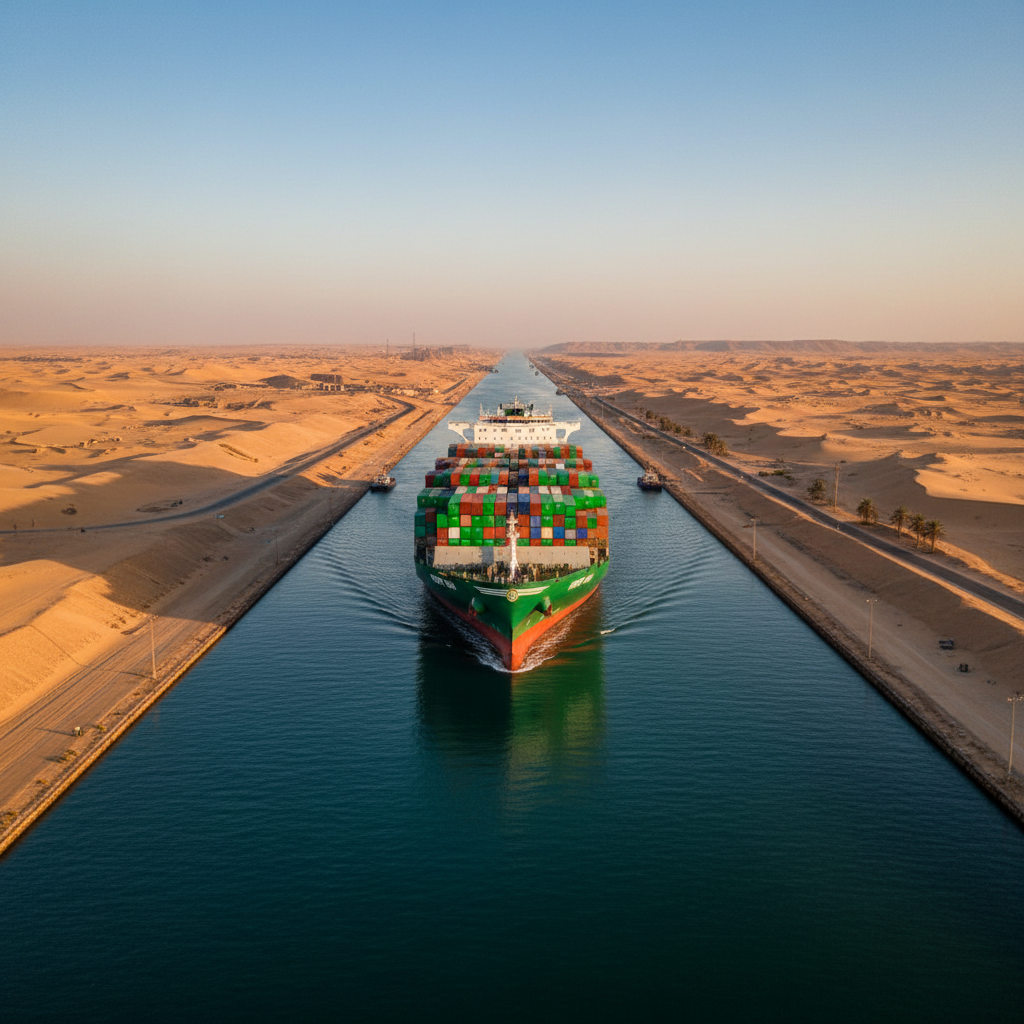
Evergreen's EVER EON Resumes Suez Canal Passage
On 8 November, Evergreen's 16,556-TEU containership, the 369-metre-long EVER EON, successfully transited the Suez Canal. This passage, originating from the Netherlands, represents a pivotal development for the global shipping industry, particularly given its context. The vessel's return to this vital waterway comes after a period of nearly three years during which the Red Sea crisis significantly curtailed, or entirely halted, major container line traffic through the canal. For Evergreen, a prominent global carrier, this action signals a strategic re-evaluation of routing decisions and potentially a gradual move towards re-establishing pre-crisis operational patterns on specific trade lanes. While a single transit does not unilaterally declare an end to regional instability, it serves as a tangible indicator of shifting risk assessments and operational confidence among carriers, providing a glimmer of cautious optimism for a sector deeply impacted by geopolitical volatility.
The Enduring Cost of Red Sea Rerouting
For nearly three years, the geopolitical tensions in the Red Sea region compelled a substantial portion of global shipping traffic to abandon the Suez Canal in favor of the longer route around the Cape of Good Hope. This diversion, while ensuring safety, imposed immense operational and financial burdens on the entire supply chain. The most immediate consequence was a drastic increase in transit times, adding thousands of nautical miles to voyages and extending delivery schedules by weeks. This not only delayed cargo but also led to a significant surge in fuel consumption, directly escalating operational costs for carriers and increasing the carbon footprint of global trade. Furthermore, the heightened risk profile of the affected regions resulted in elevated insurance premiums, with war risk surcharges becoming a standard fixture for vessels navigating or even approaching these zones. Shippers faced the brunt of these changes through higher freight rates, unpredictable delivery schedules, and challenges in managing inventory levels, often leading to increased warehousing costs or stockouts. The cumulative impact of these rerouting decisions has been a substantial drain on the efficiency and financial health of global logistics, making the EVER EON's return a potential, albeit partial, reprieve from these sustained pressures.
Strategic Network Shifts and Operational Resilience
The prolonged disruption of a critical maritime artery like the Suez Canal has forced carriers and shippers alike to fundamentally reassess their network design and operational strategies. The imperative for greater resilience has driven a diversification of routes, with companies exploring alternative pathways to mitigate reliance on single choke points. For shippers, this has often translated into a re-evaluation of inventory management, moving towards higher safety stock levels or exploring nearshoring and friendshoring initiatives to reduce transit risks and lead times. Carriers, in turn, have had to optimize vessel deployment, potentially utilizing different vessel sizes or speeds on altered routes to maintain service levels. The ability of a large vessel like the 369-metre-long EVER EON to transit the Suez Canal underscores the waterway's strategic importance for efficient global trade, especially for high-volume container movements. Its temporary unavailability highlighted the fragility of global supply chains and the urgent need for adaptable, multi-modal solutions capable of responding to sudden shifts in geopolitical landscapes without catastrophic operational failure.
The Lingering Shadow of Geopolitical Volatility
While the return of Evergreen's EVER EON to the Suez Canal is a positive indicator, it is crucial for supply chain stakeholders to recognize that the underlying geopolitical tensions which triggered the Red Sea crisis may not have entirely dissipated. Perceived stability in a region can be swiftly overturned by new incidents, demonstrating the inherent fragility of global trade routes to regional conflicts. This dynamic necessitates a continuous and rigorous reassessment of geopolitical risks by supply chain managers, understanding that any return to 'normal' transit patterns could be temporary. The nearly three years of disruption have likely spurred long-term strategic investments in alternative logistics infrastructure, technological solutions for enhanced visibility, and more robust contingency planning. The experience serves as a stark reminder that global trade arteries are highly susceptible to localized conflicts, demanding not just reactive measures but proactive, agile, and adaptable supply chain strategies to navigate an increasingly unpredictable world.
Conclusion & Strategic Insights
The return of Evergreen's EVER EON to the Suez Canal is a cautiously optimistic signal for global shipping, yet it underscores the profound and enduring impact of geopolitical instability on trade routes and operational costs.
- Route Vulnerability: Geopolitical events can instantly re-route global trade, leading to significant increases in transit times, fuel consumption, and insurance premiums.
- Cost Escalation: Extended voyages and heightened risk perceptions directly translate into higher operational expenses for carriers, which inevitably impact freight rates and supply chain budgets for shippers.
- Strategic Adaptability: The three-year disruption highlights the critical need for supply chain managers to build robust, flexible networks capable of rapid adaptation to unforeseen geopolitical challenges, including diversified routing and inventory strategies.
Source: Container News — https://container-news.com/evergreens-ever-eon-completes-first-suez-canal-transit/