
DP World's New China-Africa Link: Reshaping East-West Trade Dynamics
DP World's expansion of its China-Africa shipping network introduces a new maritime link, promising enhanced flexibility and market access. This analysis explores the profound implications for global supply chains, financial landscapes, and how advanced visibility platforms like MGS can empower stakeholders to navigate this evolving trade corridor.
How this impacts the global supply chain
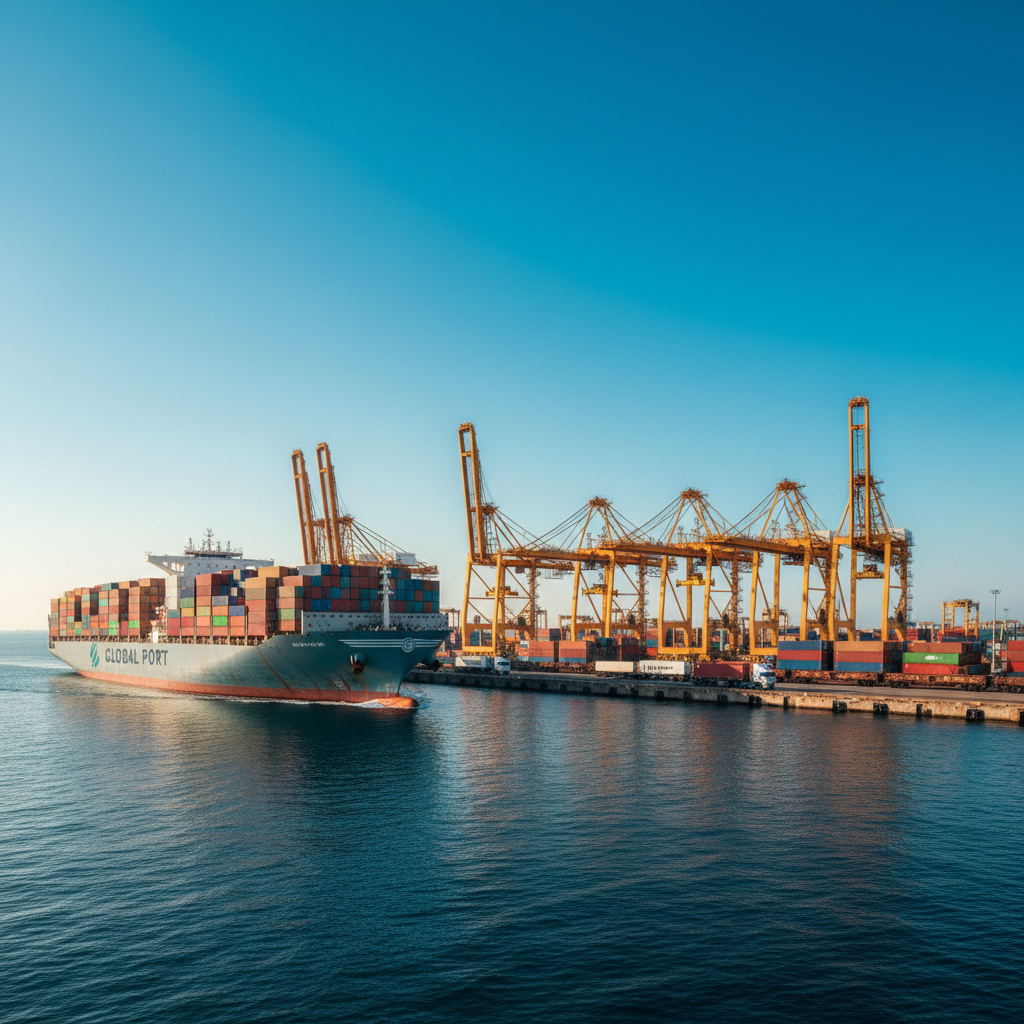
DP World's strategic initiative to strengthen the China–Africa corridor with a new shipping link represents a significant evolution in global maritime logistics. This development directly impacts the fundamental elements of global supply chains: flows, routes, capacity, and operational efficiency.
Firstly, regarding flows, the introduction of a dedicated or enhanced China–Africa maritime connection is poised to substantially increase the direct movement of goods between the Far East and the African continent. Historically, trade between these regions might have relied on more circuitous routes, often involving transshipment hubs in the Middle East or Europe. A strengthened direct link streamlines these flows, reducing the number of touchpoints and potentially accelerating delivery times for a wide array of commodities, from manufactured goods originating in China to raw materials and agricultural products from Africa. This shift signifies a more direct and efficient flow of trade capital and physical goods.
Secondly, the impact on routes is profound. The new link establishes a more defined and potentially more reliable maritime artery. For shippers, this means additional options beyond existing, possibly congested, pathways. It could lead to a re-evaluation of optimal routing strategies, favoring the directness and efficiency offered by this expanded network. Over time, as the link matures, it may even draw traffic away from alternative, less direct routes, leading to a recalibration of vessel deployment and port calls across the broader East-West trade lanes. The emphasis on 'strengthening maritime connections' implies not just an addition, but an enhancement of the overall network's robustness.
Thirdly, in terms of capacity, the expansion of DP World’s China–Africa shipping network inherently introduces new or reallocated vessel capacity to this specific corridor. While the precise number of vessels or TEU capacity is not specified, any network expansion by a major player like DP World signifies a commitment to increasing the availability of shipping slots. This added capacity can alleviate pressure on existing services, potentially leading to more competitive pricing and better schedule reliability for shippers utilizing this route. It also signals a long-term view of growing trade volumes, with capacity being proactively deployed to meet anticipated demand.
Finally, the operational implications are geared towards greater efficiency and flexibility. By offering a more direct and robust link, the new service aims to support 'more flexible supply chains.' This flexibility translates into several operational advantages: reduced lead times, better inventory management opportunities, and potentially fewer instances of cargo handling, which in turn lowers the risk of damage or delays. For businesses operating within these trade lanes, this improved operational framework can lead to more predictable supply chains, allowing for tighter planning and reduced safety stock levels. The overall effect is a more agile and responsive logistics ecosystem connecting two vital economic regions.
Global financial impact
The launch of DP World's new shipping link between China and Africa carries significant financial and cost implications for all stakeholders involved in global trade, from individual shippers to the broader economic landscape.
For shippers, the primary financial benefit stems from the potential for reduced logistics costs and improved operational efficiency. A more direct and flexible shipping link can lead to shorter transit times, which directly translates to lower inventory holding costs. Capital tied up in goods in transit is released faster, improving cash flow and working capital management. Furthermore, increased competition and capacity on this corridor could drive down freight rates, offering direct cost savings. The promise of 'access to growing markets' also implies new revenue opportunities for businesses able to efficiently tap into these regions, expanding their customer base and increasing sales volumes. Reduced risk of delays and disruptions, facilitated by a more robust network, also mitigates costs associated with penalties, expedited shipping, or lost sales.
Carriers, particularly DP World's Shipping Solutions AMEA business, stand to gain significant market share and revenue from this expansion. By proactively strengthening this corridor, DP World positions itself as a key facilitator of trade between the Far East and Africa, potentially attracting new customers and increasing cargo volumes. This strategic investment is likely to yield returns through increased bookings, optimized vessel utilization, and enhanced brand reputation as a reliable logistics partner. For competing carriers, this development could necessitate a re-evaluation of their own service offerings and pricing strategies on these routes. They may need to invest in similar network enhancements or differentiate their services to retain or attract customers, potentially leading to a more competitive and innovative shipping environment overall.
The impact on trade at large is multifaceted and largely positive. The improved maritime connections are a catalyst for increased bilateral trade volumes between China and Africa. By lowering the logistical barriers and costs associated with moving goods, the new link makes trade more accessible and economically viable for a wider range of businesses, including small and medium-sized enterprises (SMEs). This can stimulate economic growth in both regions, fostering new investment, job creation, and the development of supporting infrastructure (e.g., warehousing, inland transport). The enhanced flexibility and reliability of supply chains also reduce overall trade risk, making these markets more attractive for foreign direct investment. Ultimately, by facilitating smoother and more cost-effective trade, this initiative contributes to the broader economic integration and prosperity of the Far East and African continents.
How MGS can help navigate today's global trade environment
In an increasingly complex and interconnected global trade environment, the introduction of new shipping links like DP World's China-Africa corridor underscores the critical need for advanced shipment visibility. A platform like MGS, a shipment-visibility control tower, is uniquely positioned to help operators leverage the benefits and mitigate the challenges of such developments.
Firstly, as new maritime connections are established, MGS provides real-time tracking and monitoring capabilities. Shippers utilizing this new China-Africa link can gain unparalleled insight into the precise location and status of their cargo from origin to destination. This is crucial for managing expectations, providing accurate customer updates, and identifying potential deviations from planned schedules on these newly introduced routes. Without such visibility, the 'flexibility' promised by the new link might remain theoretical, as operators would lack the data to effectively utilize it.
Secondly, MGS facilitates performance benchmarking and optimization. With a new shipping link, operators will want to assess its efficiency and reliability compared to existing alternatives. MGS can collect and analyze data on transit times, on-time performance, and potential bottlenecks specific to the China-Africa corridor. This data-driven insight allows businesses to make informed decisions about which routes and carriers offer the best balance of speed, cost, and reliability for their specific cargo, thereby truly capitalizing on the 'strengthened maritime connections' and 'more flexible supply chains.'
Furthermore, the platform's predictive analytics capabilities become invaluable. By analyzing historical data from the new link, combined with external factors like weather patterns or port congestion, MGS can forecast estimated times of arrival (ETAs) with greater accuracy. This enhanced predictability is vital for optimizing downstream logistics, such as warehouse staffing, customs clearance, and last-mile delivery, ensuring that the benefits of faster maritime transport are not lost in subsequent stages of the supply chain. This directly supports the goal of more flexible supply chains by enabling proactive rather than reactive management.
Finally, MGS enhances risk management and response. While new links aim to improve flexibility, disruptions can still occur. A control tower provides immediate alerts for delays, diversions, or other unforeseen events impacting shipments on the China-Africa corridor. This real-time intelligence empowers operators to quickly assess the situation, communicate with stakeholders, and implement contingency plans, thereby safeguarding against potential financial losses and maintaining supply chain integrity. This proactive approach to managing the new link's operational realities is a direct application of MGS's core value proposition.
Demand–supply analysis & improvement
DP World's initiative to strengthen the China–Africa corridor explicitly addresses underlying demand and supply dynamics within global trade. The expansion of the shipping network and the launch of a new link are direct responses to, and facilitators of, evolving market needs.
The source text highlights 'access to growing markets,' which inherently points to an existing or anticipated demand from African economies for goods originating in the Far East, and potentially increasing demand from the Far East for African exports. Africa's rapidly growing population, expanding middle class, and ongoing industrialization efforts create a significant appetite for consumer goods, machinery, and infrastructure components typically sourced from China. Concurrently, Africa's rich natural resources and agricultural output continue to be vital inputs for Chinese industries. The 'growing markets' phrase suggests that the current logistical infrastructure might be insufficient to fully capitalize on this burgeoning trade potential, indicating a gap between existing shipping supply and market demand.
DP World's action represents a direct increase in supply within the maritime logistics sector for this specific trade lane. By 'expanding its China–Africa shipping network' and launching a 'new shipping link,' DP World is injecting additional capacity and service options into the corridor. This increased supply of shipping services aims to better match the identified demand, thereby reducing lead times, improving reliability, and potentially lowering shipping costs. This strategic move anticipates and aims to accelerate the growth of trade volumes between these two continents.
Several improvement levers become apparent through this lens. Firstly, the new link itself is an improvement lever, offering a potentially more efficient and direct route. This allows for better utilization of vessel capacity by consolidating cargo flows that might have previously been fragmented across multiple services or transshipment points. Secondly, the emphasis on 'more flexible supply chains' suggests an improvement in service design, possibly offering more frequent sailings, a wider range of vessel types, or more adaptable scheduling to meet diverse shipper needs. This flexibility allows businesses to better align their inventory management strategies with real-time market fluctuations. Thirdly, for DP World, the improvement lies in optimizing their network to capture a larger share of this growing trade, leveraging their port infrastructure and logistics expertise to create an integrated and attractive offering. For the broader market, the improvement is increased choice and potentially higher service standards as carriers compete to serve this strengthened corridor more effectively.
ROI-focused resilience
The concept of 'more flexible supply chains,' as mentioned in the context of DP World's new China–Africa shipping link, directly translates into a tangible return on investment (ROI) for businesses prioritizing resilience. Resilience in supply chains is not merely about avoiding disruption; it's about building systems that can adapt and recover efficiently, and this often requires strategic investment.
Investing in the utilization of new, more flexible shipping links like the China-Africa corridor offers a clear ROI by protecting against quantifiable risks inherent in less flexible, traditional supply chain models. For instance, consider the risk of single-point-of-failure or congestion-related delays. Relying on a limited number of established, often heavily trafficked routes or transshipment hubs exposes businesses to significant financial losses if those points experience disruption (e.g., port strikes, natural disasters, geopolitical tensions, or simply chronic congestion). The cost of such delays can be substantial, including demurrage and detention charges, expedited shipping fees to catch up, lost sales due due to stockouts, damage to brand reputation, and even production line stoppages.
By leveraging the 'more flexible supply chains' offered by DP World's expanded network, shippers are essentially investing in diversification of their logistics pathways. This investment yields a return in the form of avoided costs. For example, if a traditional route faces a two-week delay costing a company an estimated $50,000 in expedited shipping and lost revenue for a critical shipment, having the option to reroute or utilize a more reliable, albeit potentially slightly pricier, flexible service on the new link could prevent that $50,000 loss. The ROI is the difference between the cost of the flexible option and the much higher cost of a disruption on a less resilient alternative.
Furthermore, the improved predictability and reliability that come with a strengthened, flexible corridor can lead to optimized inventory management. Businesses can reduce the need for excessive safety stock, which ties up capital and incurs warehousing costs. If a company can reduce its safety stock by 10% due to more reliable transit times provided by the new link, the ROI is the capital freed up and the avoided storage costs. For a company holding $1 million in safety stock, a 10% reduction could free up $100,000, which can be reinvested elsewhere in the business. This is a direct financial return on the strategic choice to utilize more resilient logistics options.
In essence, the investment in leveraging these more flexible supply chain options is not just an operational choice; it's a financial one. It's about spending strategically to mitigate known and quantifiable risks, ensuring business continuity, protecting revenue streams, and ultimately enhancing profitability by building a more robust and adaptable supply chain capable of navigating today's volatile global trade environment.
Source: Supply Network Africa — https://supplynetwork-africa.co.za/dp-world-strengthens-china-africa/