
Container Lines Adjust Americas Routes: Navigating Rate Hikes and Service Changes
Global container carriers are recalibrating services to the Americas with rate increases and additional port calls. This brief analyzes the supply chain and financial impacts, and how MGS enhances visibility for effective navigation.
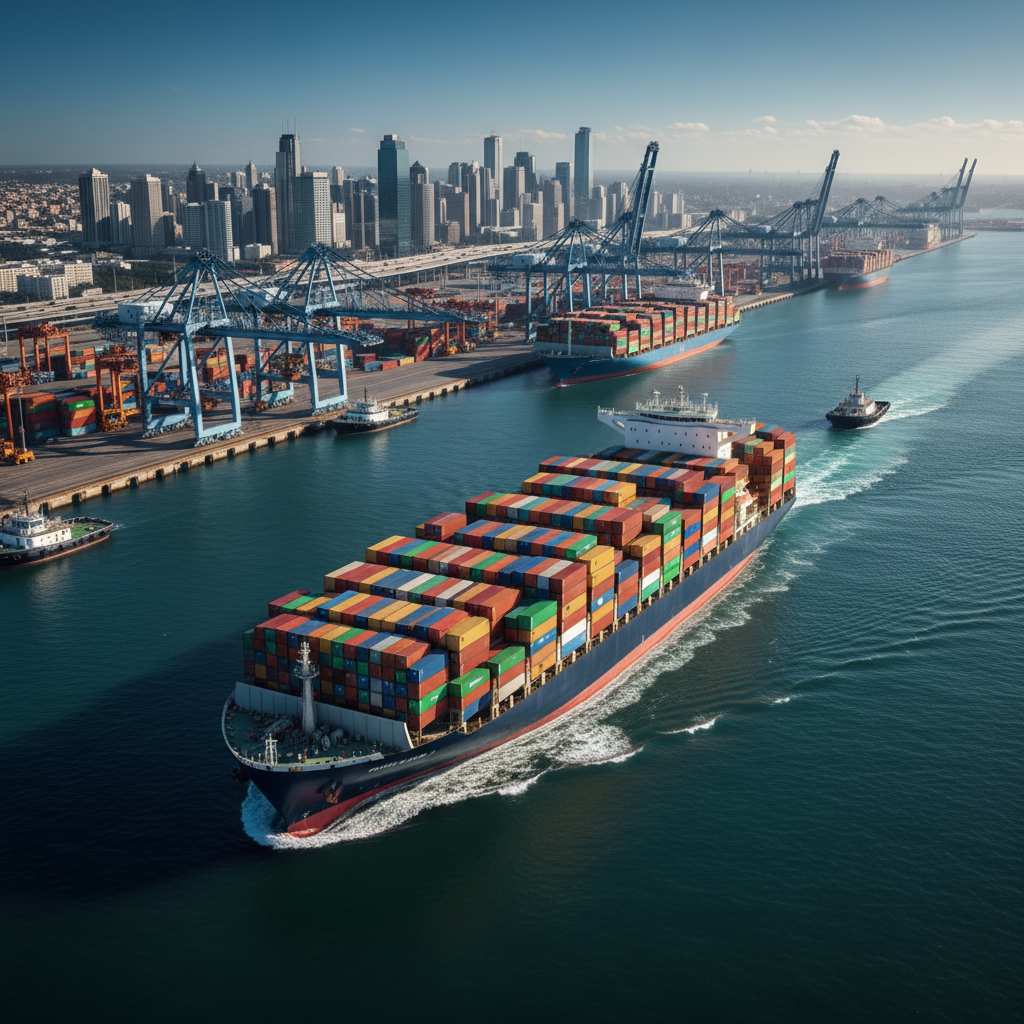
The global shipping landscape is in constant flux, with container lines regularly recalibrating their strategies to respond to market dynamics. Recent announcements from several major container carriers indicate significant adjustments to their services and pricing structures specifically targeting routes to the Americas. These changes, encompassing both rate increases on certain lanes and the introduction of additional port calls, signal a proactive shift in how these vital trade arteries are managed. For supply chain professionals, understanding the multifaceted implications of these developments is crucial for maintaining operational efficiency and financial stability.
How this impacts the global supply chain
The adjustments by global container lines, specifically the introduction of extra port calls and rate increases on routes to the Americas, will inevitably ripple through the global supply chain. Firstly, the addition of port calls, while potentially offering greater connectivity to specific regional markets within the Americas, inherently extends transit times. Each additional stop adds to the overall journey duration, impacting lead times for goods destined for these regions. This elongation of transit schedules can disrupt carefully planned inventory management strategies, potentially leading to stockouts or, conversely, an accumulation of safety stock, tying up capital.
Furthermore, these new routing configurations can alter established shipping patterns. Shippers might find their preferred direct services now include intermediate stops, or new options emerge that were previously unavailable. This necessitates a re-evaluation of optimal routing choices, considering the trade-off between speed, cost, and directness. Capacity utilization could also be affected; while extra calls might fill vessels more efficiently by tapping into smaller markets, they could also lead to congestion at newly added ports, further exacerbating delays. For supply chain operators, this means a heightened need for agility in route planning and a robust understanding of vessel schedules and port performance. The shift could also influence the distribution networks within the Americas, as cargo might be offloaded at different entry points, requiring adjustments to inland transportation and warehousing strategies. Ultimately, these changes demand a more dynamic approach to logistics, moving away from static planning to real-time adaptation.
Global financial impact
The financial implications of these carrier adjustments are substantial and multi-layered, affecting shippers, carriers, and the broader trade environment. For shippers, the most immediate and direct impact is the "lifting of prices on certain routes." This translates directly into higher freight costs, which will either erode profit margins if absorbed, or necessitate price adjustments for end consumers if passed on. For businesses operating on tight margins, even modest rate increases can significantly impact profitability and competitive positioning. The specific routes targeted by these price hikes will experience a concentrated financial burden, potentially making those trade lanes less attractive or requiring a strategic re-evaluation of sourcing and distribution locations.
Beyond direct freight costs, the introduction of extra port calls carries indirect financial consequences. While the primary intention might be service enhancement or capacity optimization, these additional stops can lead to increased operational costs for carriers due to longer voyages, higher fuel consumption, and potentially increased port charges. These costs are often, at least partially, passed on to shippers through surcharges or factored into base rates. Moreover, extended transit times due to extra calls can result in higher inventory carrying costs for shippers, as goods spend more time in transit rather than generating revenue. There's also the risk of demurrage and detention charges if delays at additional ports cause containers to sit longer than anticipated. For carriers, the strategy of raising prices and adjusting services is likely aimed at improving revenue and profitability in a competitive market, potentially offsetting rising operational expenses or capitalizing on perceived demand. However, the success of this strategy hinges on market acceptance and the ability to maintain service reliability despite the routing changes. Overall, these adjustments introduce a period of financial uncertainty and require meticulous cost analysis from all parties involved in trans-Americas trade.
How MGS can help navigate today's global trade environment
In an environment characterized by fluctuating rates and evolving service networks, a sophisticated shipment-visibility control tower like MGS becomes an indispensable tool for supply chain operators. When carriers "lift prices on certain routes," MGS provides the immediate transparency needed to track these cost changes across different bookings and lanes. Its ability to consolidate and display freight invoices and booking confirmations allows operators to quickly identify the financial impact of new rates, enabling proactive budget adjustments and negotiation strategies. Furthermore, by integrating with carrier data, MGS can highlight which specific routes are experiencing price increases, allowing businesses to compare alternative shipping options or re-evaluate their sourcing strategies to mitigate rising costs.
The "introduction of extra port calls on services to the Americas" presents a significant challenge for maintaining schedule integrity and managing lead times. MGS directly addresses this by offering real-time, end-to-end visibility into every leg of a shipment's journey. Operators can monitor vessel movements, track actual arrival and departure times at each port, including newly added ones, and receive automated alerts for any deviations from the planned schedule. This granular visibility allows for accurate prediction of estimated times of arrival (ETAs), which is critical for managing downstream logistics, such as warehouse staffing, inland transportation, and customer communication. By providing a single, unified view of all shipments, including those on altered routes, MGS empowers businesses to quickly identify potential delays caused by additional port calls, assess their impact on inventory levels, and implement contingency plans, thereby minimizing disruptions and safeguarding operational efficiency. This proactive management capability transforms uncertainty into actionable intelligence, enabling more resilient and responsive supply chain operations.
Demand–supply analysis & improvement
The carrier adjustments, specifically "lifting prices on certain routes" and "introducing extra port calls on services to the Americas," offer insights into underlying demand and supply dynamics. The decision to increase prices typically suggests that carriers perceive a strong enough demand on those specific routes to absorb higher costs, or that existing capacity is constrained relative to demand, allowing them to command a premium. Alternatively, it could be a strategic move to improve profitability in the face of rising operational expenses, such as fuel or labor. If demand were weak, carriers would be more inclined to lower prices or offer incentives, rather than raise them. Therefore, the price hikes imply a relatively robust demand environment for cargo moving to the Americas on the affected lanes.
The "introduction of extra port calls" can be interpreted in several ways regarding supply and demand. It might be a response to localized demand, where adding a stop allows carriers to better serve specific regional markets within the Americas that were previously underserved or required transshipment. This would indicate an attempt to optimize the supply network to meet nuanced demand patterns. Conversely, it could also be a strategy to optimize vessel utilization by filling empty slots with cargo from additional ports, thereby improving the efficiency of existing capacity. From an improvement perspective, shippers can leverage these insights by analyzing their own demand forecasts against these carrier signals. If certain routes are experiencing price increases, it might be an opportune time to explore alternative ports of entry within the Americas or consider different transport modes if feasible. For carriers, the success of these adjustments will depend on their ability to balance increased revenue from higher rates with the operational complexities and potential customer dissatisfaction arising from extended transit times due to extra calls. Continuous monitoring of market response will be key to refining these service offerings and ensuring they align with evolving customer needs and profitability goals.
Source: Global Trade Magazine — https://www.globaltrademag.com/container-carriers-adjust-rates-and-services-to-the-americas/