
CMA CGM Q3 26 Ocean Volumes Grow 5.5% to 6.5 Million TEU, Outperforming Rivals
CMA CGM's latest Q3 26 results reveal a significant 5.5% year-on-year increase in ocean shipping volumes, reaching 6.5 million TEU. This growth positions the French carrier as a market leader, contrasting sharply with volume declines reported by competitors like Hapag-Lloyd and Maersk. This analysis explores the implications for global supply chains, carrier strategies, and financial dynamics.
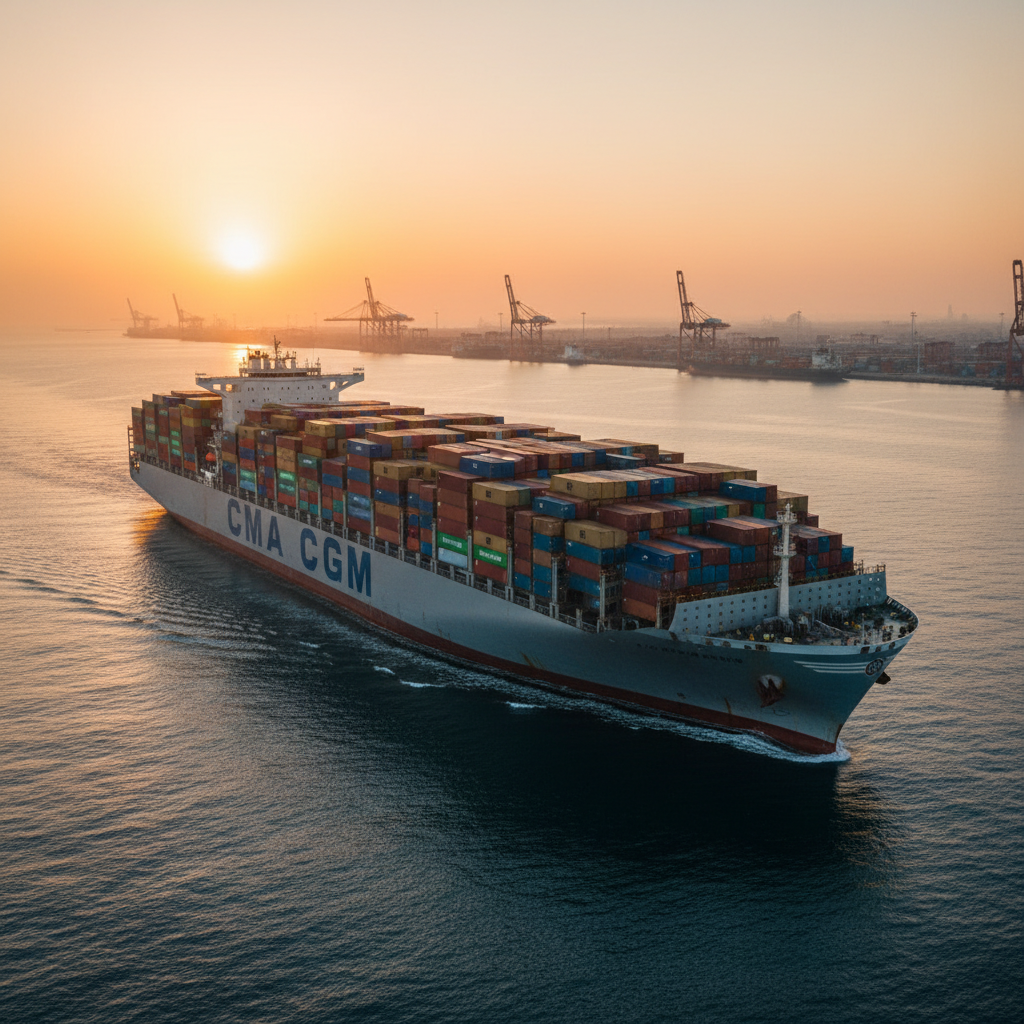
CMA CGM's Strategic Volume Expansion Amidst Carrier Contraction
CMA CGM's third-quarter 2026 performance in its ocean shipping division stands out, reporting a robust 5.5% year-on-year increase in carried volumes, reaching 6.5 million twenty-foot equivalent units (TEU). This growth trajectory is particularly noteworthy when viewed against the backdrop of its major European competitors. While CMA CGM expanded its volumes, both Hapag-Lloyd and Maersk, partners in the Gemini alliance, experienced volume declines of nearly -1% year-on-year during the same period. This divergence suggests a strategic advantage or effective market capture by CMA CGM, positioning it as the best-performing European box line for the quarter in terms of volume growth. The company's assertion of "outperforming the market" is substantiated by these comparative figures, even as its quarterly growth aligns with overall market expansion based on benchmark CTS data. This indicates that while the global container shipping market saw growth, CMA CGM successfully captured a disproportionate share of this expansion, or at least maintained its share more effectively than its peers.
This performance highlights a potential shift in market dynamics, where some carriers are more adept at navigating current trade conditions or are pursuing more aggressive commercial strategies. For shippers and forwarders, understanding these individual carrier performances is crucial. A carrier consistently growing its volumes in a competitive environment may offer more stable service frequencies or better capacity availability on key routes. Conversely, carriers experiencing volume contraction might be adjusting their networks, potentially leading to service rationalization or a greater focus on yield management over volume. The ability of CMA CGM to expand its footprint suggests a strong commercial approach, potentially leveraging its integrated logistics arm, Ceva, despite its described "mixed bag" performance, to offer comprehensive solutions that attract and retain cargo.
Operational Shifts and Capacity Utilization Across Global Networks
CMA CGM's significant volume increase to 6.5 million TEU has direct implications for global supply chain operations, particularly concerning vessel utilization and network design. For a carrier to absorb a 5.5% increase in volumes, it implies either a more efficient utilization of existing fleet capacity, the deployment of additional vessels, or a combination of both. Higher vessel utilization can lead to improved economies of scale for the carrier, potentially influencing pricing strategies and service reliability. For shippers, this could translate into more consistent sailing schedules and better access to space on CMA CGM vessels, especially on high-demand trade lanes. Forwarders, in turn, would need to factor this carrier's enhanced capacity and market presence into their procurement and routing decisions.
This divergence in volume performance among major carriers also suggests varying approaches to managing global capacity. While some carriers might be idling vessels or reducing service loops in response to softer demand or strategic adjustments, CMA CGM appears to be actively filling its ships. This could mean more direct port calls, optimized transit times, or a broader network reach for CMA CGM, making it a more attractive option for certain cargo flows. The overall impact on the global supply chain is a more concentrated flow of goods through specific carrier networks, potentially leading to increased competition for space on other carriers or a re-evaluation of preferred shipping partners by beneficial cargo owners (BCOs) and non-vessel operating common carriers (NVOCCs). The ability of one carrier to significantly grow volumes while others contract points to a dynamic environment where operational agility and strategic network planning are critical differentiators.
Financial Implications of Divergent Carrier Performance
The financial ramifications of CMA CGM's volume growth, contrasted with the declines of its peers, are substantial for both carriers and the broader trade ecosystem. For CMA CGM, a 5.5% increase in shipping volumes to 6.5 million TEU, even if aligned with overall market growth, suggests a robust revenue stream from its ocean activities. In an industry often characterized by volatile freight rates, maintaining or growing volumes is crucial for financial stability and profitability. This performance likely contributes positively to CMA CGM's overall financial health, providing capital for further investments in fleet modernization, decarbonization efforts, or expansion of its logistics services.
Conversely, carriers like Hapag-Lloyd and Maersk, experiencing nearly -1% volume declines, face revenue pressures. While they might be prioritizing yield over volume, a sustained reduction in cargo throughput can impact their financial results, potentially leading to cost-cutting measures, network adjustments, or a more cautious approach to capital expenditure. For shippers, this creates a nuanced financial landscape. A carrier with strong volume growth might be in a better position to offer competitive rates due to economies of scale, or conversely, might leverage its market strength to command premium pricing for reliable service. Carriers facing volume declines might become more aggressive on pricing to attract cargo, or they might focus on niche markets and specialized services to maintain profitability. The overall effect on global trade costs is complex, as the competitive dynamics between carriers with divergent performances can lead to varied pricing strategies across different trade lanes and service levels. Shippers must therefore engage in careful market analysis and negotiation to optimize their freight spend and service agreements.
Strategic Imperatives for Shippers and Forwarders
The observed divergence in carrier performance, with CMA CGM expanding its ocean volumes while key competitors contract, presents strategic imperatives for shippers and forwarders. For shippers, this scenario underscores the importance of diversifying carrier relationships and continuously evaluating service offerings. Relying too heavily on a single carrier, especially one experiencing volume declines, could expose supply chains to potential service disruptions or less favorable pricing. CMA CGM's demonstrated ability to capture market share suggests it might be a more reliable partner for securing capacity on certain routes, or it could be offering more attractive commercial terms. Shippers should assess whether this volume growth translates into tangible benefits such as improved schedule integrity, broader port coverage, or more competitive rates.
Forwarders, acting as intermediaries, must adapt their procurement strategies to leverage these shifting carrier dynamics. Understanding which carriers are gaining momentum and why—be it through aggressive pricing, superior service, or integrated logistics solutions—is critical for providing optimal solutions to their clients. This market behavior also signals a need for robust demand-supply analysis. If CMA CGM is growing in line with the overall market but outperforming competitors, it implies a redistribution of market share rather than a surge in overall demand that benefits all players equally. This concentration of volumes could lead to increased leverage for the growing carrier, potentially impacting future rate negotiations. Therefore, both shippers and forwarders need to maintain agile sourcing strategies, engage in proactive communication with multiple carriers, and continuously monitor market trends to mitigate risks and capitalize on emerging opportunities in a dynamic ocean freight market.
CMA CGM's Strategic Market Capture
Source: The Loadstar — https://theloadstar.com/cma-cgm-q3-26-update-out-ocean-outperforms-ceva-a-mixed-bag/