
Beyond the Model: Why AI's Supply Chain Transformation Demands a Robust Architectural Foundation
AI promises to revolutionize supply chains, but its true power remains untapped without a strong underlying architecture. This brief explores how authoritative context, governed tools, and seamless integration are critical for unlocking AI's potential in global trade.
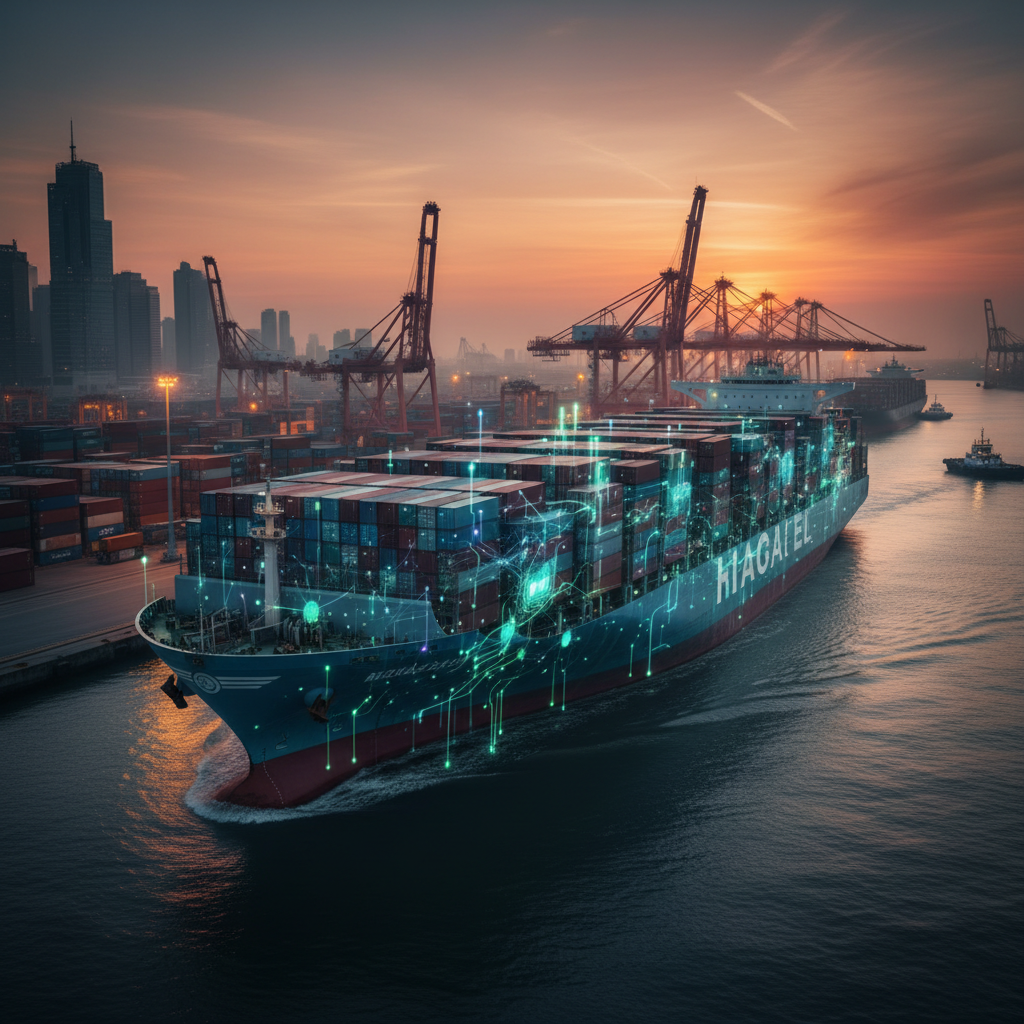
How this impacts the global supply chain
The promise of Artificial Intelligence (AI) to fundamentally reshape global supply chains is immense, yet its full impact remains largely unrealized. The core challenge, as highlighted, isn't the sophistication of the AI models themselves, but rather the foundational architecture upon which these models are built and operate. This architectural deficit profoundly affects every facet of global supply chain flows, routes, capacity, and operations.
Regarding flows and routes, AI could theoretically optimize complex global movements, dynamically rerouting shipments to avoid bottlenecks, weather events, or geopolitical disruptions. However, without "authoritative context"—a unified, reliable source of truth for data such as real-time vessel positions, port congestion levels, customs regulations, or carrier performance—AI models are left to make decisions based on incomplete or conflicting information. This leads to suboptimal route recommendations, increased transit times, and a higher risk of delays. For instance, an AI might suggest a faster route through a particular port, unaware of a sudden labor strike or a new import restriction, simply because that critical, authoritative context isn't seamlessly integrated into its operational framework. The lack of "connection to enterprise workflows" means even the most brilliant AI-generated route optimization might struggle to be implemented efficiently, requiring manual overrides or data re-entry into disparate systems.
In terms of capacity utilization, AI has the potential to match demand with available resources with unprecedented precision, optimizing load fill, warehouse space, and equipment deployment across vast networks. Yet, this potential is hampered when the AI lacks real-time, governed access to crucial operational data. If an AI model cannot reliably access up-to-the-minute inventory levels across multiple distribution centers, current truck availability from a diverse pool of carriers, or the precise dimensions of incoming cargo, its capacity planning recommendations will be flawed. The absence of "governed tools" and clear "permissions" can also create data silos or security concerns, preventing AI from accessing the breadth of data needed for holistic capacity optimization. This results in underutilized assets, increased empty miles, and missed opportunities to consolidate shipments, directly impacting operational efficiency and cost-effectiveness on a global scale.
Operations are perhaps the most directly affected. AI is envisioned to automate decision-making, streamline processes, and provide predictive insights. However, without a robust architectural backbone, AI becomes an isolated tool rather than an integrated intelligence layer. The lack of "observability" means that it's difficult to monitor AI's performance in real-world scenarios, understand why it made a particular decision, or quickly identify and rectify errors. This can erode trust in AI-driven automation. Furthermore, if AI insights are not seamlessly integrated into "enterprise workflows," operators might receive valuable predictions (e.g., a potential delay for a critical component) but lack the automated mechanisms or integrated tools to act on them immediately. This forces manual intervention, delaying responses and negating the speed advantage AI should provide. In a global supply chain characterized by complexity, multiple stakeholders, and diverse data formats, these architectural gaps translate into persistent inefficiencies, increased operational risk, and a slower, less agile response to disruptions.
Global financial impact
The architectural shortcomings preventing AI's full integration into supply chain operations carry significant financial and cost implications for all participants in global trade. The inability to fully leverage AI's capabilities translates directly into tangible economic losses and missed opportunities for efficiency gains.
For shippers, the financial impact is multifaceted. Without AI operating on a robust architectural foundation, shippers face higher operational costs stemming from inefficient planning and execution. This includes increased inventory holding costs due to less accurate demand forecasting and inventory optimization, higher transportation expenses from suboptimal routing and capacity utilization, and greater demurrage or detention charges from unexpected delays. The lack of real-time, authoritative context means AI cannot reliably predict disruptions, leading to missed delivery windows, stockouts, and ultimately, lost sales and damaged customer relationships. Investing in AI models without adequately addressing the underlying architecture can result in a poor return on investment, as the tools fail to deliver their promised efficiencies and cost savings. The cost of manual intervention to compensate for AI's architectural limitations also adds to the financial burden.
Carriers also bear a substantial financial brunt. Their primary assets – vessels, aircraft, trucks, and railcars – are expensive to operate. Without AI-driven insights powered by comprehensive, integrated data, carriers struggle to optimize asset utilization. This can lead to increased empty backhauls, suboptimal load factors, and inefficient scheduling, all of which drive up per-unit transport costs. The inability to dynamically adjust pricing or allocate capacity based on real-time market conditions and operational constraints, due to a lack of "authoritative context" and "connection to enterprise workflows," can result in lost revenue opportunities. Furthermore, the administrative overhead associated with managing disparate data sources and manually integrating AI-generated recommendations into legacy systems adds to their operational expenses. The promise of AI to enhance network efficiency and profitability remains distant without the necessary architectural upgrades.
For trade at large, the broader financial implications are substantial. The collective inefficiencies across the supply chain, exacerbated by AI's underperformance, contribute to higher overall logistics costs, which are ultimately passed down to consumers. This can stifle economic growth by making goods more expensive and less accessible. The inability to build truly resilient, AI-powered supply chains means global trade remains more vulnerable to disruptions, whether from natural disasters, geopolitical events, or economic shocks. Each major disruption incurs massive financial losses, from lost production and sales to increased insurance premiums and recovery costs. The delay in achieving the transformative efficiency gains promised by AI due to architectural limitations represents a significant drag on global economic productivity and competitiveness. The financial advantage that could be gained from a truly intelligent, interconnected global trade ecosystem is currently being left on the table, impacting everything from manufacturing costs to consumer prices.
How MGS can help navigate today's global trade environment
In an environment where AI's transformative potential is bottlenecked by architectural deficiencies, a robust shipment-visibility control tower like MGS becomes an indispensable tool for navigating the complexities of global trade. MGS inherently addresses many of the critical architectural components identified as essential for unlocking AI's true value, providing the foundational layer necessary for intelligent decision-making and operational resilience.
Firstly, MGS directly contributes to establishing authoritative context. By aggregating and normalizing data from a multitude of disparate sources—including carriers, ports, customs agencies, IoT sensors on shipments, and enterprise systems—MGS creates a single, unified source of truth for all shipment-related information. This means that instead of AI models sifting through fragmented, potentially conflicting data, they receive a clean, validated, and comprehensive dataset. This authoritative context is crucial for AI to make accurate predictions about arrival times, identify potential disruptions, and recommend optimal actions, ensuring that decisions are based on the most reliable information available.
Secondly, MGS facilitates the connection to enterprise workflows. A control tower isn't just a monitoring tool; it's an integration hub. MGS is designed to integrate seamlessly with existing enterprise resource planning (ERP), transportation management (TMS), and warehouse management (WMS) systems. This integration ensures that AI-driven insights, such as predicted delays, risk alerts, or optimized routing suggestions, are not isolated pieces of information but are immediately actionable within the operator's established operational processes. This eliminates manual data transfer, reduces response times, and allows for the automated execution of AI-recommended actions, bridging the gap between AI intelligence and operational reality.
Thirdly, MGS provides comprehensive observability. A core function of a control tower is to offer end-to-end visibility into every shipment's journey. This continuous monitoring and real-time alerting capability provides the "observability" critical for AI. Operators can see exactly where shipments are, identify deviations from planned routes or schedules, and understand the impact of various events. This level of transparency is vital for validating AI model performance, fine-tuning algorithms, and ensuring that AI is indeed improving outcomes. It allows human operators to trust and verify AI's outputs, fostering a collaborative environment where AI assists rather than operates in a black box.
Finally, MGS inherently supports governed tools and permissions. As a centralized platform, MGS provides robust data governance frameworks, ensuring data quality, security, and compliance. Role-based access controls and audit trails ensure that data access is managed, and that any AI tools or integrations operating within the MGS ecosystem adhere to defined security and operational policies. This foundational governance ensures that AI initiatives are not only effective but also secure and compliant, mitigating risks associated with data privacy and operational integrity. By providing this robust architectural backbone, MGS empowers AI to move beyond theoretical models to become a practical, reliable, and transformative force in navigating today's complex and volatile global trade environment.
ROI-focused resilience
Building resilience in global supply chains is no longer merely about mitigating risk; it's about making strategic investments that yield measurable returns. The source material implicitly frames the development of a robust architectural foundation for AI as a critical investment in achieving "sustainable advantage." This perspective allows us to analyze resilience actions in terms of their Return on Investment (ROI).
The primary ROI of investing in the architectural components – authoritative context, governed tools, permissions, observability, and connection to enterprise workflows – is the realization of AI's promised value and the avoidance of significant opportunity costs. Without this foundation, the substantial investments made in AI models themselves will largely fail to deliver their potential. The ROI, therefore, is not just about preventing losses, but about enabling gains.
Consider the quantified risk of inefficient AI deployment. If an organization invests millions in AI prediction models for demand forecasting or route optimization, but these models operate on fragmented, unreliable data (lacking authoritative context) or cannot seamlessly integrate their insights into operational systems (lacking connection to enterprise workflows), the ROI of that AI investment approaches zero. The cost of this failure is not just the sunk cost of the AI software, but the ongoing losses from suboptimal operations: higher inventory costs, increased transportation expenses, missed sales, and customer dissatisfaction. Investing in the architecture protects against this risk, ensuring that every dollar spent on AI models translates into actionable, value-generating intelligence.
Furthermore, this architectural investment builds resilience against unforeseen disruptions. A supply chain with a strong architectural backbone, characterized by comprehensive observability and authoritative context, enables AI to rapidly detect anomalies, predict potential disruptions (e.g., port closures, extreme weather, geopolitical shifts), and recommend proactive mitigation strategies. The ROI here is the avoided cost of disruption. While difficult to quantify precisely in advance, the cost of a single major supply chain disruption can run into millions or even billions for large enterprises, encompassing lost revenue, expedited shipping fees, brand damage, and regulatory fines. By enabling AI to function effectively in providing early warnings and adaptive responses, the architectural investment directly reduces the frequency and severity of these costly events.
Finally, investing in robust architecture provides future-proofing and agility. The supply chain landscape is constantly evolving, with new technologies and challenges emerging regularly. An adaptable, well-governed architectural foundation allows for easier integration of new AI models, data sources, and operational tools. The ROI is the agility to adapt and innovate without costly overhauls. Instead of having to rebuild entire systems every time a new AI solution or data requirement emerges, a strong architecture allows for modular upgrades, extending the lifespan and utility of existing investments. This protects against technological obsolescence and ensures that the supply chain can continuously evolve, maintaining a competitive edge and sustained operational resilience in the face of dynamic global trade conditions.
Source: Logistics Viewpoints — https://logisticsviewpoints.com/2026/10/05/ai-will-not-transform-the-supply-chain-until-the-architecture-around-it-catches-up/