
Beyond Seeing: Why Supply Chain Resilience Demands Executable Alternatives
True supply chain resilience isn't just about knowing a disruption exists; it's about having the pre-planned, actionable alternatives and the authority to deploy them. This insight explores how this distinction impacts global trade, finances, and how advanced visibility platforms empower decisive action.
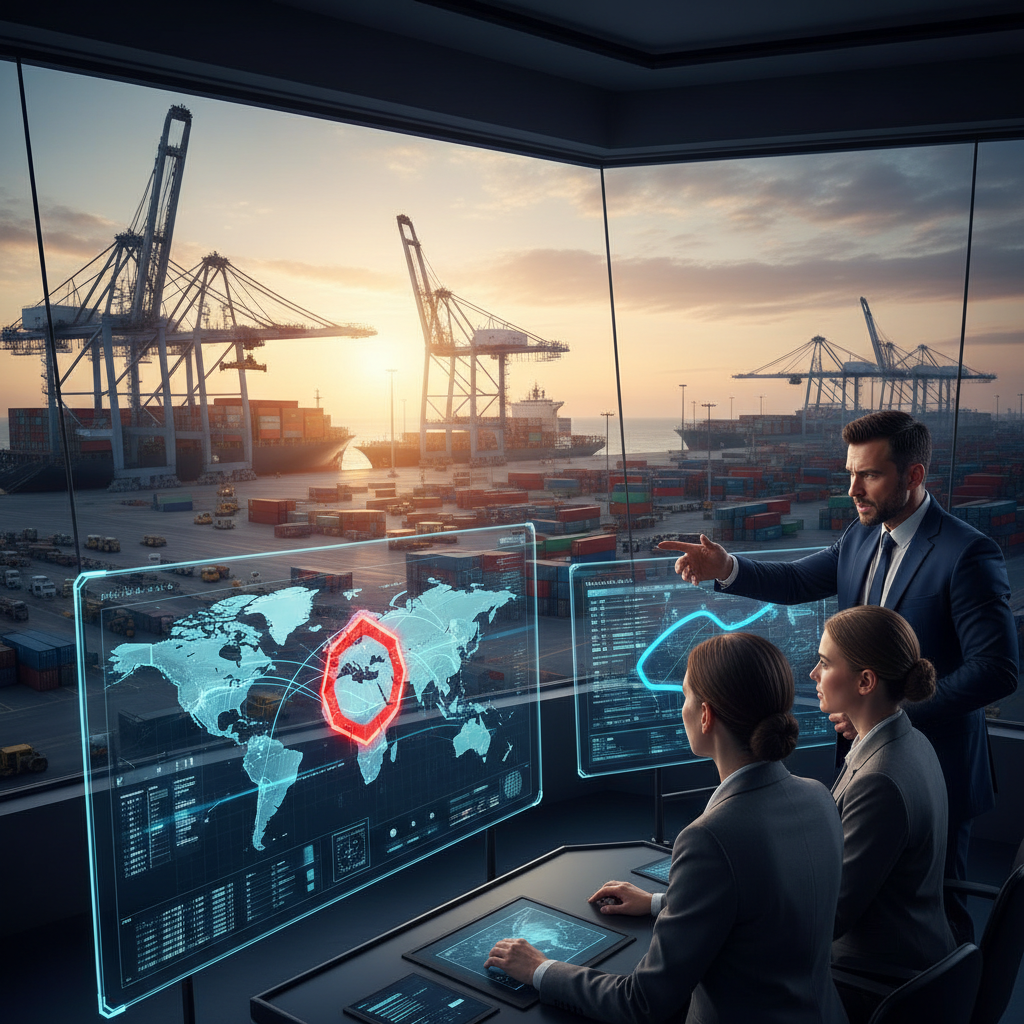
The modern global supply chain operates in a state of perpetual flux, where disruptions, from geopolitical events to natural disasters, are not anomalies but rather expected challenges. While the industry has increasingly embraced the power of real-time visibility, a critical distinction is emerging: merely seeing a disruption is not the same as being resilient to it. True resilience, as recent analysis highlights, hinges on the capacity to execute pre-defined alternatives and possess the necessary decision rights to activate them.
This insight delves into the profound implications of this distinction, examining its effects on global trade mechanics, financial landscapes, and the pivotal role of advanced shipment visibility platforms in transforming awareness into actionable response.
How this impacts the global supply chain
The ability to execute alternatives directly influences the fluidity and stability of global supply chain flows, routes, capacity, and overall operations. When a disruption occurs, such as a major port closure, a sudden shift in trade policies, or an unforeseen weather event, a supply chain with only visibility will identify the problem but remain paralyzed. Shipments halt, goods accumulate, and lead times extend indefinitely, creating a cascading effect across upstream and downstream partners.
Conversely, a resilient supply chain, armed with pre-vetted alternatives and the authority to deploy them, can swiftly reroute cargo, switch transportation modes, or activate backup suppliers. This proactive capability minimizes the impact on critical flows, ensuring that goods continue to move, albeit potentially through different channels. For instance, a vessel facing congestion at its primary destination can be diverted to an alternate port with pre-arranged onward logistics, maintaining the integrity of the supply schedule. This flexibility directly impacts routes, transforming potential dead ends into adaptable pathways. It also optimizes capacity utilization; instead of assets sitting idle or overloaded, they can be strategically redeployed to maintain operational tempo. Ultimately, this paradigm shift moves operations from reactive crisis management to proactive, adaptive navigation, fundamentally altering how global trade responds to and recovers from unforeseen events.
Global financial impact
The financial implications of distinguishing between visibility and executable resilience are substantial for all stakeholders in global trade. For shippers, the absence of executable alternatives, despite having perfect visibility, can lead to exorbitant costs. These include demurrage charges for delayed containers, expedited shipping fees to compensate for lost time, increased inventory holding costs for goods stuck in transit, and, most critically, lost sales and potential damage to brand reputation due to unmet customer commitments. Knowing a vessel is delayed by two weeks but having no option to reroute or expedite is a costly form of passive knowledge. Resilient shippers, however, can mitigate these losses by activating alternatives, potentially incurring a planned, higher cost for a backup route or supplier, but avoiding the far greater financial penalties of complete disruption.
Carriers also face significant financial exposure. Disrupted schedules lead to idle assets, missed deadlines, and contractual penalties. A lack of operational flexibility can result in empty backhauls or costly repositioning of equipment. With resilience, carriers can optimize asset utilization by dynamically rerouting vessels or aircraft, reallocating truck fleets, and maintaining service levels, potentially even commanding premium rates for their adaptable services. For global trade at large, the cumulative effect of resilient supply chains is a more stable economic environment. Without resilience, disruptions lead to volatile pricing, reduced trade volumes, extended lead times, and inflationary pressures. With it, the global economy gains a buffer against shocks, promoting more predictable supply, stable pricing, and sustained economic activity, ultimately fostering greater confidence among investors and consumers.
How MGS can help navigate today's global trade environment
In an environment where resilience is defined by the ability to execute alternatives, a shipment-visibility control tower like MGS becomes an indispensable asset. While MGS doesn't inherently create the alternatives or the decision rights, it provides the foundational intelligence that makes their timely and effective execution possible. The core insight is that visibility tells an enterprise that a disruption exists. MGS excels at this, offering real-time, granular tracking of shipments across all modes and geographies.
When a disruption occurs – be it a port strike, a customs delay, or a carrier breakdown – MGS immediately flags the affected shipments, pinpointing their exact location and status. This critical information allows operators to quickly assess the scope and impact of the event. Without MGS, identifying which specific shipments are at risk, or even recognizing a nascent disruption, could take days, by which point the window for effective intervention may have closed. By providing this immediate and accurate picture, MGS empowers supply chain professionals to move beyond mere awareness. It enables them to trigger their pre-defined alternatives with precision. For example, if MGS alerts an operator to a significant delay at a specific transshipment hub, they can instantly identify all affected cargo and activate a pre-negotiated rerouting plan or divert to an alternative port, leveraging their established decision rights. MGS transforms raw data into actionable intelligence, making the difference between knowing a problem exists and being able to decisively act upon it.
Demand–supply analysis & improvement
The distinction between visibility and executable resilience profoundly influences demand-supply dynamics. When a supply chain is solely reliant on visibility without the means to execute alternatives, any significant disruption to supply routes or production facilities can lead to immediate and severe supply shortages. This imbalance can cause price surges, stockouts, and ultimately, a failure to meet market demand, eroding customer loyalty and market share. The inability to pivot means that even if demand remains constant or increases, the supply side is crippled, creating a significant gap.
Conversely, a supply chain equipped with executable alternatives can mitigate these imbalances. By quickly rerouting shipments, sourcing from alternative suppliers, or leveraging buffer stock strategically, businesses can maintain a more consistent flow of goods to meet demand. This proactive approach helps stabilize supply, preventing the drastic fluctuations that often follow disruptions. Concrete improvement levers derived from this understanding include investing in multi-sourcing strategies, establishing flexible logistics contracts that allow for dynamic rerouting, and developing robust scenario planning capabilities. Empowering operational teams with clear decision rights ensures that these alternatives can be activated without bureaucratic delays, directly improving the responsiveness of supply to market demand, even under duress.
ROI-focused resilience
Framing resilience in terms of return on investment (ROI) becomes critical when recognizing that visibility alone does not equate to action. Investing in resilience – whether through diversified supplier networks, flexible transportation agreements, or advanced operational capabilities – carries an upfront cost. However, the true value of this investment is realized in the face of disruption, where it acts as an insurance policy against potentially catastrophic losses. The quantified risk here is the cost of inaction or the inability to execute alternatives when a disruption strikes. This includes direct financial losses from lost sales, contractual penalties, emergency expediting fees, inventory write-offs, and indirect costs such as reputational damage and erosion of market share.
Consider a scenario where a critical component supplier faces an unexpected shutdown. A company with only visibility would know about the shutdown but be unable to secure alternative supply, leading to production halts and significant revenue loss. A resilient company, having invested in a secondary qualified supplier and established the decision rights to switch, can activate this alternative, incurring a potentially higher unit cost but avoiding the much larger financial impact of a complete production stoppage. The ROI is the difference between the cost of the resilience measure and the much greater cost of the avoided disruption. It's about proactively spending a calculated amount to prevent a far larger, unpredictable loss. The emphasis on 'decision rights' further enhances this ROI, ensuring that the investments made in building alternatives are not wasted due to organizational inertia or lack of empowerment, thereby maximizing the protective value of resilience.
Source: Logistics Viewpoints — https://logisticsviewpoints.com/2026/10/16/supply-chain-resilience-is-not-visibility-it-is-the-ability-to-execute-alternatives/