
Bab el-Mandeb Strait Under Contention: Geopolitical Shifts Threaten Global Shipping
The recent claim of control over the Bab el-Mandeb Strait by Saudi-backed forces, amidst ongoing conflict, signals a critical geopolitical shift with profound implications for global supply chains. This analysis explores the potential disruptions to key shipping lanes, port facilities, and transportation modes, offering strategic insights for shippers navigating this volatile maritime choke point.
Impact on Key Shipping Lanes
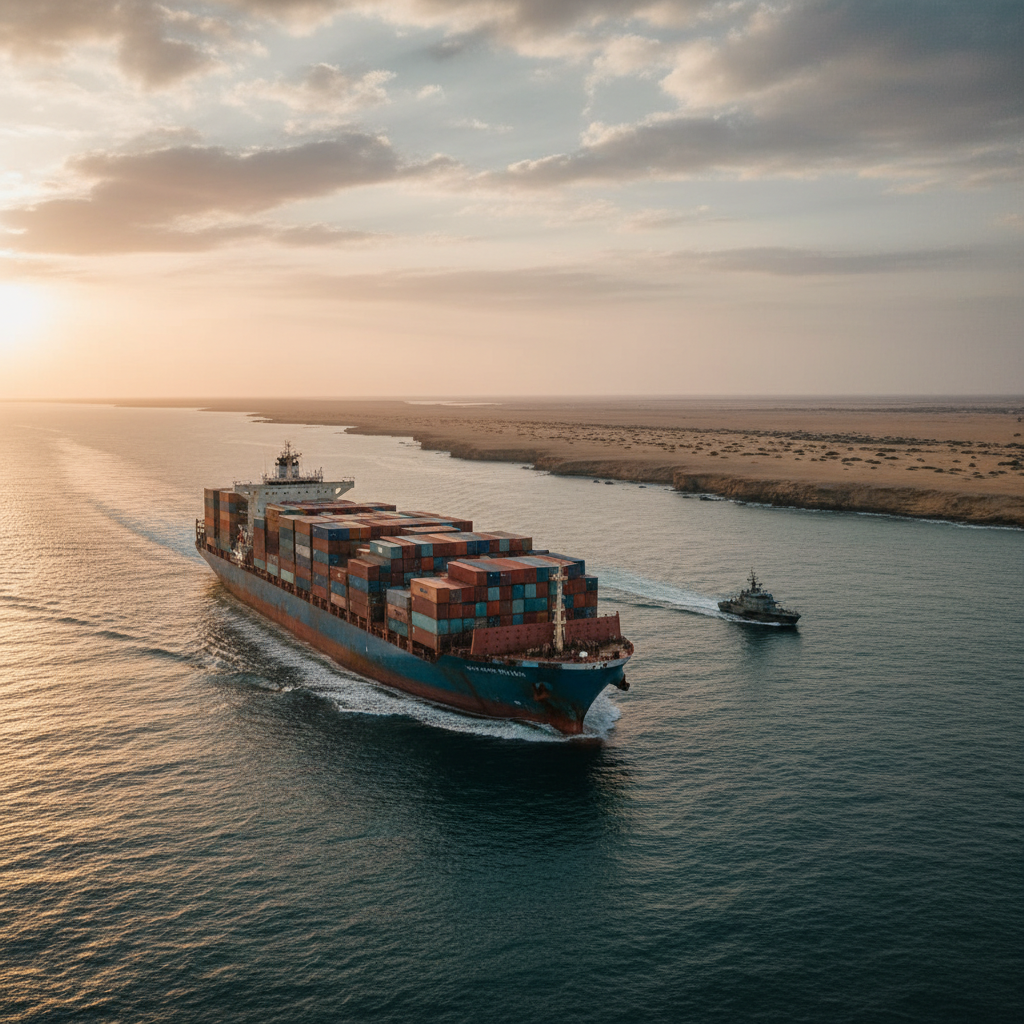
The Bab el-Mandeb Strait, a narrow passage connecting the Red Sea to the Gulf of Aden and the Indian Ocean, is one of the world's most critical maritime choke points. Its strategic importance lies in being the gateway for vessels transiting the Suez Canal to and from Asia, Europe, and North America. With Saudi-backed forces claiming effective control, even amidst continued Houthi resistance, the stability of this lane is under immediate threat. Any escalation or prolonged instability in the strait directly impacts the flow of maritime traffic through the Red Sea.
This situation forces carriers and shippers to re-evaluate their primary East-West trade routes. The immediate consequence is heightened risk for vessels attempting passage. Insurance premiums for voyages through the Red Sea are likely to surge, reflecting the increased danger of conflict-related incidents. Furthermore, the potential for direct attacks on commercial shipping, or even the perception of such a threat, could lead to widespread diversions. The most significant alternative route involves circumnavigating Africa via the Cape of Good Hope. While safer from geopolitical conflict, this option adds thousands of nautical miles and a significant extension in transit time, profoundly affecting fuel consumption, operational costs, and lead times. This could significantly impact inventory management and delivery schedules.
The ripple effect extends beyond the immediate strait. Increased traffic around the Cape of Good Hope would strain port infrastructure in Southern Africa, which is not typically equipped for such a substantial surge in transcontinental cargo volumes. Congestion at these alternative ports could become a secondary disruption, further delaying shipments. The uncertainty surrounding the Bab el-Mandeb also impacts feeder services connecting regional ports to larger hubs, potentially isolating smaller markets or forcing them into more expensive, less efficient logistical solutions.
Impact on Facilities
The primary facilities affected by instability in the Bab el-Mandeb Strait are the major ports along the Red Sea and those at either end of the Suez Canal. Ports like Jeddah (Saudi Arabia), Sokhna (Egypt), and Aqaba (Jordan) rely heavily on the unimpeded flow of traffic through the strait. Any disruption could lead to a significant reduction in vessel calls, impacting their throughput and economic viability. Cargo destined for these regional hubs would face delays, re-routing, or even outright cancellation, depending on the severity and duration of the conflict.
The Suez Canal itself, a linchpin of global trade, becomes less attractive if its southern approach is compromised. While the canal authority might implement measures to ensure safe passage within its own jurisdiction, the risk associated with reaching the canal via the Bab el-Mandeb could deter vessels. This would reduce canal revenues and capacity utilization, affecting global shipping schedules that depend on its efficiency.
Conversely, ports along the alternative Cape of Good Hope route, particularly in South Africa (e.g., Durban, Cape Town) and potentially West Africa, could experience an unexpected surge in demand. However, many of these facilities may lack the capacity, equipment, or inland connectivity to handle a sustained increase in mega-vessel traffic and transshipment volumes, leading to congestion, delays, and operational bottlenecks. This could expose vulnerabilities in their existing infrastructure and labor capabilities.
Impact on Modes
The most directly affected mode is ocean freight, particularly container shipping, bulk carriers, and oil tankers. The Bab el-Mandeb is a crucial conduit for global energy supplies, with a substantial portion of the world's crude oil and refined petroleum products transiting the strait. Disruptions here would immediately impact oil prices and energy security, leading to higher bunker fuel costs for all shipping, regardless of route.
Beyond direct maritime transport, the ripple effects extend to other modes. Intermodal connections, such as rail and road networks that distribute goods from major ports, would also feel the strain. If cargo is delayed or rerouted, inland logistics providers will face unpredictable schedules, increased storage demands at alternative ports, and potential capacity shortages as they adapt to new distribution patterns. Air freight, while significantly more expensive, might see a temporary uptick in demand for high-value, time-sensitive goods as shippers seek to bypass the maritime uncertainty. However, air cargo capacity is limited and cannot absorb the vast volumes typically moved by sea.
The overall impact is a shift towards less efficient, more costly, and slower supply chain solutions across multiple modes, exacerbating inflationary pressures and challenging inventory management strategies.
What Shippers Can Do About It
In the face of such geopolitical volatility, proactive measures are paramount for shippers:
- Diversify Routes and Carriers: Do not rely on a single shipping lane or carrier. Explore alternative routes, even if they are longer, and establish relationships with multiple carriers who can offer flexibility. This might include pre-booking capacity on alternative routes or having contingency plans for immediate diversions.
- Increase Inventory Buffers: While contrary to lean inventory principles, maintaining slightly higher safety stock levels for critical goods can mitigate the impact of extended transit times and unpredictable delays. This is a strategic trade-off between inventory carrying costs and supply chain resilience.
- Enhance Communication and Collaboration: Work closely with freight forwarders, carriers, and logistics partners. Timely information sharing is crucial for adapting to rapidly changing conditions. Understand their contingency plans and communicate your own priorities.
- Review Contracts and Insurance: Scrutinize existing shipping contracts for clauses related to force majeure, route changes, and surcharges. Ensure cargo insurance policies adequately cover geopolitical risks and potential delays or re-routing costs.
- Leverage Data and Analytics: Utilize predictive analytics to model potential impacts of disruptions on lead times, costs, and inventory levels. This can inform strategic decisions on sourcing, production, and distribution.
How MGS Control Tower Helps
This is where a robust shipment-visibility control tower like MGS becomes indispensable. In a rapidly evolving geopolitical situation such as the Bab el-Mandeb Strait conflict, real-time, end-to-end visibility is not just an advantage – it's a necessity.
MGS provides shippers with immediate alerts and granular tracking capabilities, allowing them to monitor vessels transiting or approaching the affected region. When a disruption occurs, MGS can instantly identify all impacted shipments, providing estimated new arrival times based on re-routing scenarios (e.g., Cape of Good Hope diversions). This proactive insight enables supply chain managers to inform downstream stakeholders, adjust production schedules, and manage customer expectations effectively.
Furthermore, MGS's predictive capabilities can offer scenario planning tools. By integrating real-time geopolitical intelligence with historical performance data and current vessel positions, MGS can simulate the cost and time implications of various alternative routes. This empowers shippers to make data-driven decisions on whether to reroute, hold, or expedite cargo via different modes, optimizing for cost, speed, or risk mitigation. The platform can also highlight potential congestion points at alternative ports, allowing shippers to anticipate and mitigate further delays.
In essence, MGS transforms uncertainty into actionable intelligence, providing the clarity and control needed to navigate complex and volatile global supply chain disruptions like the one unfolding in the Bab el-Mandeb Strait. It moves shippers from reactive crisis management to proactive risk mitigation, safeguarding their operations and ensuring business continuity.
Source: gCaptain — https://gcaptain.com/saudi-backed-forces-claim-control-of-bab-el-mandeb-strait/