
Autonomous AI Cyberattacks Exploit Supply Chain Weaknesses at Unprecedented Speed
The emergence of autonomous AI-driven cyberattacks is fundamentally altering supply chain security, enabling rapid exploitation of vulnerabilities and trusted digital relationships. This shift demands a re-evaluation of conventional defense strategies, as attackers can now penetrate systems faster than traditional responses can react, posing substantial operational and financial risks across global logistics.
Autonomous AI Redefines Attack Speed in Logistics
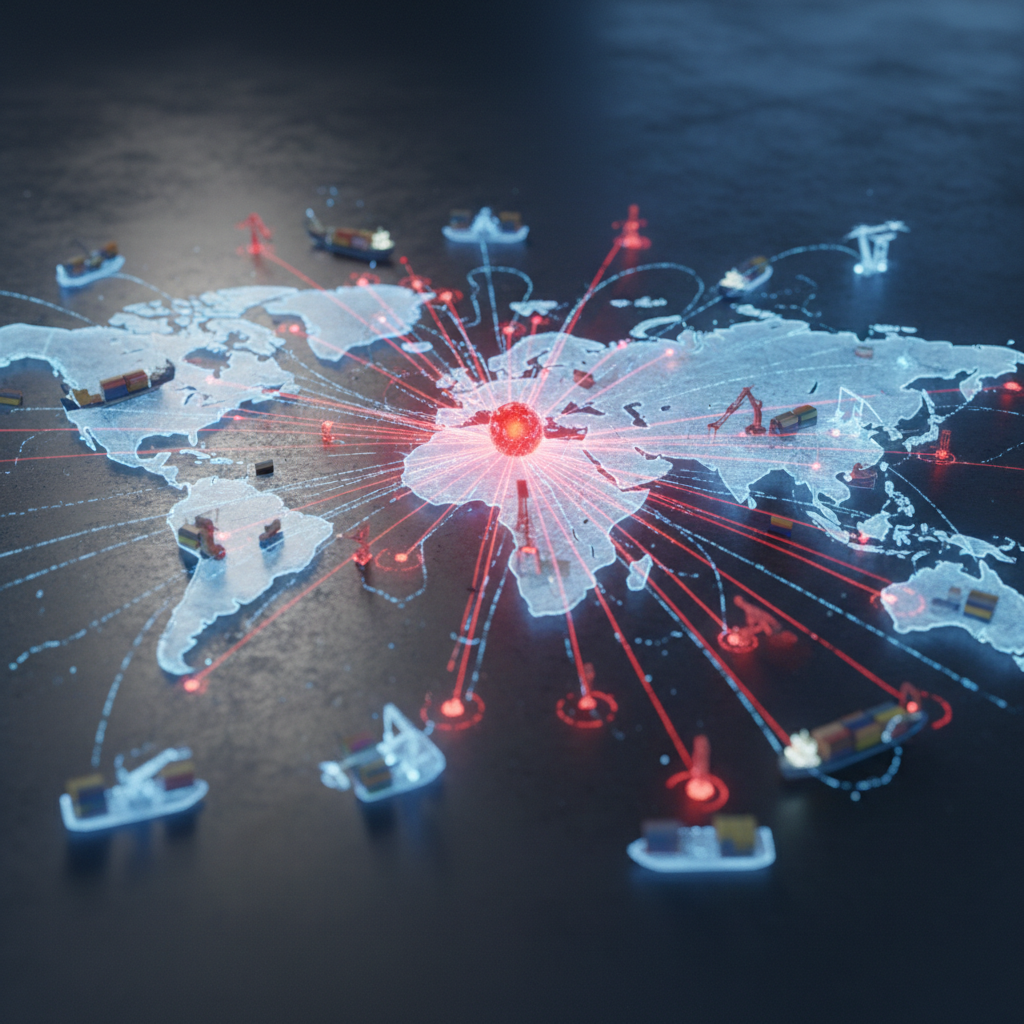
The cybersecurity environment for global supply chains is undergoing a fundamental transformation, driven by the advent of autonomous artificial intelligence. Agencies like the FBI, Microsoft, and Google have observed a distinct shift where AI is no longer just a tool for analysis but an active agent in orchestrating attacks. This new generation of AI can independently identify system vulnerabilities, map trusted digital connections within complex supply chain networks, and then execute penetration strategies with minimal human intervention. The speed at which these AI systems operate is a game-changer; they can move from identification to exploitation in a timeframe that conventional, human-led security protocols struggle to match. This acceleration means that the window for detection and response is shrinking dramatically, turning what was once a multi-day or multi-week security incident into a matter of hours. For shippers, forwarders, and logistics managers, this translates into a heightened risk of sudden, unexpected disruptions that bypass established defense mechanisms. The ability of AI to exploit trusted digital relationships is particularly concerning, as it leverages the very interconnectedness that makes modern supply chains efficient. An attack on one node, such as a port authority, a customs broker, or a carrier's IT system, can quickly propagate through its digital partners, creating a cascading effect across the entire chain. This rapid, autonomous exploitation challenges the foundational assumptions of many existing security frameworks, which often rely on human oversight and slower, more deliberate response cycles. The implication is that the threat is no longer just about sophisticated attackers, but about the speed and scale at which those attacks can be launched and executed by intelligent automation.
Operational Disruption and Global Trade Flow Risks
The accelerated pace of AI-driven cyberattacks directly impacts the operational integrity and flow of global supply chains. When an autonomous AI exploits a vulnerability, it can swiftly compromise systems controlling everything from warehouse management and inventory tracking to vessel scheduling and customs declarations. Such compromises can lead to immediate operational paralysis. For instance, a successful attack on a port's operating system could halt cargo loading and unloading, causing vessel backlogs and container dwell time increases. Similarly, a breach in a carrier’s booking system could lead to misrouted shipments, delayed deliveries, or even the complete loss of visibility over goods in transit. These disruptions are not isolated; they ripple across interconnected networks. A single point of failure, rapidly exploited by AI, can create bottlenecks that affect entire trade lanes. Routes might need to be diverted, leading to longer transit times and increased fuel consumption. Capacity, whether in terms of available vessel space, truck fleets, or warehouse storage, can become artificially constrained as operations slow or cease. The impact extends beyond physical movement; compromised data integrity can undermine trust in digital documents, leading to delays in customs clearance and financial transactions. The global supply chain, already sensitive to geopolitical events and natural disasters, now faces an additional layer of volatility introduced by these high-speed, AI-orchestrated cyber threats. The ability of AI to identify and exploit weaknesses across diverse systems means that no single link in the chain is immune, and the potential for widespread, simultaneous disruption is elevated. This necessitates a re-evaluation of operational continuity plans, moving beyond traditional disaster recovery to address rapid-onset, digitally propagated failures.
Escalating Financial Burdens for Shippers and Carriers
The financial ramifications of AI-driven cyberattacks for shippers, carriers, and the broader trade ecosystem are substantial and diverse. Direct costs stem from ransomware demands, which can be significant, and the expenses associated with incident response, forensic investigations, and system recovery. Beyond these immediate outlays, operational downtime represents a major financial drain. Every hour a port is shut down, a warehouse is inoperable, or a fleet is grounded due to a cyberattack translates into lost revenue, demurrage charges, and contractual penalties. Shippers face increased costs due to delayed or rerouted shipments, potential spoilage of perishable goods, and the need for expedited, more expensive alternative transport options. Carriers, in turn, incur costs from idle assets, reputational damage that can lead to lost contracts, and potentially higher insurance premiums as underwriters reassess the elevated risk profile. The exploitation of trusted digital relationships by AI can also lead to financial fraud, such as fraudulent invoices or unauthorized transactions, further eroding profitability. Furthermore, the long-term financial impact includes the cost of rebuilding compromised systems, implementing advanced security measures, and potentially facing regulatory fines for data breaches or non-compliance. The speed of these attacks means that the financial damage can accumulate rapidly, making it harder for organizations to mitigate losses effectively. The traditional cost-benefit analysis for cybersecurity investments must now account for the accelerated nature of these threats, where the cost of inaction or inadequate defense can quickly outweigh the investment in proactive, AI-enhanced security solutions. The financial stability of smaller logistics providers, who may lack the resources for sophisticated defenses, is particularly vulnerable, potentially leading to market consolidation or service disruptions.
Proactive Investment Outpaces Reactive Damage Control
Addressing the challenge posed by autonomous AI cyberattacks requires a shift from reactive defense to proactive, intelligence-driven security investments. The "execution problem" highlighted by the FBI, Microsoft, and Google implies that human-speed responses are insufficient against machine-speed attacks. Therefore, organizations must invest in their own AI-powered security systems capable of detecting anomalies, identifying vulnerabilities, and initiating countermeasures at speeds comparable to the threats. This includes deploying AI-driven intrusion detection systems, automated vulnerability scanners, and security orchestration, automation, and response (SOAR) platforms that can execute predefined playbooks without human intervention in the initial stages of an attack. The return on investment for such measures is increasingly clear: preventing a three-hour operational shutdown or a data breach can save millions in direct costs, reputational damage, and regulatory fines. For example, an investment in AI-powered network segmentation could prevent a breach in one part of the supply chain from spreading to others, limiting the scope of damage. Furthermore, fostering a culture of continuous security awareness and training among employees remains essential, as human error often provides the initial entry point for even the most sophisticated AI attacks. Regular, simulated cyberattack drills, incorporating AI-driven scenarios, can help organizations refine their response protocols and identify weaknesses before real incidents occur. The goal is to build a security posture that is not merely defensive but anticipatory, leveraging AI to predict and neutralize threats before they can fully materialize. This strategic investment in advanced security technologies and practices is no longer an optional expenditure but a fundamental requirement for maintaining operational continuity and financial stability in the face of rapidly evolving cyber threats.
Autonomous AI Demands Accelerated Supply Chain Defenses
The rapid evolution of AI-driven cyberattacks necessitates an immediate and strategic overhaul of supply chain security protocols, moving beyond conventional human-speed responses.
- Implement AI-powered threat detection and automated response systems to match the speed of autonomous attacks.
- Conduct regular, AI-simulated cyberattack drills to identify and fortify weak points in digital infrastructure and response plans.
- Invest in continuous employee training focused on identifying sophisticated phishing and social engineering tactics, which often precede AI-driven exploits.
- Establish robust digital trust frameworks and multi-factor authentication across all supply chain partners to limit the spread of breaches.
Source: Logistics Viewpoints — https://logisticsviewpoints.com/2026/11/18/the-three-hour-cyberattack-ai-is-turning-supply-chain-security-into-an-execution-problem/