
From AI Agents to Smarter Borders: How GPT-6 Astra Could Transform Global Trade and Business Facilitation
GPT-6 Astra could transform global trade by automating paperwork, customs clearance, and supply-chain workflows, lowering barriers for smaller firms while requiring strong cybersecurity, governance, and coherent international trade policies.
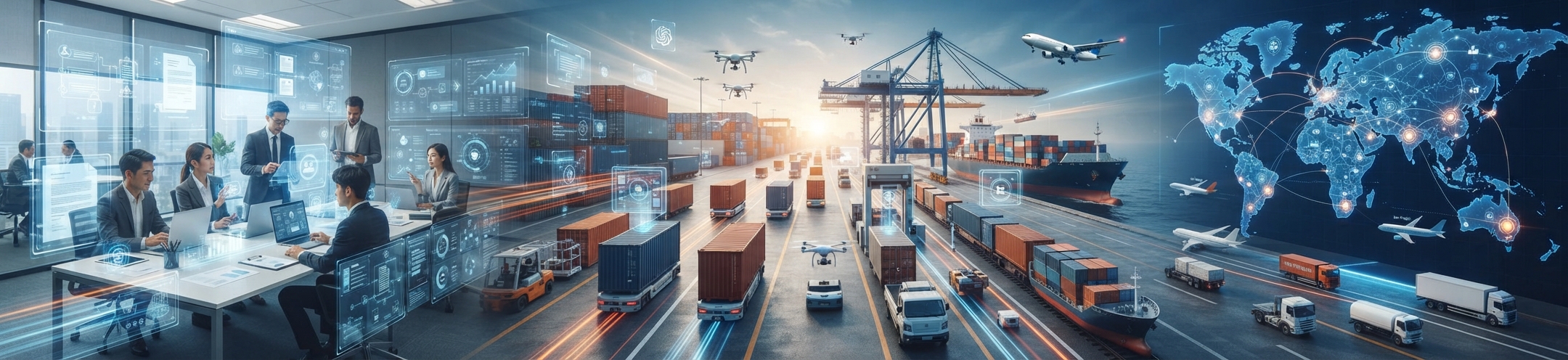
GPT-6 Astra could make cross-border trade faster, more transparent and more accessible by turning fragmented paperwork, compliance checks and supply-chain communication into automated digital workflows.** Its potential lies less in replacing traders or customs officers than in reducing the friction that makes international commerce slow, costly and difficult for smaller firms.
From documents to trade workflows
Astra’s computer-use capability allows it to work across applications: filling forms, updating systems, researching information, creating documents and handling multi-step tasks. In a trade context, that could support activities such as preparing commercial invoices, checking product classifications, assembling shipping documentation, tracking exceptions and coordinating responses across procurement, logistics, finance and compliance teams.
This shifts business facilitation from isolated digital tools toward connected workflows. A company could ask an AI agent to prepare an export shipment, identify missing documents, update a customer record, flag a customs issue and escalate only the decisions that require human judgment.
Customs and border clearance
Customs is likely to be one of the most consequential applications. AI can improve risk management, speed clearance, support product classification and give customs authorities better visibility into trade flows; the WTO notes that AI can make customs systems more agile and resilient.
UNCTAD’s ASYCUDA platform, which supports more than 100 developing economies, is incorporating AI and machine learning for smarter risk management and faster clearance. The aim is not simply automation, but better interoperability, paperless transactions, revenue collection and cross-border cooperation.
For importers and exporters, the practical result could be fewer manual document checks, earlier identification of compliance risks and more predictable release times. That matters because delays, inconsistent classifications and incomplete documentation are persistent sources of trade cost.
Lower barriers for smaller firms
The biggest facilitation gain may be for micro, small and medium-sized enterprises. AI tools can reduce language barriers, improve market intelligence, help firms navigate complex regulations and automate parts of customs clearance—capabilities that are especially valuable to companies without large trade-compliance teams.
A WTO-ICC survey found that large firms primarily use AI for trade compliance, while smaller firms focus more on market intelligence and communications. Among firms already using AI, nearly 90% reported benefits in trade-related activities, and three-quarters reported using AI for customs-related applications.
Supply-chain visibility and resilience
AI can strengthen visibility across supply chains by improving demand forecasting, exception management, shipment tracking and risk assessment. UNCTAD identifies AI as increasingly important for making cross-border transactions more efficient, transparent and straightforward, particularly as supply-chain disruptions become more frequent.
For businesses, this could mean earlier warnings of port congestion, supplier delays, regulatory changes or geopolitical disruptions. The value is not merely faster information; it is the ability to reroute goods, adjust inventory and communicate with customers before disruption becomes a service failure.
Trade policy becomes a constraint
The technology’s benefits are not automatic. The WTO warns that the gains from AI-enabled trade depend heavily on policy design, regulatory coherence, access to AI tools and countries’ capacity to participate in digital trade.[8][9]
The WTO projects that AI could raise global trade by 34% to 37% by 2040, but the range reflects different levels of policy and technological catch-up between low-, middle- and high-income economies. It also notes that quantitative restrictions on AI-related goods rose from 130 in 2012 to nearly 500 in 2024, a sign that trade policy could become a major bottleneck.
The governance challenge
Computer-use AI introduces a new category of trade risk: an agent may have access to commercial systems, customer data, shipping records, financial information and government portals. Businesses will need permissioning, audit trails, human approval for high-value transactions and clear accountability when an AI system makes an error.
Cybersecurity is especially important. OpenAI says Astra reached its “Critical” cybersecurity capability level, meaning it can identify unknown vulnerabilities and develop exploitation methods under certain conditions. That makes robust access controls and security testing essential for any deployment involving cross-border systems or sensitive commercial data.
What businesses should do
Companies should begin by mapping the trade processes where AI can remove friction: document preparation, customs classification, compliance screening, shipment tracking, supplier communication and exception handling. They should then build the governance layer—data standards, permissions, auditability and human escalation—before allowing agents to execute transactions autonomously.
The transformation is likely to be gradual but structural. If countries invest in digital customs, interoperable systems and responsible AI deployment, GPT-6 Astra-style agents could reduce trade costs, widen participation in global markets and make supply chains more responsive. If policy fragmentation and unequal access persist, the gains may concentrate among large firms and advanced economies rather than improving business facilitation broadly.
Source: https://theciotimes.com/openai-gpt-6-astra-launch/