
Weathering the Storm: How Systemic Climate Disruptions are Reshaping Global Logistics
Extreme weather events are no longer isolated incidents but systemic, compounding risks fundamentally altering global supply chains. This brief analyzes the impact on logistics flows, financial costs, and how advanced visibility platforms like MGS are crucial for navigating this new era of 'water volatility' and unpredictable disruptions.
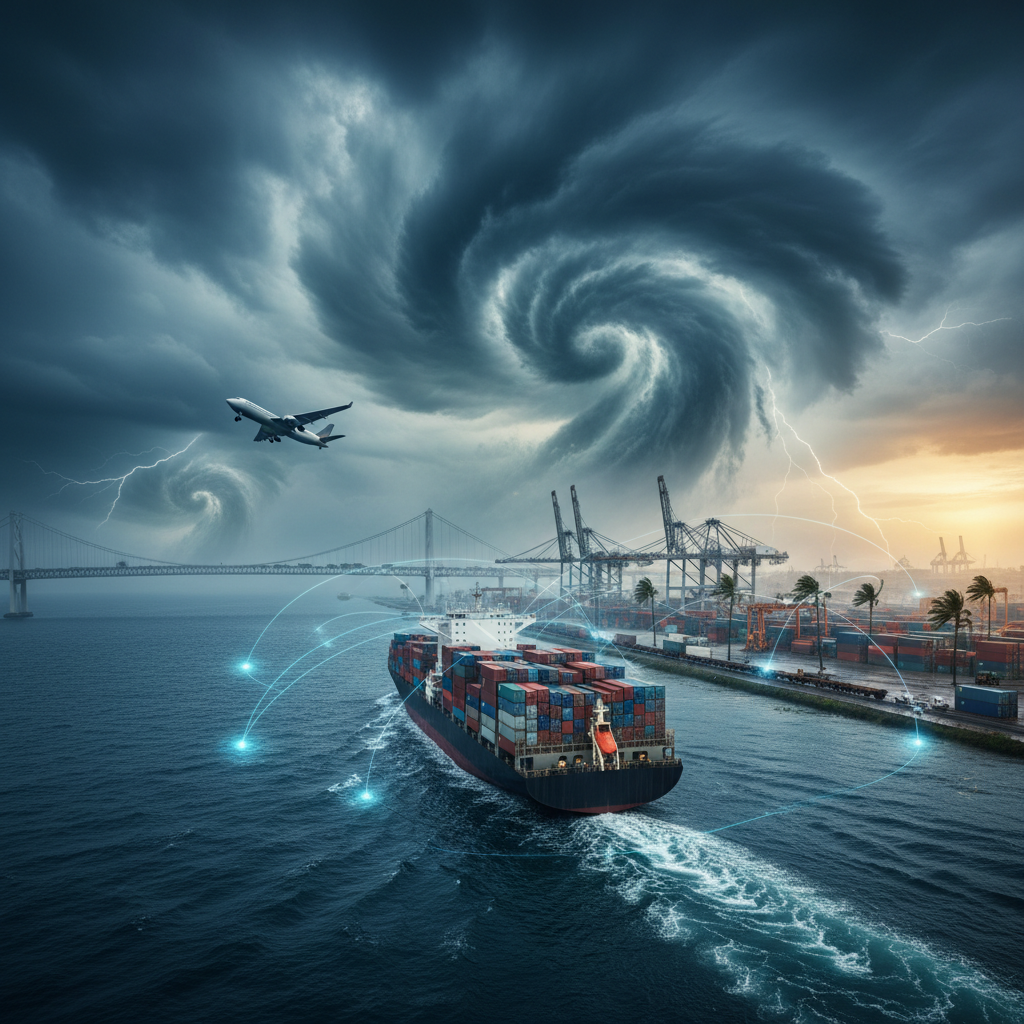
How this impacts the global supply chain
The shift from isolated weather incidents to systemic, compounding climate-driven disruptions fundamentally alters the global supply chain landscape. Historically, a flood or a hurricane might cause a temporary detour or a single vessel delay, treated as an unfortunate but manageable anomaly. Today, however, these events are increasingly interconnected and simultaneous, creating a complex web of challenges. This means that a drought impacting river levels in one region might coincide with excessive rainfall and flooding in another, leading to what the source describes as a "bizarre paradox of water volatility."
Such systemic disruptions directly impact global supply chain flows. Established routes become unreliable or impassable for extended periods. For instance, low water levels in key navigable rivers, critical arteries for inland freight, can severely restrict vessel capacity, forcing shippers to lighten loads or seek alternative, often more expensive and time-consuming, modes of transport. Conversely, extreme rainfall can lead to widespread flooding, damaging infrastructure like roads and rail lines, and creating bottlenecks that halt the movement of goods. This forces extensive rerouting, adding significant mileage and time to transit, or even necessitating a complete shift in transport mode, such as from maritime to air freight for urgent shipments.
Capacity is also significantly affected. When routes are disrupted, the available capacity on remaining viable routes becomes strained, leading to congestion and delays at ports, rail yards, and border crossings. Equipment, such as containers, trucks, or vessels, can become stranded in affected areas, reducing overall network availability. This not only delays current shipments but also creates a ripple effect, impacting subsequent schedules and the ability to fulfill future orders. The compounding nature means that one disruption can exacerbate another, leading to cascading failures across multiple nodes in the network. Operations become far more complex, requiring constant adaptation and re-planning. Lead times become unpredictable, inventory buffers need to be re-evaluated, and the entire logistical planning process shifts from a relatively stable forecast-driven model to a highly dynamic, reactive, and often proactive risk-management exercise. The very architecture of global trade, built on assumptions of predictable transit times and stable infrastructure, is being rewritten by these persistent and interconnected climate challenges.
Global financial impact
The systemic and compounding nature of climate-driven disruptions translates directly into significant financial and cost implications for all stakeholders in global trade. For shippers, the immediate impact is often seen in increased freight costs. When primary routes are impassable or capacity is constrained, alternative modes or expedited services become necessary, invariably at a premium. This could involve shifting from cost-effective river barge transport to more expensive road or rail, or even air freight for critical goods. Furthermore, extended transit times lead to higher inventory holding costs, as goods spend longer in transit or require larger safety stocks to mitigate unpredictability. Penalties for delayed deliveries, lost sales due to stockouts, and increased insurance premiums for goods in transit through high-risk areas further erode profitability. The need for buffer stock also ties up capital that could otherwise be invested elsewhere.
Carriers face their own set of escalating costs. Fuel consumption increases due to longer rerouted journeys or idling in congested areas. Asset utilization drops when vessels, trucks, or trains are delayed or stranded, meaning fewer trips can be completed within a given timeframe, reducing revenue generation per asset. Maintenance costs can also rise due to operations in more challenging conditions, such as navigating through flood-damaged areas or operating in extreme temperatures. The "bizarre paradox of water volatility" means carriers must invest in more adaptable fleets or infrastructure, for example, vessels capable of operating in a wider range of water depths, or more robust land transport options. Insurance costs for carriers are also on an upward trend as the frequency and severity of claims related to weather events increase, directly impacting their operational overheads and ultimately, their pricing structures.
At the macro level, for trade at large, these financial impacts contribute to inflationary pressures. Higher logistics costs are ultimately passed down to consumers, impacting purchasing power and economic stability. The reduced reliability and increased unpredictability of supply chains can deter foreign investment and trade, as businesses seek more stable and predictable environments for their operations and sourcing. The need for greater resilience, while critical, also requires significant investment in infrastructure upgrades, diversified supply networks, and advanced technological solutions, all of which come with a substantial price tag. This investment, though necessary for long-term stability, adds to short-to-medium term costs. The cumulative effect of these systemic disruptions is a fundamental re-evaluation of economic risk associated with globalized production and distribution, leading to a potential shift towards regionalization or near-shoring to mitigate these escalating climate-related financial exposures.
How MGS can help navigate today's global trade environment
In an era where climate-driven disruptions are systemic and compounding, a shipment-visibility control tower like MGS becomes an indispensable tool for operators. The traditional approach of reacting to isolated incidents is no longer viable; proactive, data-driven decision-making is paramount. MGS provides real-time, end-to-end visibility across the entire supply chain, offering a single, unified view of all shipments, regardless of mode or geography. This is crucial when "water volatility" or other extreme weather events suddenly render established routes impassable or severely restrict capacity.
When a river level drops critically, or a port is closed due to a storm, MGS can immediately highlight affected shipments and provide alternative routing options based on real-time data and predictive analytics. This capability allows operators to swiftly reroute cargo, minimizing delays and mitigating the financial impact of stranded goods or missed deadlines. Instead of waiting for manual updates or relying on fragmented information, MGS aggregates data from various sources – carriers, IoT sensors, weather feeds, port authorities – to present a comprehensive operational picture. This integrated view is essential for understanding the full scope of a systemic disruption and its ripple effects across the network.
Furthermore, the platform's predictive capabilities are vital for anticipating potential disruptions before they fully materialize. By integrating advanced weather forecasting with shipment data, MGS can alert operators to impending risks, allowing them to proactively adjust schedules, pre-position inventory, or secure alternative transport well in advance. This shifts the operational paradigm from reactive problem-solving to proactive risk management, enabling businesses to prepare for the "compounding risks" rather than just responding to them.
MGS also facilitates enhanced communication and collaboration among all supply chain stakeholders. In a complex, multi-party environment, rapid and accurate information sharing is critical during disruptions. The control tower acts as a central hub, ensuring that shippers, carriers, and consignees are all working from the same up-to-date information, streamlining decision-making and improving response times. This unified approach helps manage expectations and coordinate efforts to navigate the "systemic, compounding risks" described in the source. By providing actionable insights derived from vast amounts of data, MGS empowers operators to make informed choices that build resilience and maintain continuity in an increasingly volatile global trade environment. It transforms raw data into strategic intelligence, enabling businesses to adapt and thrive amidst unprecedented climate challenges.
Source: Logistics Viewpoints — https://logisticsviewpoints.com/2026/07/13/from-deluges-to-dry-beds-how-extreme-weather-is-rewriting-logistics-strategy/