
Weather's Unpredictable Grip: Navigating Disruptions at the Port of Los Angeles
A recent incident at the Port of Los Angeles, where three shipping containers fell overboard, underscores the critical impact of weather events on global supply chains. This brief examines how such disruptions affect key trade lanes, port facilities, and various transport modes, offering actionable insights for shippers to mitigate risks.
Introduction: Setting the Scene
In the intricate dance of global supply chains, myriad factors can introduce friction, but few are as unpredictable and potent as weather. From severe storms to unexpected high winds, meteorological events frequently challenge the meticulously planned movements of cargo, leading to delays, damage, and significant operational hurdles. A recent incident at the Port of Los Angeles serves as a stark reminder of this vulnerability, where the forces of nature directly impacted cargo operations, causing containers to fall into the water. Such occurrences, while sometimes localized, send ripples across the entire logistics network, affecting shipping lanes, port efficiency, and the seamless flow of goods across various transportation modes. For supply chain professionals, understanding these disruptions and developing robust mitigation strategies is not merely a best practice; it is an essential component of resilient logistics.
The Incident: What Happened and Where
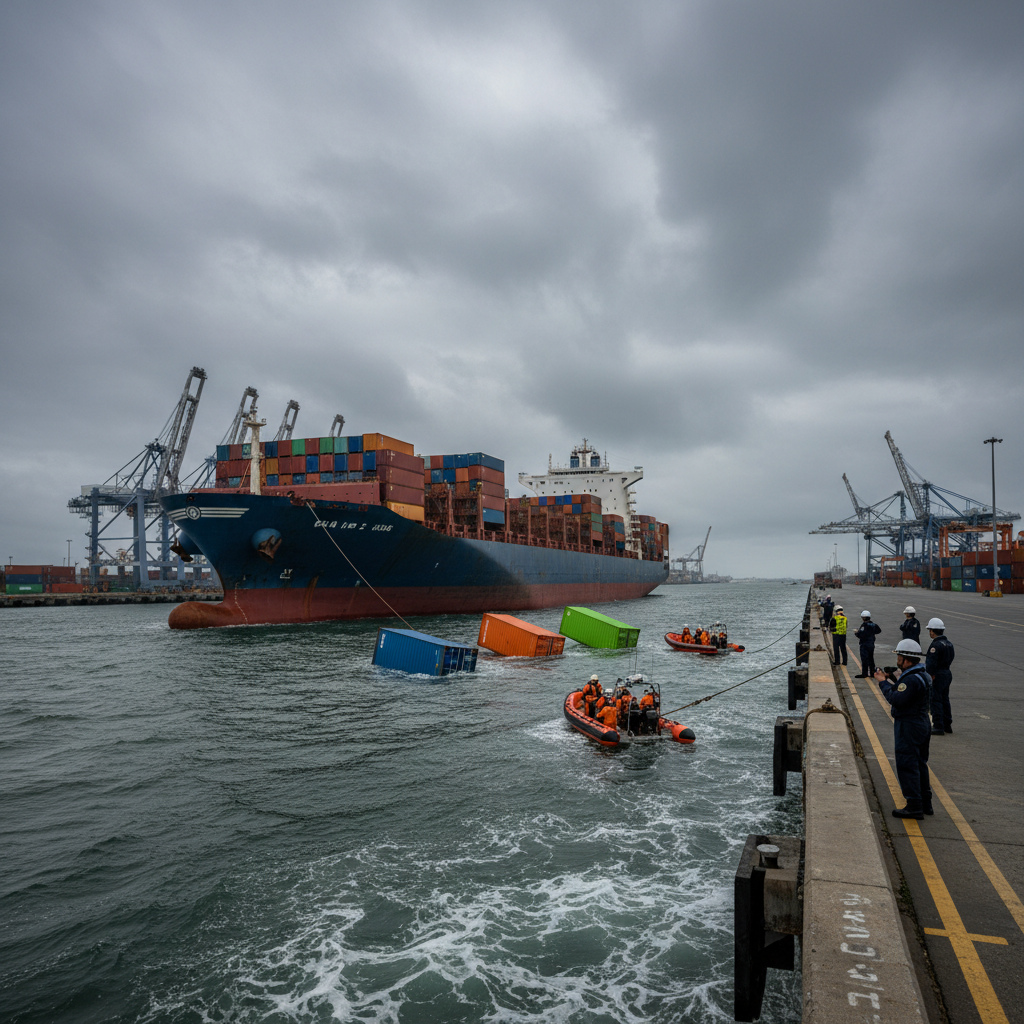
On a recent Tuesday, operations at the bustling Port of Los Angeles experienced an unexpected disruption. During what appears to have been challenging conditions, three shipping containers were dislodged from a vessel and fell into the water. This immediate and critical event necessitated a rapid response from authorities. A safety zone was promptly established around the affected area, effectively halting or severely restricting normal operations in that specific part of the port. Crews were immediately deployed to secure the containers and address the situation, which inherently diverted resources and attention from routine cargo handling. The Port of Los Angeles, being one of the busiest gateways for trans-Pacific trade into North America, is a critical node in countless supply chains. An incident of this nature, even if contained to a specific berth or channel, has the potential to create cascading effects due to the sheer volume of cargo and vessel traffic it handles daily. The immediate focus was on safety and recovery, but the broader implications for scheduled movements and overall port fluidity quickly became apparent.
Impact on Lanes and Facilities
The ramifications of such an incident extend far beyond the immediate recovery effort. At the Port of Los Angeles, the establishment of a safety zone directly impacts the operational capacity of the facility. Specific berths or even entire terminals might experience reduced throughput or temporary closures, leading to vessel backlogs. Ships scheduled to dock or depart from the affected area face immediate delays, which can then propagate throughout their subsequent voyages. This creates a bottleneck effect, where vessels are forced to wait, incurring demurrage charges and throwing off carefully planned schedules.
Regarding shipping lanes, the incident primarily affects trans-Pacific routes that utilize the Port of Los Angeles as a key entry or exit point. Vessels en route to LA might be instructed to slow steam, anchor offshore, or even divert to alternative ports if the disruption is prolonged. While a single incident might not reroute an entire lane, the cumulative effect of multiple weather-related events can shift carrier strategies and lead to increased congestion at other major West Coast ports. Furthermore, the delay in offloading cargo at LA means that containers are not available for their onward journey, impacting the efficiency of the entire intermodal network reliant on this critical gateway. The interconnectedness of global trade means that a localized disruption at a major port like Los Angeles can have a disproportionate impact on global shipping schedules and facility utilization across the entire supply chain.
Affected Modes of Transport
The primary mode of transport directly impacted by containers falling overboard is, unequivocally, ocean freight. The vessel involved in the incident faces delays, potential damage assessment, and the time required for recovery operations. Other vessels scheduled to use the same berth or channel are also delayed, leading to a ripple effect across shipping schedules. This can result in missed port calls, extended transit times, and increased fuel consumption for vessels waiting offshore.
However, the disruption quickly extends to intermodal rail and trucking. Once containers are finally offloaded from the vessel, they need to be transferred to rail cars or trucks for inland distribution. Delays at the port mean a backlog of containers awaiting transfer, overwhelming terminal capacity for both rail and truck operations. This can lead to increased dwell times for containers, chassis shortages, and driver hour constraints, further exacerbating delays in the onward movement of goods. Shippers relying on just-in-time inventory models are particularly vulnerable, as even minor delays at the port can throw off their entire distribution network. The incident underscores how a single point of failure in one mode (ocean) can cascade into significant challenges for subsequent modes (rail and road), highlighting the integrated nature of modern logistics.
Shipper Strategies for Mitigation
In the face of unpredictable events like the Port of Los Angeles incident, shippers must adopt proactive and resilient strategies. The first step is to enhance shipment visibility. Platforms like MGS are invaluable here, providing real-time tracking and predictive analytics that allow shippers to monitor cargo movements, identify potential delays, and understand the precise location and status of their goods. With this granular data, businesses can anticipate impacts and make informed decisions.
Diversification of routes and ports is another critical strategy. Relying solely on a single port, even one as efficient as Los Angeles, increases exposure to localized disruptions. Shippers should explore using multiple gateways on both the West and East Coasts, as well as considering alternative intermodal routes to distribute risk. Building relationships with multiple carriers and freight forwarders also provides flexibility when one service provider is affected.
Robust contingency planning is essential. This involves developing pre-approved alternative logistics plans for various disruption scenarios. For instance, having agreements in place for transloading cargo to different ports, utilizing air freight for critical shipments, or having access to flexible warehousing solutions can significantly reduce the impact of port congestion or closures. Regular review and updating of these plans are crucial.
Furthermore, proactive communication and collaboration with logistics partners are paramount. Maintaining open channels with carriers, drayage companies, and rail operators allows for quicker dissemination of information and coordinated responses. Understanding potential weather patterns and port advisories in advance can also help in making timely adjustments to shipping schedules. Finally, reviewing and updating cargo insurance policies to ensure adequate coverage for delays, damage, and rerouting costs associated with unforeseen events provides a financial safety net.
By combining advanced visibility tools with strategic planning and strong partnerships, shippers can significantly enhance their resilience against the inevitable disruptions caused by weather and other unforeseen events in global supply chains.
Source: gCaptain — https://gcaptain.com/port-of-los-angeles-cargo-operations-disrupted-after-containers-go-overboard/