
Uncharted Territory: Navigating Soaring Shipping Costs with Visibility
Global shipping rates are reaching unprecedented highs, with the ClarkSea Index surging 73% in a month to $75,658 a day. This brief analyzes the profound impact on global supply chains, financial implications for shippers and carriers, and how advanced visibility platforms like MGS are crucial for navigating this volatile environment.
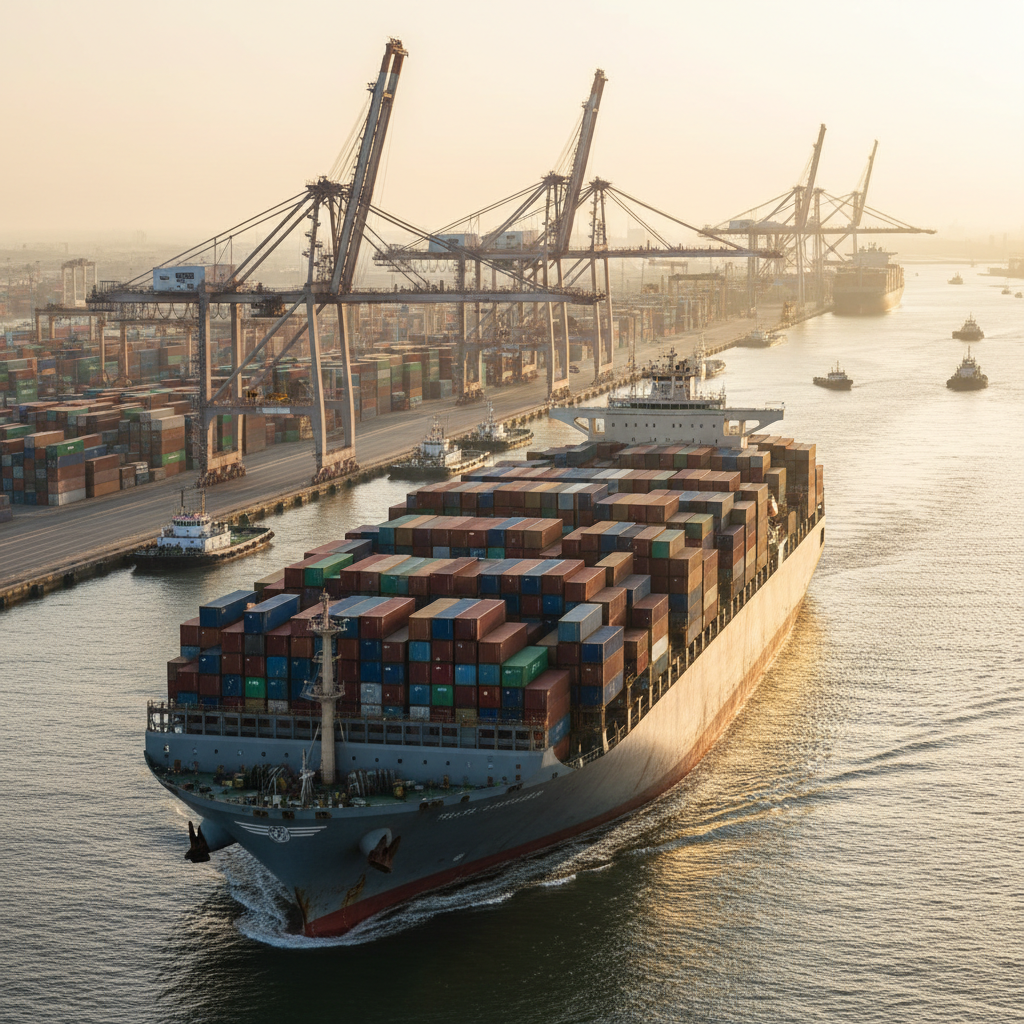
How this impacts the global supply chain
The current surge in shipping markets, evidenced by the ClarkSea Index reaching $75,658 a day and marking its fourth consecutive all-time high, is sending ripples throughout global supply chains. This extraordinary earnings boom, with the index up 73% in a single month and 66% year-on-year, fundamentally reshapes the dynamics of global trade.
Firstly, supply-chain flows are under immense pressure. The heightened cost of transportation means that every movement of goods is significantly more expensive. This could lead to a re-evaluation of traditional just-in-time (JIT) strategies, as the financial penalty for delays or disruptions becomes exponentially higher. Companies may shift towards holding more buffer stock to mitigate the risk of stock-outs, despite the increased inventory carrying costs. Furthermore, the economic viability of transporting lower-value goods over long distances is diminishing, potentially leading to regionalization of sourcing and production to reduce freight exposure.
Routes are also being scrutinized. While direct routes might still be preferred for speed, the premium associated with them is now substantial. Shippers might increasingly explore alternative, less direct, or multimodal routes if they offer a significant cost advantage, even if it means longer transit times. This could lead to shifts in port traffic and increased demand for intermodal connections, placing new strains on inland logistics infrastructure. The drive to optimize every leg of a journey becomes paramount when the baseline cost of shipping is so elevated.
Regarding capacity, the market is clearly skewed in favor of carriers. With earnings soaring, vessel capacity is a highly sought-after commodity. Shippers are likely facing significant challenges in securing space, particularly for urgent or high-volume shipments. This environment fosters increased competition for available slots, potentially leading to bidding wars or long-term commitments at elevated rates. While high earnings might incentivize carriers to eventually invest in new vessels, the immediate impact is a tight market where existing capacity is maximized, often leading to fuller ships and potentially slower turnaround times at congested ports as carriers prioritize revenue per voyage.
Finally, operations across the supply chain are forced to adapt. Logistics teams must become more agile and proactive. The cost of operational inefficiencies, such as demurrage or detention charges, is magnified in this high-rate environment. There's an increased focus on optimizing loading and unloading processes, improving port call efficiency, and ensuring seamless handovers between different modes of transport. The pressure to avoid any unnecessary delays or costs has never been greater, pushing companies to seek out every possible efficiency gain.
Global financial impact
The financial ramifications of the current shipping market boom are profound and far-reaching, affecting all stakeholders in the global trade ecosystem.
For shippers, the most immediate and significant impact is a dramatic increase in freight costs. With the ClarkSea Index up 73% in a month and 66% year-on-year, the cost of moving goods has become a dominant factor in their overall cost structure. This directly erodes profit margins, forcing companies to either absorb these higher costs or pass them on to consumers through price increases. For many businesses, particularly those operating on thin margins or dealing with high-volume, low-value goods, these elevated shipping expenses can severely impact their competitiveness and even their viability. Budgeting for logistics becomes a highly volatile exercise, requiring constant adjustments and a greater allocation of financial resources to transportation.
Carriers, on the other hand, are experiencing an unprecedented period of profitability. The extraordinary earnings boom, with the ClarkSea Index reaching $75,658 a day, translates directly into robust financial performance. This allows carriers to strengthen their balance sheets, pay down debt, and potentially invest in fleet modernization or expansion over the long term. However, this windfall also raises expectations and could attract new entrants or increased competition in the future. For now, carriers are in a strong negotiating position, able to command premium rates and dictate terms, shifting the balance of power in their favor.
For trade at large, these elevated shipping costs act as a significant inflationary pressure. As businesses pass on higher freight expenses, the cost of imported goods rises, contributing to overall consumer price inflation. This can dampen consumer spending and potentially reduce global trade volumes as certain products become uneconomical to transport across continents. The global economy could see a shift towards more localized production and consumption, altering established trade patterns. Furthermore, the volatility introduced by such rapid rate increases (73% in a month) creates uncertainty, making long-term planning and investment decisions more challenging for businesses reliant on global supply chains.
How MGS can help navigate today's global trade environment
In an environment characterized by surging shipping costs and unprecedented market volatility, a shipment-visibility control tower like MGS becomes an indispensable tool for operators seeking to maintain control and mitigate financial exposure.
MGS provides real-time, end-to-end visibility into every shipment, which is critical when freight rates are at all-time highs. For instance, knowing that the ClarkSea Index is at $75,658 a day underscores the immense financial impact of even minor delays. With MGS, operators can track shipments proactively, identifying potential delays or deviations early. This allows for immediate intervention, such as rerouting critical cargo, arranging alternative transport, or adjusting inventory plans to prevent stock-outs, thereby avoiding costly expedited shipping at even higher spot rates or mitigating significant demurrage charges.
In a market where securing capacity is challenging and expensive, MGS helps optimize the utilization of existing bookings. By providing accurate ETAs and status updates, shippers can better manage their warehouse operations, ensuring that goods are ready for collection or receipt precisely when a vessel or truck arrives. This reduces idle time and minimizes the risk of incurring additional charges due to inefficient loading or unloading processes, which are particularly punitive when the underlying cost of transport is so high.
Furthermore, MGS empowers proactive decision-making that directly impacts the bottom line. When freight costs have surged 73% in a month, every decision carries magnified financial weight. MGS allows logistics managers to see the broader picture of their supply chain, identifying bottlenecks or risks before they escalate into costly disruptions. This data-driven approach enables more informed negotiations with carriers, as performance data gathered through MGS can highlight areas for improvement or validate service levels, even in a seller's market.
Ultimately, by transforming opaque supply chain operations into transparent, actionable insights, MGS helps operators navigate the financial pressures of today's high-cost shipping environment. It shifts the focus from reactive problem-solving to proactive risk management, safeguarding margins and ensuring business continuity when the cost of global trade is at an unprecedented premium.
Demand–supply analysis & improvement
The current market conditions, characterized by an "extraordinary earnings boom" and the ClarkSea Index surging 73% in a month to $75,658 a day, unequivocally point to a severe imbalance between demand and supply in the global shipping sector. The fact that the index is 84% above its 10-year trend highlights a sustained period of robust demand outstripping available capacity, allowing carriers to command premium rates across multiple sectors.
The demand dynamics appear to be exceptionally strong, driving the market to its fourth consecutive all-time high. This suggests a global economy with significant appetite for goods, leading to sustained pressure on shipping lanes. Whether driven by post-pandemic recovery, inventory restocking, or shifts in consumer spending, the volume of cargo requiring transport is evidently overwhelming the system.
On the supply side, while carriers are maximizing their assets, the rapid and sustained increase in rates indicates that the existing vessel capacity is insufficient to meet this elevated demand. Factors contributing to this tight supply could include port congestion tying up vessels, slower ship speeds to conserve fuel, or a lag in new vessel deliveries. This scarcity of available shipping space is the primary lever enabling carriers to achieve such high earnings.
Concrete improvement levers for navigating this environment are critical. For shippers, strategic improvements include:
- Diversifying Sourcing and Production: Reducing reliance on single geographic regions or long-haul routes can mitigate exposure to extreme freight volatility.
- Optimizing Inventory Management: Moving away from strict JIT to a more flexible approach with strategic buffer stocks can reduce the urgency and cost of last-minute, high-priced shipments.
- Enhanced Forecasting and Planning: Better collaboration with suppliers and customers to improve demand forecasting can help smooth out shipment requirements, avoiding peak rate periods where possible.
- Exploring Multimodal and Regional Options: Investigating rail, road, or shorter sea routes for portions of the journey, or even shifting production closer to consumption markets, can reduce overall shipping costs.
For carriers, while the current market is highly favorable, long-term improvements involve:
- Investing in Efficiency and Capacity: While new vessel builds take time, optimizing port turnaround times and improving fleet utilization through advanced logistics can incrementally increase effective capacity.
- Data-Driven Route Optimization: Leveraging data to identify the most efficient and profitable routes, minimizing empty legs and maximizing cargo load factors.
Overall, the market signals a need for greater resilience and adaptability across the entire supply chain, with an emphasis on strategic planning and operational efficiency to manage the persistent demand-supply imbalance.
ROI-focused resilience
The extraordinary surge in shipping costs, with the ClarkSea Index jumping 73% in a month to $75,658 a day, fundamentally alters the return on investment (ROI) calculation for supply chain resilience. The cost of inaction or inadequate preparation against disruptions has never been higher, making investments in resilience strategies far more justifiable and demonstrating faster ROI.
Quantified Risk: The primary risk is the magnified financial impact of any supply chain disruption. If the daily cost of shipping is $75,658, then a single day's delay on a critical shipment could translate directly into a five-figure loss in terms of demurrage, lost sales, or the need for emergency expedited freight. Consider a scenario where a stock-out due to a delayed shipment leads to lost sales for a product with a high-profit margin; the cost of that lost revenue is now compounded by the exceptionally high freight rates required to replenish inventory quickly. The risk is no longer just the cost of the delay itself, but the opportunity cost and penalty cost amplified by the current market conditions. The fact that rates are 84% above the 10-year trend means that the financial penalty for supply chain failures is significantly higher than historical norms.
Investment in Resilience: Investing in a robust shipment-visibility control tower like MGS provides a clear ROI in this high-cost environment. The cost of implementing such a platform can be quickly offset by preventing just a few major disruptions. For example, if MGS helps a company avoid a single week-long delay on a vessel, potentially saving $75,658 multiplied by seven days in demurrage or preventing a critical stock-out that costs hundreds of thousands in lost revenue, the platform's value becomes immediately apparent. The ability to proactively identify and mitigate risks, such as rerouting cargo around congested ports or optimizing inventory to reduce reliance on single shipments, directly translates into avoided costs and protected revenue streams.
Furthermore, diversifying suppliers and routes, while potentially incurring higher initial setup costs, offers an ROI in terms of reduced exposure to single points of failure. In a market where rates are volatile and capacity is tight, having alternative options can prevent complete supply chain paralysis and the exorbitant costs associated with emergency measures. The investment in these resilience actions protects against the quantified risk of extreme financial penalties and operational disruptions, ensuring business continuity and safeguarding profitability in an increasingly unpredictable global trade landscape.
Source: Splash247 — https://splash247.com/shipping-markets-hit-new-highs-across-multiple-sectors/