
Ukraine Strike Damages Crimean Bridge, Forcing Logistics Reroutes
The recent strike on the Crimean Bridge disrupts cargo movement, necessitating reroutes for southern Ukraine, elevating Black Sea shipping risks, and tightening sanctions enforcement on dual-use goods.
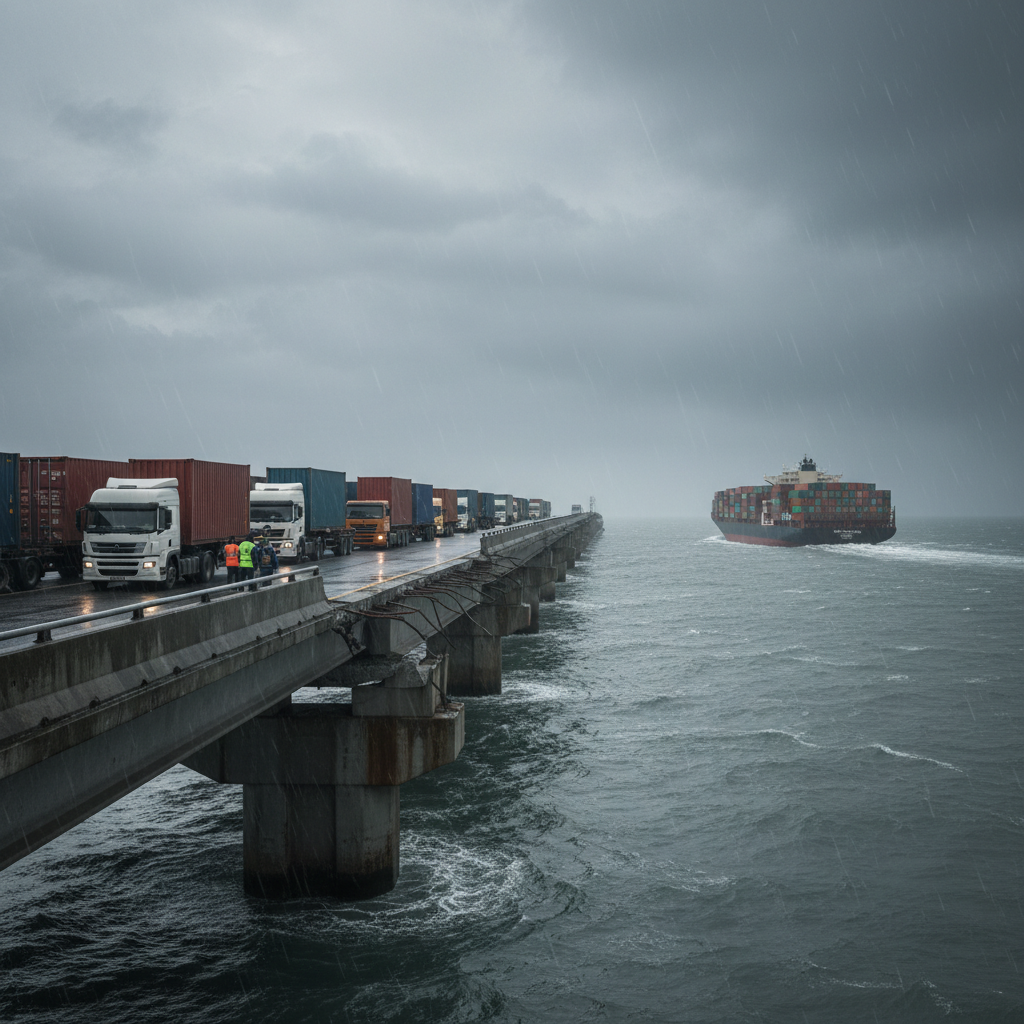
Crimean Bridge Damage Forces Logistics Reroutes for Southern Ukraine
The recent strike that partially damaged the Crimean Bridge on November 17 directly impacts the logistical arteries supporting the Crimean peninsula and adjacent occupied territories in southern Ukraine. This bridge serves as a primary conduit for both military and civilian supplies, connecting Russia to Crimea. Its disruption necessitates immediate and extensive rerouting of cargo.
Prior to the attack, the bridge facilitated the movement of a wide array of goods, from construction materials and foodstuffs to military equipment and personnel. With its capacity now compromised, the flow of these essential items faces immediate constraints. Shippers and forwarders previously relying on this direct link must now seek alternative pathways, primarily through land corridors that traverse occupied Ukrainian regions. These alternative routes are inherently less efficient, often characterized by poorer infrastructure, increased security risks, and longer transit times. The operational challenges include managing checkpoints and contending with potential infrastructure damage.
The shift to these less secure land routes increases the vulnerability of cargo to delays, damage, or seizure. For commercial enterprises, this translates into higher operational costs, extended lead times, and reduced supply chain predictability. Businesses involved in supplying goods to Crimea or extracting products from the region will experience direct economic pressure. Furthermore, the reduced throughput capacity of alternative routes could lead to localized shortages of certain goods within Crimea, impacting local economies and populations. The reliance on sea transport as an alternative also faces heightened risks, as the Black Sea remains a contested area, making maritime insurance premiums and vessel availability more challenging.
Black Sea Shipping Faces Heightened Risk Premiums and Avoidance
The attack on the Crimean Bridge, regardless of its specific target, escalates the perceived risk for all maritime operations within the Black Sea. This perception directly translates into increased costs and operational hurdles for the shipping industry. Insurers, already wary of the region due to ongoing hostilities, are likely to reassess their risk models, leading to a further surge in war risk premiums for vessels entering or transiting Black Sea waters.
This rise in insurance costs affects all cargo types, from bulk commodities like grain and oil to containerized goods. For shippers, these elevated premiums become an additional expense, ultimately passed down to consumers or absorbed by profit margins. Beyond cost, the heightened risk environment can lead to a reduction in vessel availability. Shipowners and operators, facing prohibitive insurance rates or concerns for crew safety, may opt to avoid the Black Sea altogether. This reduction in available tonnage can drive up freight rates for the remaining vessels willing to operate in the region, creating a bottleneck for trade.
Ports along the Black Sea, including those not directly involved in the conflict, will feel the ripple effects. Reduced vessel calls can impact port revenues, employment, and the efficiency of their logistics ecosystems. The existing Black Sea grain corridor, which has seen intermittent operation, could face renewed challenges as the overall risk profile of the region intensifies. The cumulative effect is a more volatile and expensive maritime trade environment, forcing supply chain managers to explore more distant and costly alternative routes for goods that traditionally moved through this basin.
Airspace Restrictions Expand Over Eastern European Corridors
While the Crimean Bridge incident is a ground and sea-based event, its geopolitical implications extend to the air. Escalations in regional conflicts frequently lead to the expansion or tightening of existing airspace restrictions and no-fly zones. Air cargo carriers, already contending with extensive rerouting around conflict areas in Eastern Europe, may face further constraints.
The primary consequence for air freight is the lengthening of flight paths. Aircraft must often circumnavigate large swathes of restricted airspace, adding significant distances to their journeys. This directly translates into increased fuel consumption, higher operational costs, and extended transit times for air cargo. For time-sensitive shipments, these delays can be particularly disruptive, impacting manufacturing schedules, inventory management, and just-in-time supply chains.
Global air freight networks, particularly those connecting Asia and Europe, are already under pressure from existing geopolitical tensions. Any further expansion of restricted airspace in Eastern Europe would compound these challenges, forcing carriers to re-evaluate optimal routes and potentially leading to higher air freight rates across broader regions. The cumulative effect of multiple regional conflicts on global air corridors means that what might seem like a localized incident can have far-reaching implications for the efficiency and cost-effectiveness of international air cargo movement. Supply chain planners must account for this increased unpredictability and build greater flexibility into their air logistics strategies.
Sanctions Enforcement Tightens on Dual-Use Goods
The heightened tensions following the Crimean Bridge attack can prompt a more rigorous enforcement of existing international sanctions, particularly those targeting dual-use goods. These are items with both civilian and military applications, and their movement is already subject to strict controls when destined for or transiting through sanctioned entities or regions.
Governments and international bodies often respond to escalations by increasing scrutiny on supply chains to prevent circumvention of sanctions. This means shippers and forwarders dealing with goods that could be classified as dual-use, even if intended for purely civilian purposes, will face enhanced due diligence requirements. Customs checks may become more thorough, leading to longer processing times at borders and ports. The risk of goods being delayed, impounded, or even seized due to compliance concerns increases significantly.
For businesses, this translates into higher compliance costs, requiring more robust internal controls, detailed documentation, and potentially specialized legal advice. Industries such as electronics, machinery, chemicals, and advanced materials are particularly susceptible to these tightened controls. The overall effect is a more complex and risk-laden environment for international trade, where the movement of certain categories of goods becomes slower, more expensive, and less predictable, even for legitimate commercial transactions. Supply chain managers must proactively review their product classifications and destination risks to mitigate potential disruptions.
Black Sea Logistics Enter New Volatility Phase
The damage to the Crimean Bridge signals a new phase of heightened risk and unpredictability for cargo movement in and around the Black Sea, with cascading effects on global supply chains. Direct land routes are compromised, forcing costly and less secure alternatives, while maritime and air operations face increased insurance premiums, rerouting, and stricter compliance demands. This incident reinforces the need for supply chain resilience and diversification away from conflict-prone regions.
This assessment could prove wrong if the damage to the Crimean Bridge is repaired much faster than anticipated, or if a de-escalation of regional tensions leads to a rapid reduction in perceived risk. A significant diplomatic breakthrough or a cessation of hostilities could quickly lower insurance premiums and reopen more direct transport routes, alleviating the current pressures on logistics networks.
Source: Atlantic Council — https://www.atlanticcouncil.org/blogs/ukrainealert/ukraines-crimean-bridge-attack-is-a-very-personal-humiliation-for-putin/