
The Warehouse Expansion Imperative: Navigating a 5% Growth Trajectory to 2027
Global warehousing is set to grow by 5% annually through 2027, reaching 214,000 large facilities. This Insight brief analyzes the operational, financial, and visibility implications for modern supply chains.
How this impacts the global supply chain
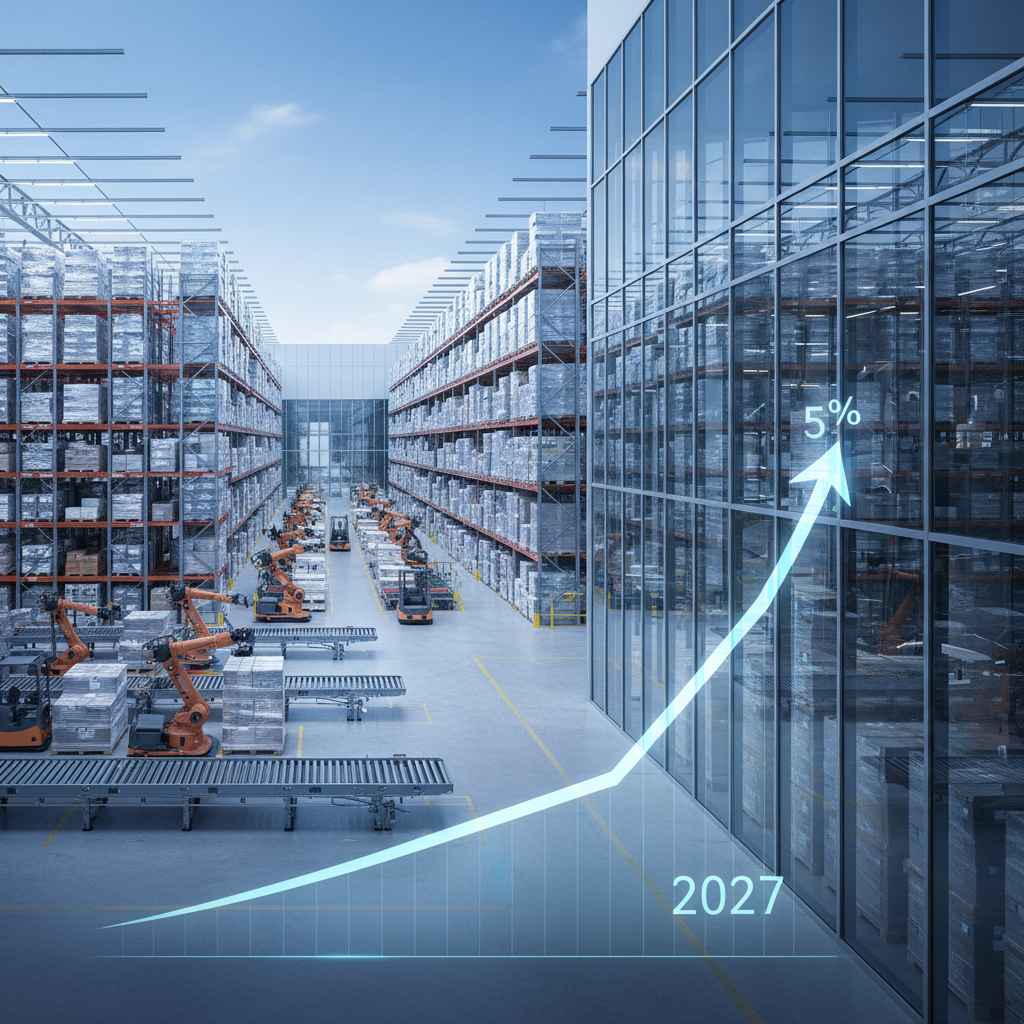
The global logistics landscape is undergoing a structural transformation, driven by a significant expansion in physical infrastructure. Recent analysis indicates that the warehousing sector is poised for a sustained growth trajectory, with the number of large-scale facilities—defined as those exceeding 50,000 square feet—expected to rise from 163,000 in 2021 to 214,000 by 2027. This represents a compound annual growth rate that underscores a fundamental shift in how goods are stored, sorted, and distributed globally. For supply chain operators, this is not merely a statistic about real estate; it is a signal of changing flow dynamics.
This expansion directly impacts global supply-chain flows by increasing the density of nodes within the network. As the number of large warehouses grows, the average distance between production points and final consumption hubs may decrease, potentially reducing last-mile delivery times. However, this increased node density also introduces complexity. With more facilities entering the ecosystem, the coordination required to move goods efficiently between these points becomes exponentially more difficult. Routes are no longer linear pipelines but complex webs of inter-connected storage and distribution centers.
Capacity implications are profound. The addition of tens of thousands of large warehouses suggests that the industry is moving away from lean, just-in-time models that rely on minimal buffer stock, toward models that prioritize availability and speed through strategic inventory positioning. This shift means that capacity planning must evolve from a focus on transportation assets to a holistic view of storage availability. Operations must adapt to manage a more fragmented network where inventory is distributed across a wider array of locations, requiring more sophisticated algorithms for inventory allocation and replenishment.
Furthermore, the operational burden on logistics providers increases. Managing a network that is growing at a 5% annual rate requires robust systems to track not just the movement of goods, but the status of the facilities themselves. Are these new warehouses integrated into digital ecosystems? Do they have the technological infrastructure to support automated sorting and real-time data exchange? The growth in physical capacity must be matched by a proportional growth in digital connectivity to avoid creating bottlenecks in information flow that mirror the physical constraints of the past.
Global financial impact
The financial implications of this warehousing boom are multifaceted, affecting shippers, carriers, and the broader trade ecosystem. For shippers, the primary cost driver is the capital expenditure required to secure space in this expanding market. While the supply of warehouse space is increasing, the demand for high-quality, technologically advanced facilities often outstrips the availability of older, less efficient stock. This can lead to rental rate inflation in key logistics hubs, pressuring margins for companies that rely on third-party logistics (3PL) providers.
For carriers, the financial impact is tied to the efficiency of the new network. A denser network of warehouses can reduce long-haul transportation costs by enabling regional distribution. Instead of shipping goods across continents to a single central hub, carriers can deliver to regional warehouses closer to the end consumer. This modal shift from long-distance trucking or rail to shorter, more frequent deliveries can optimize fuel consumption and driver utilization. However, it also increases the frequency of stops and the complexity of route planning, which can drive up labor and administrative costs if not managed with advanced routing software.
At a macroeconomic level, the investment in 214,000 large warehouses by 2027 represents a significant injection of capital into the global economy. This construction and development activity stimulates local economies, creates jobs, and drives demand for construction materials and technology services. However, it also raises the stakes for operational efficiency. The fixed costs associated with maintaining such a vast physical infrastructure are substantial. Any inefficiency in inventory turnover or space utilization directly erodes profitability. Therefore, the financial health of the supply chain becomes increasingly dependent on the ability to maximize the yield of each square foot of warehouse space.
Moreover, the financial risk profile changes. With more inventory distributed across a larger number of facilities, the exposure to localized disruptions—such as natural disasters, labor strikes, or political instability—increases. Companies must balance the cost of redundancy against the risk of stockouts. The financial impact of a disruption in one node of a dense network can ripple through the system, affecting multiple downstream partners. This necessitates a more robust financial contingency planning, including insurance and hedging strategies, to protect against the volatility inherent in a rapidly expanding and complex logistics network.
How MGS can help navigate today's global trade environment
In an environment where the number of large warehouses is growing by tens of thousands over a five-year period, visibility becomes the critical differentiator between operational success and failure. A shipment-visibility control tower like MGS is designed to address the complexity introduced by this expansion. As the network of facilities grows, the sheer volume of data points generated by shipments, inventory movements, and facility statuses becomes unmanageable through traditional spreadsheet-based or siloed systems.
MGS helps operators navigate this environment by providing a unified view of the entire supply chain. By integrating data from multiple carriers, 3PLs, and warehouse management systems, MGS creates a single source of truth for shipment status. This is particularly relevant in the context of warehouse growth, as it allows shippers to monitor not just the transit of goods, but their arrival and processing within the expanding network of facilities. Real-time visibility into warehouse dock appointments, inventory receipt, and outbound scheduling enables proactive management of potential delays.
Furthermore, MGS enhances decision-making by providing predictive analytics. With a growing number of warehouses, the likelihood of bottlenecks at specific nodes increases. MGS can identify patterns and predict congestion before it occurs, allowing operators to reroute shipments or adjust inventory levels dynamically. This capability is essential for maintaining service levels in a network that is constantly evolving. By leveraging data from the 214,000 projected facilities, MGS can help companies optimize their network design, ensuring that inventory is positioned in the most strategic locations to meet demand efficiently.
The platform also facilitates collaboration among supply chain partners. In a fragmented landscape with thousands of new warehouses, communication gaps are common. MGS bridges these gaps by providing a shared platform for data exchange, ensuring that all stakeholders have access to the same information. This transparency reduces friction, accelerates problem resolution, and builds trust among partners. For companies navigating the complexities of a growing warehousing sector, MGS offers the visibility and control needed to turn infrastructure expansion into a competitive advantage.
Source: Interact Analysis — https://interactanalysis.com/warehousing-sector-poised-for-5-growth-up-to-2027/