
The AI Boom's Physical Footprint: A New Era for Global Logistics
The rapid expansion of artificial intelligence is creating unprecedented physical logistics challenges, transforming global supply chains for semiconductors, data centers, and critical infrastructure. This brief explores the profound impact on flows, costs, and the vital role of real-time visibility in navigating this complex landscape.
How this impacts the global supply chain
The burgeoning demand for artificial intelligence is no longer confined to the digital realm; it has rapidly manifested as a significant physical logistics challenge, profoundly reshaping global supply chains. The core components driving this transformation—semiconductors, data centers, power infrastructure, cooling systems, and network designs—each carry intricate logistics requirements that ripple across flows, routes, capacity, and operational strategies worldwide.
Firstly, the sheer volume and specialized nature of semiconductors required for AI computation are creating intense pressure points. These high-value, often fragile components necessitate highly secure, time-sensitive, and temperature-controlled transportation, typically via air freight. This surge in demand strains existing air cargo capacity and drives up costs, particularly for routes connecting major fabrication plants in Asia to technology hubs globally. The intricate, multi-stage manufacturing process for advanced chips, often spanning multiple countries, means any disruption at a single point can have cascading effects, delaying the deployment of entire data centers.
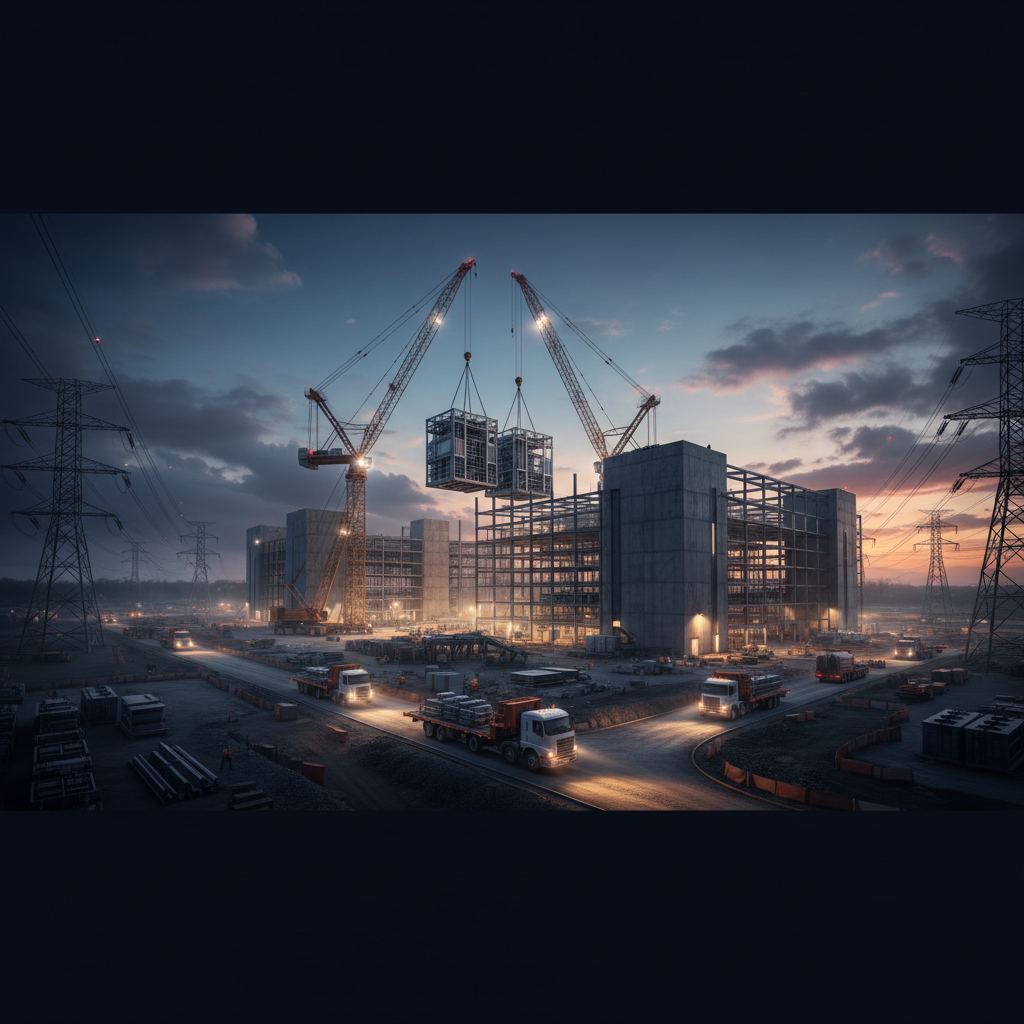
Secondly, the construction of data centers themselves represents a monumental logistics undertaking. These facilities are not merely server farms; they are massive industrial complexes requiring vast quantities of construction materials (steel, concrete, cabling), specialized heavy equipment for installation, and sophisticated cooling apparatus. The logistics for these projects involve coordinating diverse suppliers from around the globe, often requiring ocean freight for bulk materials and specialized land transport for oversized components. This influx of demand strains port capacities, inland transportation networks, and specialized heavy-lift services. The chosen locations for these data centers, often driven by access to affordable land, renewable energy, and fiber optic networks, are creating new logistics corridors and increasing traffic on less-traveled routes.
Thirdly, the immense power and cooling requirements of AI infrastructure introduce further complexities. Building new power generation facilities, substations, and transmission lines to support data centers demands the movement of heavy, specialized electrical components and construction materials. Cooling systems, integral to preventing AI hardware from overheating, involve the transport of large chillers, piping, and specialized fluids. This adds another layer of complexity to project logistics, demanding precise scheduling and coordination to ensure components arrive in sequence for construction and installation. The environmental considerations associated with energy consumption also push for logistics solutions that prioritize efficiency and sustainability, adding pressure on carriers and shippers to optimize routes and modes.
Finally, the expansion and design of network infrastructure—the physical backbone connecting these data centers and users—require extensive deployment of fiber optic cables, networking hardware, and associated construction equipment. This involves last-mile logistics challenges, often in remote or newly developed areas, requiring agile and adaptable transportation solutions. The collective impact is a global supply chain facing unprecedented strain on capacity, an increase in specialized transport needs, and a heightened requirement for precision and resilience in coordinating highly interdependent logistics flows.
Global financial impact
The AI boom's physical logistics demands are generating significant financial and cost implications across the entire trade ecosystem, affecting shippers, carriers, and the broader global economy.
For shippers, particularly those involved in the technology sector, the financial burden is escalating. Increased demand for specialized components like high-end semiconductors, coupled with constrained manufacturing capacity, often leads to higher procurement costs. Freight expenses are rising due to intense competition for limited air cargo space for critical components and specialized ocean/land transport for data center infrastructure. Delays in component delivery can result in significant project overruns, penalty clauses, and lost revenue opportunities for AI service providers. Furthermore, the need for increased inventory buffers to mitigate supply chain risks can tie up substantial capital, impacting working capital efficiency. Companies are also facing pressure to invest in more robust supply chain planning and risk management systems to navigate this volatility.
Carriers, while benefiting from increased demand, are also facing substantial operational and financial pressures. The surge in cargo volumes, especially for specialized and high-value goods, presents opportunities for revenue growth in air, ocean, and land freight sectors. However, this also necessitates significant capital investment in expanding fleets, acquiring specialized equipment (e.g., heavy-lift trucks, temperature-controlled containers), and upgrading logistics infrastructure like warehouses and cross-dock facilities. Fuel costs, labor shortages, and regulatory compliance for transporting sensitive materials add to their operational expenses. The complexity of coordinating multi-modal, time-sensitive deliveries for large-scale data center projects also requires advanced logistics management systems and skilled personnel, driving up administrative and operational costs. Carriers able to offer integrated, end-to-end solutions for these complex projects stand to gain a competitive advantage.
At large, global trade is experiencing a fundamental shift. The massive capital expenditure required for AI infrastructure development is driving economic activity in construction, manufacturing, and technology sectors. However, it also contributes to inflationary pressures on raw materials, energy, and specialized labor. The concentration of semiconductor manufacturing in a few regions creates geopolitical risks and potential for trade imbalances. Countries and regions that can offer reliable energy, suitable land, and robust infrastructure are becoming attractive investment destinations, influencing global capital flows. The overall financial landscape is characterized by increased investment in physical infrastructure, rising logistics costs, and a heightened awareness of supply chain resilience as a critical economic imperative.
How MGS can help navigate today's global trade environment
In this era of unprecedented logistics complexity driven by the AI boom, a robust shipment-visibility control tower platform like MGS becomes an indispensable tool for operators. MGS provides the crucial real-time intelligence and actionable insights necessary to manage the intricate supply chains supporting AI infrastructure development.
For the high-value semiconductors and critical data center equipment, MGS offers end-to-end visibility from the point of origin (e.g., a fabrication plant in Asia) to the final installation site. This means operators can track the precise location and status of every component, whether it's on an air freight journey, traversing oceans, or moving via specialized land transport. This granular visibility is vital for coordinating just-in-time deliveries for data center construction, where delays in a single component can halt an entire project and incur significant costs.
When a critical shipment of cooling systems or power infrastructure components faces an unexpected delay—perhaps due to port congestion, customs holdups, or adverse weather—MGS's proactive alerts enable immediate intervention. Logistics managers can be notified instantly, allowing them to assess the impact, explore alternative routes, expedite customs clearance, or even pre-emptively inform construction teams to adjust schedules. This ability to react swiftly minimizes costly project delays, avoids penalties, and ensures that the massive capital tied up in these projects remains productive.
Furthermore, MGS empowers better inventory management for the vast array of materials needed for data center construction. By providing accurate estimated times of arrival (ETAs) and real-time location data for bulk materials like steel or cabling, operators can optimize storage, reduce warehousing costs, and prevent stockouts that could bring construction to a standstill. This is particularly relevant given the scale and diverse origins of materials required for these mega-projects.
Finally, MGS contributes significantly to risk mitigation and supplier performance management. By continuously monitoring carrier performance against agreed-upon service levels and identifying recurring bottlenecks or underperforming routes, operators can make data-driven decisions on carrier selection and route optimization for future AI infrastructure projects. This continuous feedback loop helps build a more resilient and efficient logistics network, essential for sustaining the rapid pace of AI development without succumbing to the physical logistics challenges it presents.
Demand–supply analysis & improvement
The AI boom unequivocally reveals a significant imbalance between surging demand and constrained supply across several critical logistics dimensions. The underlying source text highlights this by identifying the core components of the challenge: semiconductors, data centers, power, cooling, construction capacity, and network design. Each of these represents a nexus of intense demand meeting often inelastic or geographically concentrated supply.
Demand: The appetite for AI-driven capabilities is insatiable, translating directly into unprecedented demand for its foundational physical infrastructure. This includes a skyrocketing need for advanced semiconductors – particularly high-performance GPUs and AI accelerators – which are the 'brains' of AI systems. Concurrently, there's an exponential demand for data centers to house these powerful chips, requiring vast quantities of servers, racks, and specialized cooling equipment. This construction boom, in turn, fuels demand for raw materials like steel and concrete, heavy machinery, and specialized construction labor. The energy requirements of these data centers drive demand for new power generation and distribution infrastructure, including transformers, cabling, and potentially renewable energy components. Finally, the need for seamless connectivity translates into increased demand for network design and deployment, requiring fiber optic cables and networking hardware.
Supply: The supply side, however, struggles to keep pace. The manufacturing of cutting-edge semiconductors is highly concentrated, with only a handful of foundries capable of producing the most advanced chips. Expanding this capacity requires multi-year lead times and billions in investment, making supply inherently rigid in the short to medium term. For data centers, suitable land with access to reliable power and cooling resources is becoming scarcer and more expensive. The construction industry faces challenges with skilled labor shortages and supply chain volatility for materials. Similarly, the development of new power infrastructure is often hampered by regulatory hurdles, environmental concerns, and the sheer scale of investment and time required. Specialized cooling systems and network components also have finite production capacities and can be subject to geopolitical or trade-related disruptions.
Improvement Levers: Addressing this demand-supply imbalance requires multi-faceted strategies:
- Diversification of Sourcing and Manufacturing: Companies are increasingly looking to diversify their semiconductor supply chains, investing in new fabrication plants in different regions to reduce reliance on single points of failure. This also applies to other critical components, seeking multiple suppliers globally.
- Strategic Inventory Management: For long lead-time or high-risk components, strategic stockpiling can act as a buffer against sudden supply shocks, though this comes with increased carrying costs.
- Investment in Infrastructure: Governments and private entities must accelerate investment in power grids, port capacities, and specialized transportation networks to support the physical expansion of AI infrastructure. This includes fostering innovation in energy-efficient cooling solutions.
- Enhanced Collaboration and Visibility: Closer collaboration between chip manufacturers, data center developers, logistics providers, and utility companies can streamline planning and execution. Real-time visibility platforms are crucial for understanding bottlenecks and optimizing flows across these complex interdependencies.
- Standardization and Modularity: Where possible, promoting standardization of data center components and modular construction techniques can accelerate deployment and reduce reliance on highly specialized, custom-built solutions.
- Workforce Development: Investing in training programs for skilled labor in semiconductor manufacturing, data center construction, and specialized logistics is essential to alleviate capacity constraints.
By proactively implementing these levers, the industry can work towards a more resilient and responsive supply chain capable of sustaining the rapid growth of the AI economy.
Source: Logistics Viewpoints — https://logisticsviewpoints.com/2026/09/15/ai-boom-bec oming-logistics-race/