
Strategic Realignment: FedEx Divests Supply Chain Arm to CMA CGM, Reshaping Global Logistics
The recent sale of FedEx Supply Chain to CMA CGM Group signals a major strategic shift, impacting global logistics flows, financial dynamics, and the competitive landscape. This analysis explores the implications for shippers and carriers, highlighting the critical role of shipment visibility in navigating an evolving trade environment.
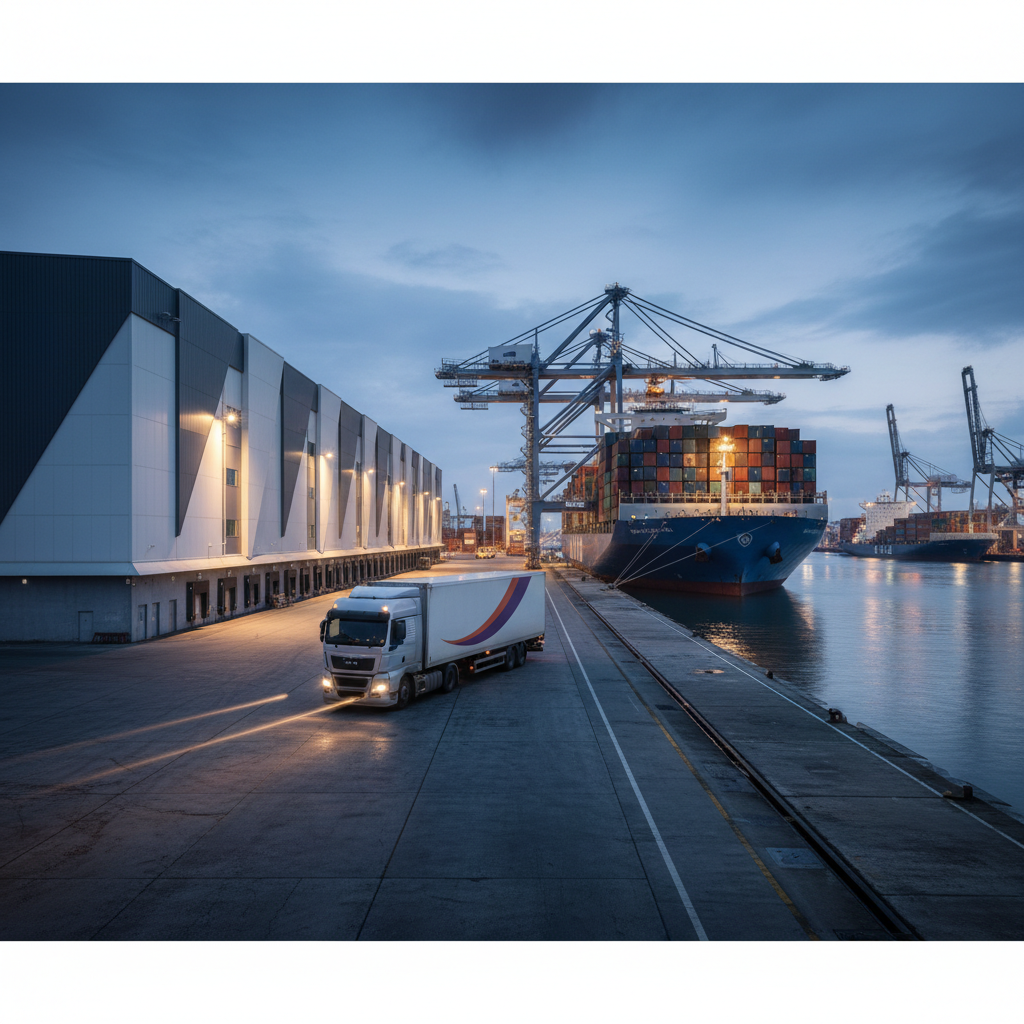
On October 1, 2026, a significant transaction reverberated through the global logistics sector: FedEx Corp. completed the sale of its FedEx Supply Chain subsidiary to the CMA CGM Group. This move is more than just a corporate divestiture; it represents a strategic realignment for two of the world's logistics titans, with profound implications for the intricate web of global trade.
How this impacts the global supply chain
The divestment of FedEx Supply Chain to CMA CGM Group marks a pivotal moment, influencing global supply-chain flows, routes, capacity, and operational strategies. For FedEx, this decision likely signals a renewed focus on its core express, parcel, and air freight services. By shedding its broader supply chain and contract logistics arm, FedEx can concentrate resources and capital on enhancing its established strengths in rapid, time-definite delivery and global air networks. This might lead to further optimization of its existing routes and potentially increased investment in its air cargo fleet and last-mile capabilities, aiming for greater efficiency and competitive edge in its primary domain.
Conversely, for CMA CGM Group, a global leader in container shipping, the acquisition represents a substantial expansion of its end-to-end logistics capabilities. Already possessing CEVA Logistics, this integration of FedEx Supply Chain significantly strengthens CMA CGM's presence in land-side logistics, warehousing, and value-added services. The move accelerates the trend towards integrated, multimodal logistics solutions, allowing CMA CGM to offer a more seamless, door-to-door service that bridges the gap between ocean freight and inland distribution. This could lead to optimized routing across different transport modes, potentially reducing transit times and improving the overall efficiency of global cargo movement. For instance, ocean freight arriving at ports can be more fluidly transferred to an integrated inland network, leveraging shared infrastructure and operational protocols.
The impact on global supply chain flows will manifest as shippers gain access to more consolidated offerings. Instead of managing multiple vendors for different legs of their supply chain (ocean, warehousing, trucking), they may increasingly opt for a single, integrated provider. This can simplify procurement and management, but also centralizes risk. The competitive landscape will intensify, as CMA CGM's expanded portfolio will directly challenge other integrated logistics providers and traditional freight forwarders, potentially spurring innovation and consolidation across the industry. Capacity utilization could also see improvements as CMA CGM seeks to leverage its newly acquired assets in conjunction with its existing network, leading to more efficient deployment of trucks, warehouses, and other logistics infrastructure globally.
Global financial impact
The financial and cost implications of this transaction are far-reaching, affecting shippers, carriers, and the broader trade environment. For shippers, the emergence of more comprehensive, integrated logistics solutions from a single provider like CMA CGM could offer several financial benefits. The potential for bundled services might lead to simplified billing, reduced administrative overhead, and potentially more competitive pricing due to economies of scale and optimized operations. Shippers with complex global supply chains could see cost savings through streamlined processes and improved efficiency, such as reduced inventory holding costs stemming from more reliable and faster end-to-end transit times. However, increased market consolidation could also lead to fewer choices in certain segments over the long term, which might influence pricing dynamics.
For FedEx, the divestment frees up capital and allows the company to sharpen its financial focus on its core express and parcel delivery operations. This strategic streamlining could lead to improved profitability and a stronger balance sheet in its primary business segments, as resources are no longer allocated to a broader, potentially less synergistic, supply chain division. The financial success of this move for FedEx will be measured by its ability to enhance efficiency and market share in its core offerings.
For CMA CGM, the acquisition represents a significant financial investment aimed at expanding its market footprint and diversifying its revenue streams beyond ocean shipping. The financial success of this strategic play hinges on the effective integration of FedEx Supply Chain's assets and capabilities into the broader CMA CGM Group, particularly with CEVA Logistics. Successful integration could unlock substantial operational synergies, allowing for cost reductions through shared infrastructure, technology, and personnel, ultimately boosting profitability and market value. Conversely, integration challenges could lead to initial financial strain. The expanded service portfolio is designed to attract new customers and deepen relationships with existing ones, potentially increasing overall revenue and market share in the lucrative integrated logistics sector.
At a macro level, this transaction contributes to the ongoing trend of consolidation within the global logistics industry. While this can lead to greater efficiencies and potentially lower costs for some through integrated services, it also raises questions about market concentration. The long-term financial health of global trade could benefit from more resilient and efficient supply chains facilitated by these integrated giants, as they are often better positioned to invest in advanced technologies, automation, and infrastructure. However, the balance between efficiency gains and market competition will be a critical factor influencing overall trade costs and accessibility.
How MGS can help navigate today's global trade environment
The strategic realignment initiated by FedEx's sale of its Supply Chain arm to CMA CGM Group introduces new layers of complexity and opportunity into the global trade environment. In such a dynamic landscape, a shipment-visibility control tower like MGS becomes an indispensable tool for operators seeking to maintain control, optimize operations, and ensure continuity.
Firstly, MGS provides uninterrupted visibility across evolving networks. When major logistics players undergo such significant restructuring, it often results in changes to operational systems, carrier partnerships, and data flows. Shippers utilizing MGS can maintain a consistent, real-time view of their cargo, irrespective of the underlying carrier or logistics provider changes that might occur during the integration of FedEx Supply Chain into CMA CGM's ecosystem. This ensures that critical supply chain data remains accessible and actionable, preventing blind spots that could arise from transitional periods.
Secondly, MGS helps in mitigating integration risks and disruptions. The process of integrating two large entities can be complex, potentially leading to temporary service disruptions, changes in routing, or unforeseen delays. With MGS, shippers receive proactive alerts and real-time tracking updates, enabling them to identify and address potential issues stemming from the transition before they escalate. This capability is crucial for maintaining supply chain resilience and minimizing the financial impact of unexpected events, ensuring that goods continue to move efficiently through the newly configured networks.
Furthermore, as CMA CGM expands its integrated multimodal offerings, MGS empowers shippers to optimize their multimodal strategies. The platform can provide granular data on transit times, reliability, and performance across different legs of the journey, whether ocean, rail, or road, now potentially offered under a single CMA CGM umbrella. This data-driven insight allows shippers to objectively compare the efficiency and cost-effectiveness of these new integrated solutions against traditional, fragmented approaches, informing strategic decisions about carrier selection and route optimization. By leveraging MGS, operators can effectively evaluate the promises of integrated logistics against real-world performance, ensuring they make choices that genuinely enhance their supply chain's efficiency and resilience.
Finally, MGS facilitates enhanced decision-making and performance monitoring in a consolidating market. With new service configurations and potential shifts in service level agreements, operators need robust tools to monitor their logistics partners' performance. MGS provides the data and analytics necessary to assess the effectiveness of the new CMA CGM integrated services, track key performance indicators, and hold partners accountable. This level of transparency is vital for navigating a global trade environment where strategic realignments are continuously reshaping the landscape, ensuring that operational decisions are always grounded in accurate, real-time information.
Source: Global Trade Magazine — https://www.globaltrademag.com/fedex-completes-sale-of-fedex-supply-chain-to-cma-cgm-group/