
Strategic Leadership Shift Ignites Gap's Profit Outlook: An Operational Deep Dive
Gap's recent leadership change at Old Navy has sparked a significant market reaction and a raised profit forecast. This brief explores the financial and operational implications, from organizational productivity to revenue and margin optimization.
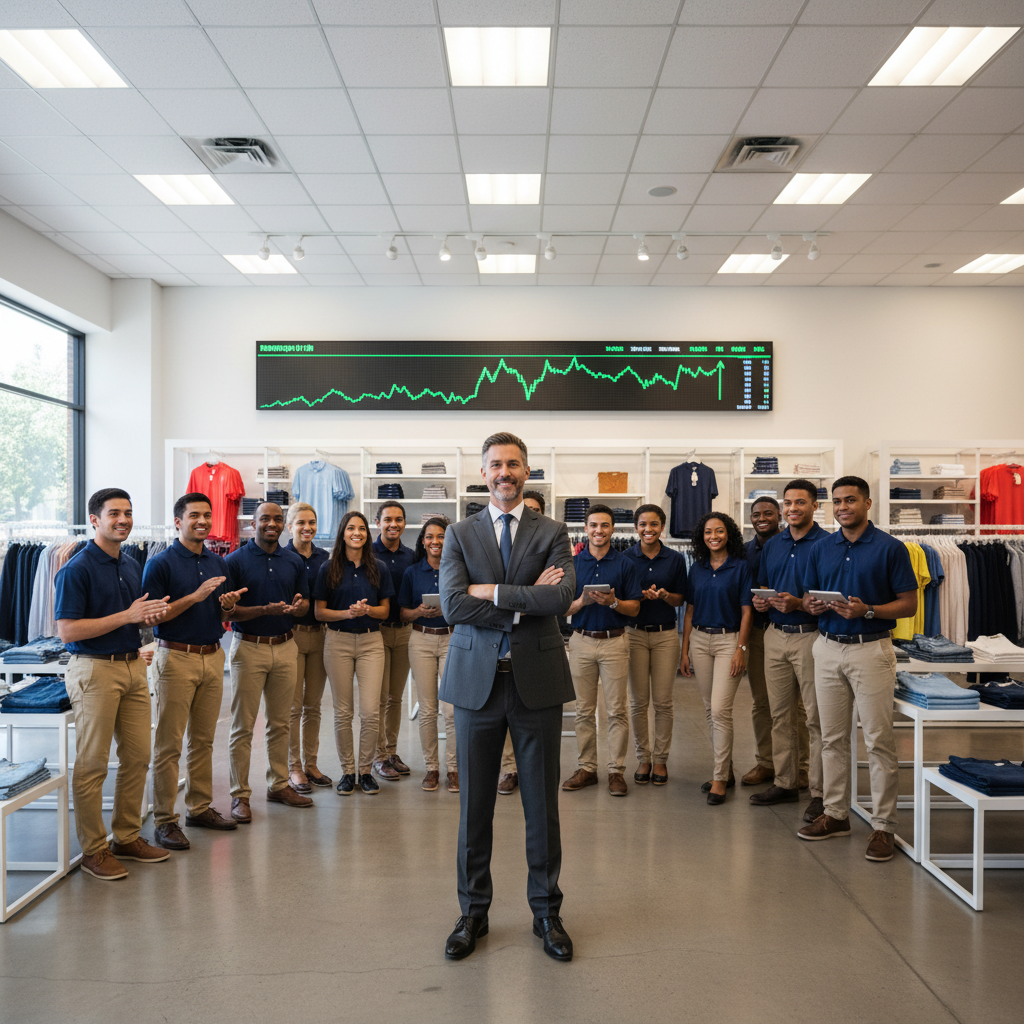
The recent announcement regarding a leadership shake-up at Gap's Old Navy brand, coupled with a revised upward profit forecast, has sent a clear signal to the market, evidenced by a substantial 24% surge in Gap's share price. This market reaction underscores the critical role that strategic operational and leadership decisions play in shaping a company's financial trajectory. While Gap's other brands have demonstrated resilience and growth, Old Navy has faced headwinds with falling comparable sales, making this leadership transition a pivotal moment for the brand's turnaround. This analysis delves into the financial and operational value levers at play, examining how these strategic shifts are expected to influence organizational productivity, workforce optimization, sales effectiveness, revenue generation, and ultimately, high-margin opportunities.
Organizational productivity
The appointment of a new CEO for Old Navy, Michael Francis, represents a strategic intervention designed to revitalize a key segment of Gap's portfolio. Organizational productivity, in this context, refers to the efficiency and effectiveness with which Old Navy converts its resources into desired outputs, such as sales and profitability. The "leadership shake-up" signals an acknowledgment that existing organizational structures or processes were not yielding optimal results, particularly given the brand's "falling comparable sales." A new leader brings fresh perspectives, potentially streamlining decision-making, re-aligning departmental goals, and fostering a more performance-driven culture. This shift aims to enhance the collective output of the Old Navy organization, ensuring that internal operations are better geared towards market demands and competitive pressures. The market's positive response, reflected in the "24% share surge" and the "profit forecast raised," indicates investor confidence that this leadership change will indeed translate into tangible improvements in how the organization operates and delivers value. This is not merely a personnel change but a strategic move to unlock latent productivity within a large, established brand, directly impacting its ability to contribute positively to Gap's overall financial health.
Workforce optimization
The strategic decision to appoint Michael Francis as the new CEO of Old Navy is a prime example of workforce optimization at the highest level. Workforce optimization extends beyond mere headcount management; it involves ensuring the right talent is in the right roles, equipped with the vision and capabilities to drive performance. Old Navy's struggle with "falling comparable sales" necessitated a re-evaluation of its leadership capabilities to steer the brand back to growth. By bringing in new leadership, Gap is optimizing its executive workforce, placing a leader with the specific expertise and strategic acumen believed necessary to address Old Navy's challenges. This move is intended to cascade throughout the organization, inspiring renewed focus, improving morale, and setting clear strategic directions that empower the broader workforce. The market's enthusiastic reaction, manifested in the "24% share surge," suggests that investors perceive this executive-level workforce optimization as a critical catalyst for the brand's future success, directly contributing to the "profit forecast raised" by instilling confidence in the strategic direction and execution capabilities of the Old Navy team.
Sales effectiveness
The core challenge facing Old Navy, as highlighted by its "falling comparable sales," is a clear indicator of issues in sales effectiveness. This metric directly reflects the brand's ability to convert customer interest into actual purchases and maintain customer loyalty over time. The leadership shake-up, therefore, is fundamentally aimed at enhancing Old Navy's sales effectiveness. A new CEO is expected to implement strategies that improve product assortment, merchandising, marketing campaigns, and in-store or online customer experience, all of which are crucial drivers of sales performance. The objective is to reverse the downward trend in comparable sales, ensuring that Old Navy's offerings resonate more strongly with its target demographic and that sales channels are optimized for conversion. The "profit forecast raised" by Gap, following this strategic appointment, is a direct acknowledgment that improved sales effectiveness at Old Navy is a key component of the company's anticipated financial improvement. The "24% share surge" further underscores the market's belief that these efforts will successfully reignite customer engagement and drive stronger sales outcomes for the brand.
Revenue optimization
Old Navy's "falling comparable sales" directly translates to a significant drag on Gap's overall revenue performance. The strategic leadership change is thus a direct maneuver towards revenue optimization for the brand. Revenue optimization encompasses not just increasing sales volume but also improving pricing strategies, product mix, and market penetration to maximize top-line growth. The new CEO's mandate will likely involve a comprehensive review of Old Navy's market positioning, product lifecycle management, and customer acquisition strategies to stem the decline and initiate a period of sustainable revenue growth. The fact that "Gap's other brands gain momentum" provides a comparative benchmark, indicating that the overall market is receptive, but Old Navy specifically needs to adapt. The "profit forecast raised" is a strong signal that management anticipates successful revenue optimization efforts at Old Navy will contribute meaningfully to the company's financial outlook. This expected turnaround in revenue for Gap's "biggest brand" is a primary driver behind the "24% share surge," as investors foresee a significant uplift in the company's top-line performance.
High-margin opportunities
The decision to raise Gap's "profit forecast" following the leadership change at Old Navy inherently points to the identification and pursuit of high-margin opportunities. While "falling comparable sales" at Old Navy suggest challenges, the strategic appointment of a new CEO is a proactive step to unlock greater profitability. High-margin opportunities can arise from various factors, including improved product mix (e.g., selling more full-price items or higher-value categories), enhanced operational efficiency reducing the cost of goods sold, or more effective pricing strategies. The new leadership is expected to analyze Old Navy's product portfolio and operational footprint to identify areas where profitability can be significantly enhanced. This could involve optimizing inventory management to reduce markdowns, refining sourcing strategies, or focusing on product lines that naturally carry higher margins. The market's enthusiastic response, characterized by the "24% share surge," reflects investor confidence that these strategic adjustments under new leadership will not only reverse the negative sales trend but also fundamentally improve the brand's profitability profile, directly contributing to the "profit forecast raised" and positioning Old Navy for a future of more sustainable and higher-margin growth.
Source: The Economic Times Markets — https://economictimes.indiatimes.com/markets/us-stocks/wall-street-guide/gap-shares-surge-24-after-old-navy-leadership-shake-up-profit-forecast-raised/articleshow/133596540.cms