
Strategic Investment Fuels Long-Term Value: A Deep Dive into a Global QSR's $8.5 Billion Plan
A major quick-service restaurant chain's $8.5 billion investment plan targets enhanced productivity and higher operating margins by 2030. This analysis explores how initiatives in food quality, aesthetics, and employee training, alongside a strategic pivot towards chicken products, are set to optimize costs, cash flow, and revenue across the franchise network.
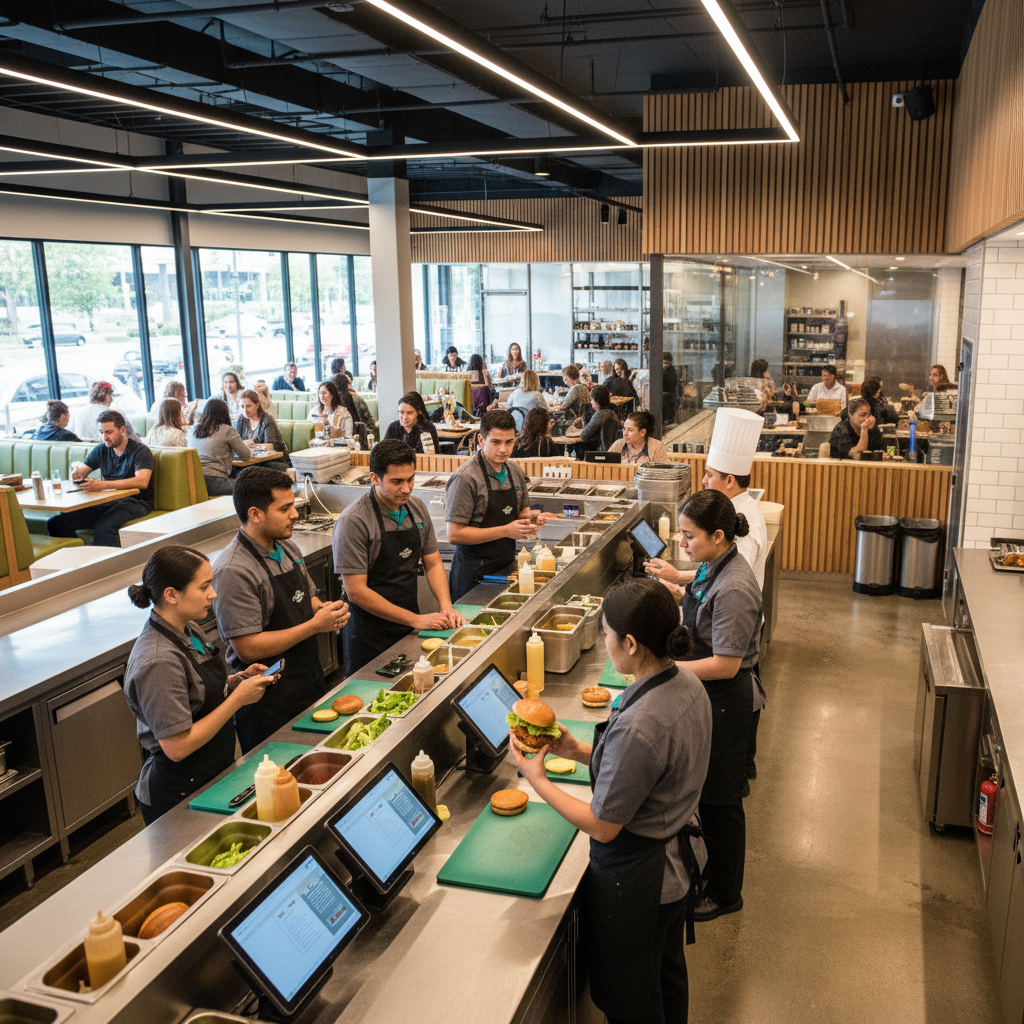
In a strategic move signaling a commitment to long-term financial health and operational excellence, a major global quick-service restaurant chain has unveiled an ambitious $8.5 billion investment plan. This initiative, designed to bolster its extensive franchisee network, aims to significantly boost productivity and elevate operating margins by 2030. The comprehensive strategy encompasses improvements in core product quality, enhancements to the customer environment, and robust employee development programs. This brief analyzes the multifaceted financial and operational value inherent in this substantial investment, examining its potential impact across various critical business dimensions.
Operation efficiency
The $8.5 billion investment is a direct commitment to enhancing operational efficiency across the franchise system. By refreshing restaurant aesthetics, the company likely aims to implement more streamlined layouts, upgrade equipment, and improve the overall flow of service, reducing bottlenecks and speeding up order fulfillment. Simultaneously, comprehensive employee training programs are crucial for standardizing best practices, minimizing errors, and increasing the speed and consistency of service delivery. These combined efforts are designed to directly 'boost productivity,' ensuring that each dollar of input generates more output, which is fundamental to operational efficiency.
Cost reduction
While direct cost reduction isn't the sole focus, the strategy incorporates significant cost management and avoidance elements. The escalation of beef prices presents a clear cost pressure. By strategically pursuing 'increased market share in chicken products,' the company is diversifying its primary protein offering, potentially mitigating the impact of volatile beef costs. This shift can act as a cost avoidance strategy by reducing reliance on a high-cost commodity. Furthermore, the 'boost productivity' goal, driven by training and aesthetic improvements, can lead to lower labor costs per unit of output and reduced waste, indirectly contributing to a more favorable cost structure.
Organizational productivity
Organizational productivity is a central pillar of this $8.5 billion investment. The 'comprehensive employee training' initiative is paramount, as it directly elevates the skill sets and efficiency of the workforce across the entire franchise network. Better-trained employees are more capable, make fewer mistakes, and can handle higher volumes, leading to improved throughput. Moreover, 'refreshing restaurant aesthetics' can contribute to a more ergonomic and efficient working environment, enabling teams to operate more cohesively and productively. The collective impact of these improvements across numerous locations will translate into substantial system-wide productivity gains, a key factor in achieving 'higher margins by 2030'.
Customer profitability maximization
The investment strategy directly targets customer profitability through enhanced experience and diversified offerings. 'Elevating food quality' and 'refreshing restaurant aesthetics' are designed to improve customer satisfaction and loyalty. A superior experience can encourage repeat visits, increase average transaction values through upselling or premium choices, and attract new customers, thereby expanding the base of profitable patrons. The push for 'increased market share in chicken products' also caters to evolving consumer preferences and dietary trends, ensuring the brand remains relevant and captures a broader segment of the market, ultimately maximizing the lifetime value of its customer base.
Cash flow optimization
The $8.5 billion investment represents a significant capital outlay, an initial cash outflow designed to generate substantial future cash inflows. The explicit target of 'higher margins by 2030' is a direct indicator of improved profitability, which translates directly into stronger operating cash flow. Increased organizational productivity means more efficient use of resources, leading to better cash conversion cycles. Furthermore, 'increased market share' contributes to higher sales volumes and revenue, bolstering the top line and, consequently, the cash generated from operations. This strategic investment is a long-term play to optimize the company's cash-generating capabilities.
Procurement savings
The escalating 'beef prices' highlight a critical procurement challenge. The strategic response, aiming for 'increased market share in chicken products,' serves as a proactive procurement management approach. By shifting demand and potentially increasing volumes for chicken, the company may gain leverage to negotiate more favorable terms with chicken suppliers, or at least reduce its exposure to the volatility and rising costs associated with beef. While not a direct 'savings' in the traditional sense, it's a sophisticated strategy to control and optimize input costs within a dynamic commodity market.
Workforce optimization
'Providing comprehensive employee training' is the cornerstone of workforce optimization within this $8.5 billion plan. This initiative aims to enhance employee skills, improve consistency in service delivery, and boost overall efficiency. A well-trained workforce is less prone to errors, operates faster, and can adapt more readily to new procedures or menu items. This not only improves operational output but can also lead to higher employee satisfaction and retention, reducing recruitment and training costs associated with turnover. Optimized human capital is a critical driver for achieving the broader productivity and margin goals.
Sales effectiveness
Sales effectiveness is poised for significant uplift through this strategic investment. 'Elevating food quality' and 'refreshing restaurant aesthetics' directly enhance the perceived value and appeal of the brand's offering, making it more attractive to consumers. This can lead to higher foot traffic, increased conversion rates, and greater customer spend per visit. The focused effort to achieve 'increased market share in chicken products' is a targeted sales strategy, capitalizing on market trends and potentially expanding the customer base by offering compelling alternatives, thereby driving overall sales volume and market penetration.
Revenue optimization
Revenue optimization is a key outcome anticipated from the $8.5 billion investment. By 'elevating food quality' and 'refreshing restaurant aesthetics,' the company aims to enhance the customer experience, which can support premium pricing strategies or encourage customers to choose higher-value menu items. The strategic push for 'increased market share in chicken products' directly contributes to revenue growth by expanding the product offering and attracting new customers or increasing purchases from existing ones. These initiatives collectively work to maximize the top line, forming a crucial component of the overarching goal to achieve 'higher margins by 2030'.
High-growth opportunities
The investment clearly identifies and targets high-growth opportunities, particularly in the context of evolving market dynamics. The strategic pivot towards 'increased market share in chicken products' is a direct response to 'beef prices escalate,' signaling an intentional shift into a potentially more stable or expanding market segment. The $8.5 billion commitment to franchisee support, which includes product and aesthetic enhancements, is designed to equip the network to capitalize on this growth area, positioning the brand for significant expansion within this category and contributing to overall market share growth by 2030.
High-margin opportunities
The explicit target of 'higher margins by 2030' underscores the focus on profitability. The investment in 'elevating food quality' and 'refreshing restaurant aesthetics' can create a more premium perception, potentially allowing for better pricing power or justifying existing prices against rising operational costs. Furthermore, the strategic emphasis on 'increased market share in chicken products' could be a direct pursuit of higher-margin offerings, especially if chicken products inherently carry better profitability or offer more stable input costs compared to the escalating prices of beef. This multi-pronged approach aims to enhance the overall profitability profile of the business.
Source: The Economic Times Markets — https://economictimes.indiatimes.com/markets/us-stocks/news/mcdonalds-lays-out-8-5-billion-franchisee-support-plan-targets-higher-margins-by-2030/articleshow/134440438.cms