
SolitAir's Bishkek Route: A New Air Corridor Reshaping Central Asian Logistics
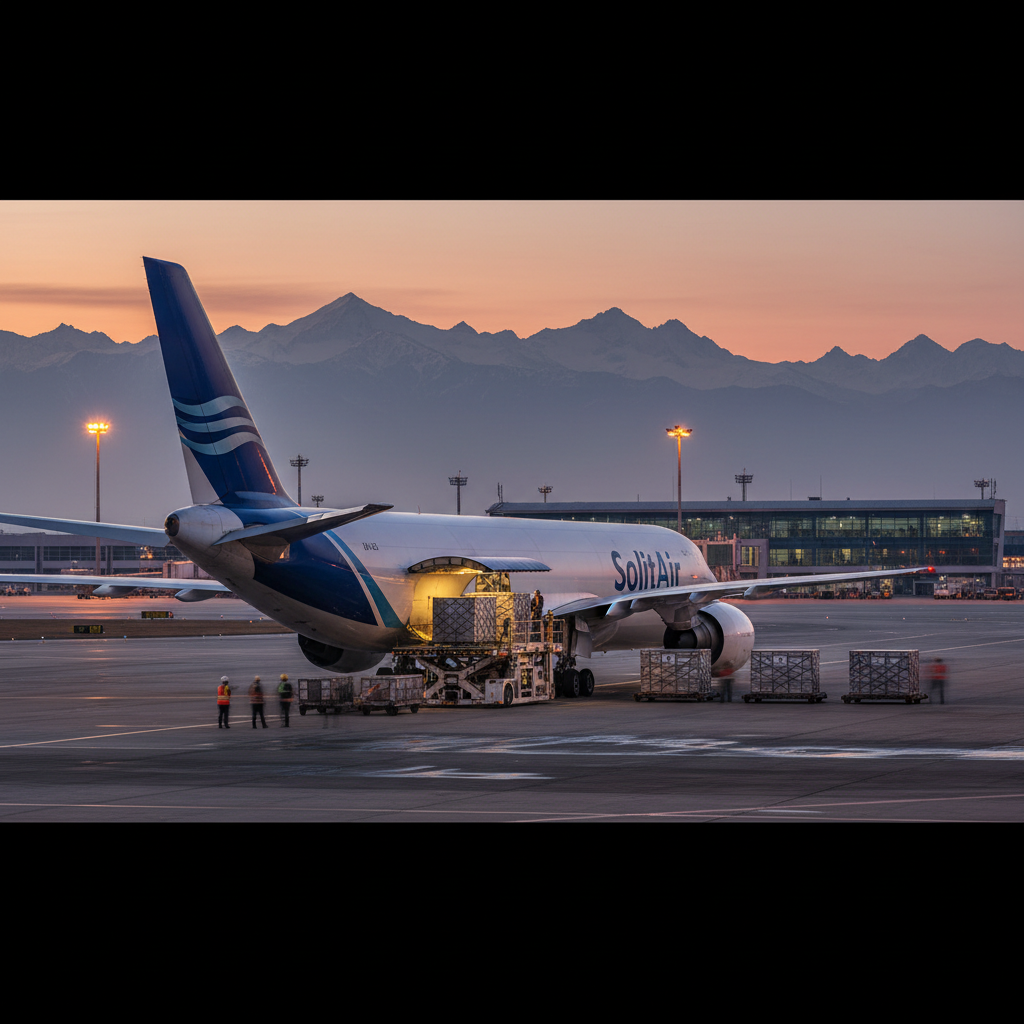
SolitAir's new direct air cargo service between Dubai and Bishkek opens a critical express middle-mile link, impacting global supply chains and offering new strategic opportunities for businesses.
How this impacts the global supply chain
SolitAir's launch of a charter cargo service between Dubai World Central (DWC) and Bishkek’s Manas International Airport (BSZ) represents a significant development for global supply chains, particularly for Central Asia. This new direct air corridor fundamentally alters existing flows and routes by establishing a swift, dedicated link where more circuitous or multimodal options might have been the norm. For businesses engaged in trade with Kyrgyzstan, it means significantly reduced transit times and a more predictable logistics pathway, effectively shortening the "middle-mile" for time-sensitive or high-value goods.
In terms of capacity, the introduction of a "dedicated next-generation B2B, airport-to-airport, express middle-mile cargo airline" signifies a targeted increase in air freight availability on this specific lane. This new capacity is crucial for sectors requiring rapid delivery, such as e-commerce, pharmaceuticals, or electronics components. It also reinforces Dubai World Central's role as a vital gateway for Central Asian markets, strengthening its position in global logistics networks.
Operationally, this development offers considerable advantages. Shippers can anticipate streamlined processes and reduced handling points. The "airport-to-airport" nature of SolitAir's service implies a focus on efficiency at the air freight stage, allowing businesses to optimize their first and last-mile logistics more effectively. This can lead to lower operational risks, fewer opportunities for damage or loss, and greater overall reliability. By integrating Kyrgyzstan more directly into the global air freight network, it supports the growth of local industries and fosters economic development, underscoring a trend of specialized cargo airlines serving niche market demands.
Global financial impact
The financial and cost implications of SolitAir's new DWC-BSZ cargo service are significant for shippers, carriers, and broader trade. For shippers, the primary financial benefit lies in the potential for reduced total logistics costs. While direct air freight might have a higher per-unit cost than slower modes, the "express middle-mile" service directly translates to faster inventory turns, lower inventory holding costs, and a reduced need for buffer stock. For high-value goods, this can mean substantial savings in working capital. Faster market access for new products or seasonal goods can also lead to increased sales and competitive advantage, directly impacting revenue. Reduced transit times further mitigate risks associated with product obsolescence or spoilage, safeguarding profit margins.
For carriers, SolitAir gains new revenue streams and expands its network footprint by entering Kyrgyzstan. This strategic move taps into an underserved market, potentially securing first-mover advantage and establishing strong relationships. The "charter service" model allows for flexible capacity deployment, enabling SolitAir to test market demand and optimize operational costs. This expansion strengthens SolitAir's position as a specialized B2B cargo airline. For competing carriers, particularly those offering indirect services, this direct route could introduce new competitive pressures, potentially leading to adjustments in pricing or service offerings.
At a broader level, the financial impact on trade is significant. Improved air connectivity facilitates greater trade volumes between the UAE/Middle East and Central Asia, stimulating economic activity in Kyrgyzstan. Easier export and import processes can attract foreign direct investment, fostering industrial growth and job creation. The specialized nature of SolitAir's service, catering to higher-value goods, means a greater economic multiplier effect per unit of freight moved. This improved trade infrastructure contributes to overall economic resilience and diversification for the involved regions.
How MGS can help navigate today's global trade environment
In today's complex global trade environment, new routes like SolitAir's DWC-BSZ service necessitate advanced shipment visibility. A platform like MGS, a shipment-visibility control tower, is crucial for operators to leverage such developments and mitigate risks.
Firstly, MGS provides real-time, end-to-end visibility for shipments utilizing this new express middle-mile route. For time-sensitive, B2B air cargo, knowing the precise location and status of goods is paramount. MGS can integrate data from SolitAir's systems, ground handlers, and customs agencies at both DWC and BSZ, offering a consolidated view. This allows shippers to monitor schedule adherence, track potential delays due to weather or ground operations, and proactively communicate with consignees.
Secondly, MGS enables proactive risk management and exception handling. On a new route, unforeseen operational challenges can arise. If a charter flight experiences a diversion, delay, or cargo handling issue at Bishkek, MGS can immediately trigger alerts. This empowers logistics managers to quickly assess the situation, initiate contingency plans, and inform downstream operations, minimizing disruptions to production schedules or customer commitments. Without such visibility, issues on a new direct route could go undetected, leading to significant financial losses.
Furthermore, MGS facilitates data-driven decision-making and performance optimization. By aggregating data from shipments on the DWC-BSZ route, MGS provides insights into SolitAir's actual performance metrics, such as on-time delivery rates and transit time variances. Shippers can use this data to evaluate the reliability and cost-effectiveness of this new service against alternatives, optimizing future routing decisions and ensuring the strategic benefits of a direct express service are fully realized. MGS integrates this new lane's performance into a broader network analysis, identifying opportunities to re-balance freight flows across the entire supply chain, maximizing efficiency and resilience.
Demand–supply analysis & improvement
SolitAir's new charter service to Bishkek reveals clear demand-supply dynamics. The very launch indicates an identified, likely underserved, demand for express air cargo connectivity between the UAE and Kyrgyzstan. This demand likely stems from growing trade, a need for faster transport of time-sensitive or high-value goods (e.g., electronics, pharmaceuticals, e-commerce), and existing regional connectivity gaps that made traditional routes inefficient. Businesses seeking to expand into or source from Kyrgyzstan require robust, fast logistics support.
SolitAir provides a specialized supply solution. As a "dedicated next-generation B2B, airport-to-airport, express middle-mile cargo airline," it focuses on efficient, speedy air legs. The initial "charter service" reflects a flexible supply strategy, allowing SolitAir to gauge demand before committing to regular schedules.
Improvement levers for shippers include leveraging MGS to analyze the new route's performance against existing options, enabling data-driven route optimization for lead time and cost reduction. For SolitAir, MGS could provide insights into demand patterns, helping refine capacity management and scheduling for optimal utilization. Regionally, the success of this air link could spur investment in first and last-mile infrastructure around BSZ, further enhancing overall supply chain efficiency and attracting more international trade and investment into Kyrgyzstan.
ROI-focused resilience
Investing in resilience today means making strategic choices that yield measurable returns by mitigating quantifiable risks. SolitAir's direct air cargo service to Bishkek, coupled with an MGS visibility platform, exemplifies this.
Risk 1: Extended Lead Times & High Inventory Costs. Indirect routes to landlocked regions mean unpredictable, lengthy transit, requiring higher safety stock and tying up working capital.
- Investment: Using SolitAir's express air service.
- ROI: Reduced transit times (e.g., 3-7 days faster). For a company with significant inventory, this can free up substantial working capital. MGS verifies these lead time reductions, proving the ROI.
Risk 2: Supply Chain Disruptions & Production Stoppages. Complex journeys increase exposure to delays (customs, ground handling). For manufacturers, component delays mean costly production halts.
- Investment: Prioritizing direct air freight for critical goods, monitored by MGS.
- ROI: MGS provides early warnings for delays on the DWC-BSZ route, enabling proactive mitigation (e.g., alternative shipments) and preventing costly production stoppages, thereby protecting revenue.
Risk 3: Lost Sales & Customer Dissatisfaction. Slow or unreliable delivery harms market opportunities and brand reputation.
- Investment: Ensuring faster, more reliable delivery via the new air service, tracked by MGS.
- ROI: Improved on-time delivery rates directly translate to increased customer retention and sales. MGS tracks these performance metrics, offering concrete evidence of the return on investment in enhanced logistics.
By strategically utilizing direct air routes and MGS visibility, businesses build resilience with a clear understanding of the financial returns, transforming it into a value driver.
Source: Supply Network Africa — https://supplynetwork-africa.co.za/solitair-charters-new-cargo-service-to/