
Small Dispute, Massive Disruption: The LA/LB Port Standoff and Global Supply Chain Vulnerability
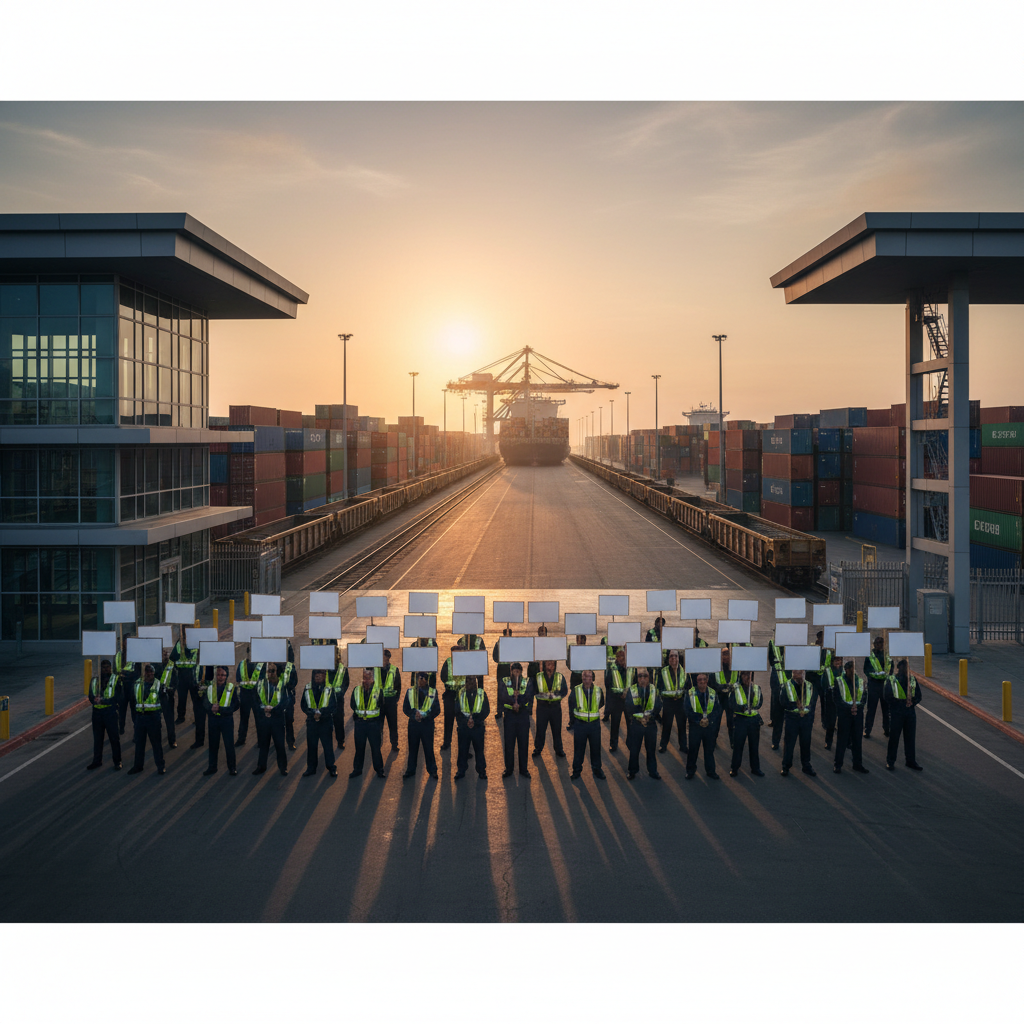
A potential walkout by 250 security personnel at the Los Angeles and Long Beach port complex threatens to paralyze half of America's busiest trade gateway, exacerbating existing congestion with 35,688 containers already awaiting rail service. This analysis explores the far-reaching implications for global supply chains, financial markets, and how advanced visibility platforms like MGS are crucial for navigating such critical disruptions.
How this impacts the global supply chain
The threatened labor action by a small contingent of 250 security personnel at the Los Angeles and Long Beach port complex, even if delayed, represents a critical vulnerability in the global supply chain. These two ports collectively form America's busiest gateway for trans-Pacific trade, and any significant disruption here creates immediate and cascading effects. Firstly, global supply chain flows are directly impacted as vessels destined for these ports face potential diversions, extended dwell times, or outright cancellations. This forces carriers to re-route, adding transit time and distance, and potentially overwhelming alternative ports that lack the necessary infrastructure or capacity to handle unexpected surges. The existing backlog of 35,688 containers already awaiting rail service underscores the fragility of the intermodal network; a port shutdown would halt the flow of these containers entirely, creating an insurmountable bottleneck that would ripple through inland distribution centers across the United States. Operational efficiency would plummet, leading to increased container rollovers, where scheduled cargo misses its intended vessel, further delaying deliveries and exacerbating inventory challenges for businesses. Ultimately, this scenario highlights how a localized labor dispute, involving a relatively small workforce, can disproportionately cripple a vital global trade artery, disrupting manufacturing schedules, retail replenishment, and the timely delivery of goods worldwide.
Global financial impact
The financial ramifications of a potential shutdown or severe slowdown at the Los Angeles and Long Beach ports are substantial and far-reaching, affecting all stakeholders in the global trade ecosystem. Shippers would face a direct increase in operational costs, including higher demurrage and detention fees as containers remain stranded at the port or on vessels. The necessity of re-routing cargo or utilizing expedited, often more expensive, shipping methods would inflate freight costs significantly. Beyond immediate logistics expenses, businesses would incur substantial losses from delayed or missed sales opportunities, increased inventory holding costs, and potential penalties for failing to meet contractual delivery deadlines. For carriers, the financial burden includes additional fuel costs for diversions, reduced vessel utilization due to prolonged port stays, and the erosion of schedule reliability, which can lead to customer dissatisfaction and loss of future business. The broader trade environment would experience inflationary pressures as the cost of moving goods rises, potentially impacting consumer prices. Furthermore, the uncertainty generated by such disputes can deter investment and disrupt long-term supply chain planning, leading to a less predictable and more expensive global trade landscape. The existing backlog of 35,688 containers already awaiting rail service represents a significant financial liability, with each day of delay adding to the cumulative cost for importers and exporters.
How MGS can help navigate today's global trade environment
In an environment characterized by such high-impact, localized disruptions, a shipment-visibility control tower like MGS becomes an indispensable tool for operators. MGS provides real-time, end-to-end visibility of all shipments, allowing businesses to immediately identify which of their 35,688 (or more) containers are directly impacted by the potential Los Angeles and Long Beach port walkout. This granular insight enables proactive decision-making, such as re-routing cargo before it reaches the affected port or diverting vessels to alternative gateways if the situation escalates. The platform's predictive analytics can forecast potential delays based on port congestion data and labor dispute updates, issuing early warnings to stakeholders. For instance, MGS could alert users to vessels en route to LA/LB that might be caught in the disruption, allowing them to communicate with carriers to explore alternative discharge ports. Furthermore, MGS facilitates dynamic inventory management by providing accurate ETAs, enabling businesses to adjust production schedules, manage stock levels, and mitigate the financial impact of delays. By aggregating data from various sources – including vessel tracking, port status updates, and rail movements – MGS offers a consolidated view that empowers supply chain managers to assess risk, evaluate alternative logistics strategies, and communicate effectively with partners, transforming potential chaos into actionable insights and maintaining business continuity amidst unforeseen challenges.
Demand–supply analysis & improvement
The situation at Los Angeles and Long Beach starkly illustrates a critical imbalance in the demand-supply dynamics of global trade, particularly concerning port services and intermodal connectivity. The demand for efficient cargo throughput at these major gateways is consistently high, driven by the vast consumer and industrial markets of the United States. However, the supply of critical resources – in this case, port security labor and rail capacity – proves to be highly vulnerable. A small group of 250 security personnel holds the potential to significantly constrain the supply of port operational capacity, highlighting an over-reliance on specific labor segments within a complex system. Compounding this, the existing backlog of 35,688 containers awaiting rail service indicates a pre-existing deficit in intermodal rail capacity, meaning that even if port operations were fluid, the onward movement of goods is already constrained. Concrete improvement levers include a multi-pronged approach: firstly, investing in robust labor relations and dispute resolution mechanisms to prevent such critical nodes from being paralyzed by localized disagreements. Secondly, accelerating investment in port automation and expanding intermodal rail infrastructure to enhance resilience and reduce dependence on single points of failure. Thirdly, encouraging shippers to diversify their port strategies, utilizing a broader network of gateways to distribute demand and reduce the impact of disruptions at any single location. MGS, by providing data on port performance and congestion across various hubs, can inform these strategic decisions, helping businesses identify and leverage alternative routes and modes effectively.
ROI-focused resilience
Investing in supply chain resilience, particularly through advanced visibility platforms and diversified strategies, offers a quantifiable return on investment (ROI) against the backdrop of risks like the Los Angeles and Long Beach port dispute. The potential financial exposure from the 35,688 containers already waiting for rail service, let alone those that would be impacted by a full walkout, is immense. Each day these containers are delayed incurs demurrage, detention, and increased inventory holding costs, alongside the opportunity cost of lost sales. A proactive investment in a platform like MGS can directly mitigate these risks. For example, by providing early warning of a potential port shutdown, MGS allows shippers to divert cargo, potentially saving thousands in demurrage fees per container that would otherwise be stranded. If even 10% of the 35,688 containers could be proactively re-routed or managed more efficiently through MGS insights, the cost savings in avoided penalties and expedited shipping could quickly outweigh the platform's investment. Furthermore, MGS enables businesses to quantify the risk of reliance on single ports, informing strategic investments in alternative port relationships or multimodal transport options. The ROI is not just in cost avoidance but also in maintaining customer satisfaction, protecting brand reputation, and ensuring business continuity, all of which contribute to long-term profitability and market competitiveness. In essence, resilience investments like MGS transform potential liabilities into strategic advantages, offering a clear financial justification for enhanced supply chain preparedness.
Source: The Loadstar — https://theloadstar.com/250-watchmen-one-picket-line-and-half-of-americas-busiest-port-complex/