
Savannah's Mega-Terminal: Reshaping Global Supply Chains with 12 Million TEU Capacity
The Port of Savannah's ambitious expansion to an annual capacity of 12 million TEUs is set to fundamentally alter global shipping dynamics. This analysis explores its profound impact on supply chain flows, financial implications for stakeholders, and how advanced visibility platforms like MGS become indispensable for navigating this evolving trade landscape.
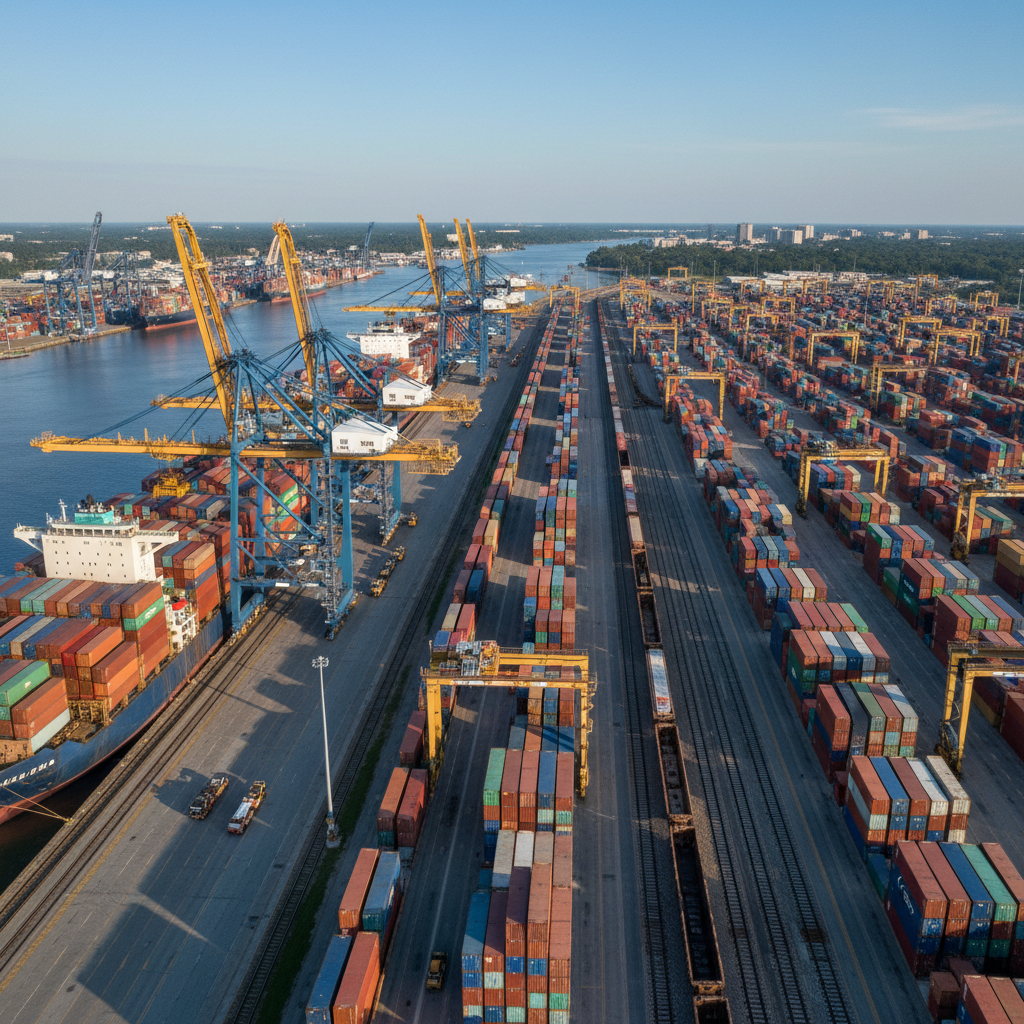
The announcement of the Port of Savannah's significant expansion, projecting an annual handling capacity of 12 million TEUs upon completion, marks a pivotal moment for global logistics. This development is not merely an incremental upgrade but a substantial boost to the East Coast's port infrastructure, poised to reshape trade routes, operational efficiencies, and the financial calculus for participants across the supply chain.
How this impacts the global supply chain
This monumental increase in capacity at the Port of Savannah will have far-reaching implications for global supply chain flows and operational strategies. Primarily, it significantly enhances the overall container handling capability on the U.S. East Coast, offering a robust alternative to traditionally congested gateways. With an expected annual capacity of 12 million TEUs, Savannah will solidify its position as a critical node in international trade networks, potentially diverting cargo that might otherwise transit through West Coast ports or other East Coast facilities.
The expansion is likely to influence shipping routes, encouraging carriers to deploy larger vessels to the port, optimizing economies of scale. This could lead to a re-evaluation of existing vessel rotations and service loops, potentially creating more direct routes from key manufacturing hubs in Asia and Europe to the U.S. Southeast. For shippers, this translates into more diverse port options, reducing reliance on single points of entry and mitigating risks associated with localized disruptions, such as labor disputes or natural disasters.
Operationally, the new capacity aims to improve efficiency and reduce transit times. A larger, more modern terminal typically incorporates advanced technology and streamlined processes, leading to faster vessel turnarounds, reduced dwell times for containers, and improved intermodal connectivity. This enhanced throughput capability will empower supply chain managers to plan with greater precision, potentially reducing safety stock requirements and improving inventory management across their networks. The increased capacity also acts as a vital buffer against demand surges, making the entire supply chain more resilient to fluctuations and unexpected events.
Global financial impact
The financial and cost implications of Savannah's expansion are substantial, offering potential benefits and challenges for various stakeholders. For shippers, the increased competition among ports and the potential for reduced congestion could lead to more favorable shipping rates. Greater reliability and predictability in port operations mean fewer costly delays, reduced demurrage and detention charges, and a decrease in the need for expensive expedited freight services. This improved efficiency directly translates into lower landed costs for goods, enhancing competitiveness for businesses.
Carriers stand to benefit from the ability to deploy larger, more cost-effective vessels to Savannah, maximizing their per-TEU profitability. However, the increased capacity across the industry could also intensify competition among carriers, potentially putting downward pressure on freight rates. Nonetheless, the promise of faster turnarounds and reduced operational bottlenecks at the port will contribute to better asset utilization and operational cost savings for shipping lines. The expansion also supports the long-term trend of mega-vessel deployment, which requires ports with deep channels and extensive handling capabilities.
For trade at large, the Port of Savannah's enhanced capacity fosters a more efficient and resilient global trading environment. By providing a reliable gateway for imports and exports, it supports economic growth, particularly in the U.S. Southeast and Midwest. Reduced supply chain costs can stimulate trade volumes, making U.S. goods more competitive in international markets and making imported goods more affordable for consumers. This investment in infrastructure ultimately contributes to greater economic stability and reduced vulnerability to global trade shocks, offering a significant return on investment in terms of sustained economic activity and reduced inflationary pressures from supply chain inefficiencies.
How MGS can help navigate today's global trade environment
In an increasingly complex and dynamic global trade environment, the Port of Savannah's expansion, while beneficial, also introduces new layers of operational considerations. A shipment-visibility control tower platform like MGS becomes an indispensable tool for operators to effectively leverage this new capacity and manage their supply chains.
Firstly, MGS provides unparalleled real-time visibility into cargo movements through the expanded Port of Savannah. As vessels discharge and load containers, MGS can track individual TEUs, providing precise location data and estimated times of arrival and departure. This granular visibility allows shippers to monitor the performance of the new terminal, ensuring that the promised efficiencies are realized and quickly identifying any emerging bottlenecks or delays, even within a high-capacity environment.
Secondly, MGS empowers proactive decision-making. With the ability to aggregate data from carriers, port systems, and inland logistics providers, MGS can offer predictive analytics regarding potential congestion or disruptions at the new 12 million TEU facility. If, for instance, a sudden surge in volume or an unexpected operational issue arises, MGS can alert operators in advance, allowing them to reroute shipments, adjust inventory plans, or communicate proactively with customers. This capability is crucial for maximizing the benefits of increased port capacity, ensuring that the investment translates into tangible supply chain reliability.
Furthermore, MGS facilitates optimized inventory management. By providing accurate, real-time insights into shipment progress through Savannah, businesses can reduce the need for excessive safety stock, freeing up working capital. The platform's ability to offer a single source of truth for all shipment data helps reconcile discrepancies and improve collaboration across the entire logistics ecosystem, from origin to final destination. This holistic view ensures that even with expanded port capabilities, operators maintain tight control over their supply chain, capitalizing on the new efficiencies while mitigating potential risks.
Demand–supply analysis & improvement
The Port of Savannah's expansion to an annual capacity of 12 million TEUs represents a significant strategic enhancement of supply-side infrastructure within the global logistics network. This substantial increase in handling capability directly addresses the burgeoning demand for containerized freight, particularly through the U.S. East Coast. While the source text does not specify current demand figures, an investment of this magnitude clearly signals a strong, forward-looking assessment of sustained growth in trade volumes and the need for robust capacity to meet future requirements.
From a demand-supply perspective, this development aims to rebalance the equilibrium, particularly during periods of high demand or unforeseen disruptions. By injecting 12 million TEUs of annual capacity into the system, Savannah is positioning itself to absorb growing import and export volumes, thereby alleviating pressure on other, potentially overstretched, port gateways. This expanded supply of port services can help stabilize freight rates, improve service levels, and reduce the volatility that has characterized global shipping in recent years.
Concrete improvement levers stemming from this analysis include enhanced network optimization for shippers. They can now strategically leverage Savannah's increased capacity to diversify their port calls, optimize lead times, and potentially reduce overall transportation costs. For carriers, the expanded facility offers opportunities for more efficient vessel deployment and faster turnarounds, improving asset utilization. Moreover, the new terminal's design and technology are likely to incorporate advanced operational efficiencies, such as automated gate systems and optimized yard management, further improving throughput and reducing the operational costs associated with container handling. This proactive expansion directly improves the supply chain's ability to meet and manage fluctuating global trade demands.
ROI-focused resilience
The investment in the Port of Savannah's expansion, culminating in an annual capacity of 12 million TEUs, can be framed as a strategic, ROI-driven move towards enhancing supply chain resilience. The primary investment is the capital expenditure required to build and equip the new container terminal. The quantified risks it protects against are the tangible costs associated with port congestion, delays, and disruptions – risks that have historically led to significant financial losses for businesses.
Consider the financial impact of port congestion: demurrage and detention charges, which can run into thousands of dollars per container per day; increased inventory holding costs due to extended lead times; lost sales from stockouts; and the exorbitant costs of expedited air freight or alternative shipping methods. These risks, when materialized, can erode profit margins, damage customer relationships, and disrupt entire production schedules. A single major port disruption can cost companies millions, if not billions, in a short period.
By providing an additional 12 million TEUs of annual handling capacity, Savannah creates a substantial buffer against these quantifiable risks. The return on investment (ROI) is realized through the avoidance of these costs. For example, if the expanded capacity reduces average vessel waiting times by even a few days across thousands of ships annually, the savings in fuel, crew time, and opportunity costs for carriers are immense. For shippers, more reliable port operations mean fewer instances of costly demurrage, reduced need for safety stock (freeing up working capital), and a lower probability of lost sales due to supply chain failures. The investment in this capacity acts as an insurance policy, protecting against the financial volatility and operational inefficiencies inherent in a constrained logistics network. This resilience translates directly into improved financial performance and sustained competitive advantage for all users of the port.
Source: Supply Chain Dive — https://www.supplychaindive.com/news/port-of-savannah-to-build-35m-teu-container-terminal/833246/