
Robots Drive Logistics Transformation: A Deep Dive into Automation's Supply Chain Impact
The rapid adoption of service robots, with nearly half of 2025 sales dedicated to transportation and logistics, is fundamentally transforming global supply chain operations, efficiency, and cost structures. This analysis delves into the profound implications of this automation surge.
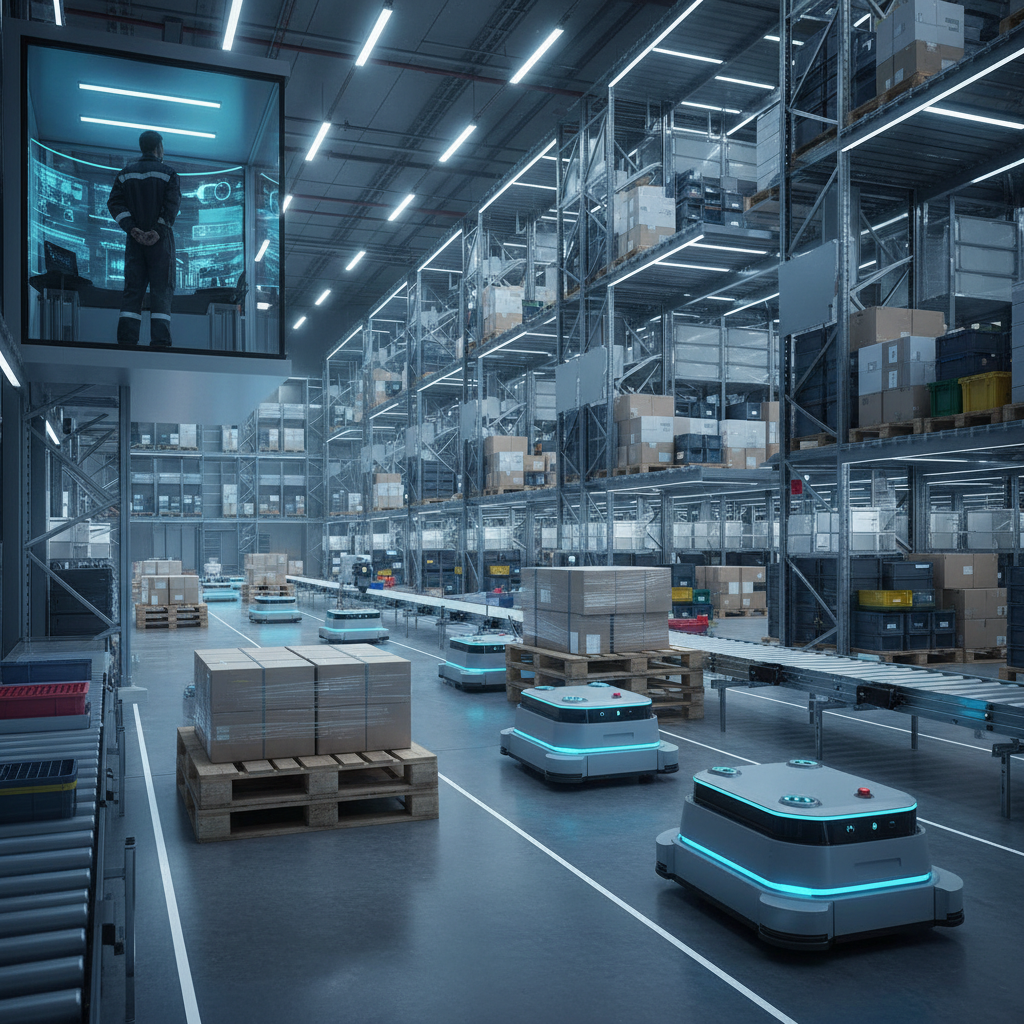
How this impacts the global supply chain
The accelerating integration of service robots into transportation and logistics (T&L) is poised to redefine the global supply chain landscape. With nearly half, specifically 47%, of all professional service robots sold in 2025 finding application in this sector, the operational paradigm is shifting rapidly. This represents a significant 21% increase in T&L robot sales for that year, contributing to an overall 24% rise in global shipments to almost 250,000 units.
This surge in automation directly influences supply chain flows by introducing unprecedented levels of efficiency and predictability at critical nodes. Within warehouses, distribution centers, and fulfillment hubs, robots streamline material handling, sorting, and order picking processes. This leads to faster throughput, reduced bottlenecks, and more consistent movement of goods, from inbound receiving to outbound shipping. The optimization of these internal flows can significantly shorten lead times and improve the overall velocity of goods through the supply chain.
While robots do not inherently alter long-haul routes for ocean freight, air cargo, or rail, their impact on the 'first and last mile' within facilities is profound. By accelerating loading and unloading operations, robots enable quicker turnaround times for trucks and other transport vehicles. This indirect effect can improve asset utilization and potentially influence the scheduling and efficiency of regional and national distribution networks. Furthermore, the enhanced speed and accuracy at distribution points can support more direct-to-consumer models and decentralized inventory strategies, subtly reshaping optimal network designs.
In terms of capacity, robotic deployment effectively expands the operational capability of existing infrastructure. A warehouse equipped with automated systems can process a substantially higher volume of goods within the same physical footprint, thereby increasing effective capacity without requiring new construction. This is particularly crucial in land-constrained urban areas or during periods of peak demand. Moreover, by automating repetitive and physically demanding tasks, robots alleviate reliance on human labor for these specific functions, allowing human capital to be reallocated to more complex, strategic, or customer-facing roles, thereby optimizing human capacity within the logistics workforce.
Operations are transformed through heightened efficiency, accuracy, and reduced human error. Robots can operate continuously, 24/7, without fatigue, leading to consistent performance and improved operational resilience. The data generated by these automated systems provides rich insights into operational performance, enabling continuous optimization and predictive maintenance. This shift necessitates a change in workforce skills, moving from manual labor to roles focused on oversight, maintenance, and data analysis, fostering a more technologically advanced and data-driven operational environment.
Global financial impact
The widespread adoption of service robots in transportation and logistics carries substantial financial and cost implications for all stakeholders across the global trade ecosystem.
For shippers, the financial impact is multifaceted. Initially, there's the capital expenditure (CAPEX) associated with purchasing and implementing robotic systems. However, the growing popularity of Robotics as a Service (RaaS) models offers an alternative operational expenditure (OPEX) approach, lowering the barrier to entry and providing greater financial flexibility. Over time, shippers stand to realize significant cost reductions through decreased labor expenses for repetitive tasks, improved operational efficiency, and a drastic reduction in errors, damages, and associated insurance claims. Faster inventory turns, driven by accelerated processing, can also free up working capital. Beyond cost savings, the enhanced speed, reliability, and accuracy provided by automation translate into a strong competitive advantage, potentially leading to increased market share and improved customer satisfaction, which directly impacts revenue.
Carriers will also experience financial shifts. While their primary investment remains in transport assets, they may need to adapt their own facilities, such as cross-docking terminals and sorting centers, to seamlessly integrate with increasingly automated shipper and receiver operations. The benefits, however, can be substantial. Faster and more efficient loading and unloading processes at origin and destination points lead to quicker vehicle turnaround times. This improves the utilization of expensive transport assets (trucks, trailers, containers) and can reduce driver waiting times, ultimately enhancing operational profitability and potentially allowing for more trips per vehicle. The overall efficiency gains in the supply chain can also lead to more predictable scheduling and reduced fuel consumption due to optimized routes and fewer delays.
For trade at large, the financial implications are overwhelmingly positive, fostering a more efficient and resilient global economy. The initial investment in robotic technology and the necessary infrastructure upgrades represents a significant capital allocation, but the returns are evident in the rapid growth of the sector, with 117,500 units sold in T&L in 2025. This investment fuels innovation and creates new job categories focused on technology development, integration, and maintenance. The enhanced efficiency and reduced lead times contribute to lower overall costs of goods, potentially benefiting consumers through more competitive pricing. Furthermore, the increased operational resilience, less susceptible to labor shortages or localized disruptions, helps stabilize global trade flows, mitigating financial risks associated with supply chain volatility. The rise of RaaS models democratizes access to advanced automation, allowing even smaller enterprises to leverage these technologies and participate more effectively in global trade, driving broader economic growth.
How MGS can help navigate today's global trade environment
In an increasingly automated logistics landscape, the role of a sophisticated shipment-visibility control tower like MGS becomes even more critical for operators seeking to maximize efficiency and resilience.
With the proliferation of service robots generating vast amounts of operational data—from task completion rates and location within a facility to efficiency metrics and potential anomalies—MGS provides the crucial capability to integrate this granular data with broader, end-to-end shipment information. This means that operators don't just see a robot moving a pallet; they see that pallet as part of a specific order, linked to an ocean vessel, customs clearance, and final delivery. This holistic view is essential for true supply chain visibility, extending beyond the four walls of a warehouse to encompass the entire journey.
MGS empowers proactive management by correlating real-time robotic performance data with overall supply chain health. For instance, if a fleet of 117,500 T&L robots is deployed across a network, and MGS detects a slowdown or malfunction in a specific automated system, it can immediately flag potential downstream impacts on scheduled shipments. This allows operators to intervene before a minor issue escalates into a major disruption, enabling rerouting, rescheduling, or reallocating resources to mitigate delays. Such proactive intervention is invaluable in maintaining service levels and avoiding costly penalties.
Furthermore, MGS enhances exception handling in an automated environment. While robots are designed for reliability, unforeseen issues can occur, such as a system integration glitch or a network outage affecting automated processes. In such scenarios, MGS provides the overarching perspective needed to understand the ripple effect across the entire supply chain. It can identify which specific shipments are affected, assess the extent of the impact, and facilitate coordinated responses, ensuring that operators can quickly pivot and maintain continuity. By providing a single source of truth for all shipment and operational data, MGS ensures that the investment in automation, as evidenced by the 21% growth in T&L robot sales, is fully leveraged to deliver maximum operational insight and control.
Demand–supply analysis & improvement
The significant growth in the adoption of service robots for transportation and logistics reveals compelling demand-supply dynamics and highlights key levers for continuous improvement within the sector.
The demand for automation solutions in logistics is unequivocally strong. The fact that nearly half (47%) of all professional service robots sold in 2025 were dedicated to T&L, with a 21% increase in units sold for this application, underscores an urgent industry need. This demand is driven by a confluence of factors: persistent labor shortages, rising operational costs, the imperative for greater operational efficiency, and the increasing pressure for faster, more reliable delivery in an e-commerce-driven world. Companies are actively seeking ways to enhance throughput, reduce errors, and build more resilient supply chains, making robotic solutions an attractive investment. The overall market growth of 24% in global shipments, reaching almost 250,000 units, further confirms this robust demand across various service robot applications, with T&L leading the charge.
On the supply side, the market is clearly responding to this demand with increased production and innovative business models. The substantial growth in robot shipments indicates that manufacturers are scaling up to meet industry requirements. The rising popularity of Robotics as a Service (RaaS) models is a crucial development, demonstrating suppliers' adaptability. RaaS lowers the financial barrier to entry for many companies, allowing them to access advanced automation without significant upfront capital expenditure. This flexible procurement model enables businesses to scale their automation capabilities up or down based on fluctuating demand, thereby improving agility and making automation accessible to a broader range of enterprises, including those with tighter budgets or seasonal operational peaks.
Concrete improvement levers can further optimize this evolving landscape. Firstly, data integration and analytics are paramount. As robots generate vast amounts of operational data, leveraging this information through advanced analytics can lead to continuous process optimization, predictive maintenance, and improved resource allocation. Secondly, interoperability and standardization across different robotic systems and existing warehouse management systems will become increasingly important to ensure seamless integration and scalability. Thirdly, workforce development is essential; investing in training programs to upskill employees for roles in robot management, maintenance, and data interpretation will maximize the human-robot collaboration potential. Finally, the continued evolution and adoption of RaaS models will be a key improvement lever, enabling businesses to experiment with automation, mitigate investment risks, and adapt quickly to market changes, fostering a more dynamic and responsive supply chain ecosystem.
ROI-focused resilience
Investing in service robots for transportation and logistics is increasingly viewed through the lens of ROI-focused resilience, where the financial outlay is justified by its ability to protect against quantifiable risks and ensure operational continuity. The significant commitment to automation, evidenced by 117,500 units sold in T&L in 2025 and a 21% growth in this segment, reflects a strategic decision to build more robust supply chains.
The primary investment involves either the outright purchase of robotic hardware and software (CAPEX) or the adoption of Robotics as a Service (RaaS) models (OPEX). The latter, gaining popularity, allows companies to treat automation as an operational expense, aligning costs more directly with usage and perceived benefits, thereby de-risking the initial commitment.
This investment protects against several quantified risks:
- Labor Shortages and Rising Costs: One of the most significant risks in logistics is the scarcity and escalating cost of manual labor. Robots mitigate this by automating repetitive, physically demanding tasks, ensuring continuous operation even during labor market fluctuations. The ROI here is measured in avoided labor costs, consistent productivity, and reduced dependency on a volatile workforce.
- Operational Inefficiency and Errors: Human error in manual processes can lead to mispicks, damaged goods, and shipping delays, incurring significant financial penalties, customer dissatisfaction, and rework costs. Robots offer superior accuracy and consistency, drastically reducing these errors. The ROI is calculated through reduced damage claims, fewer returns, improved order accuracy, and enhanced customer loyalty.
- Supply Chain Disruptions: Automated facilities are inherently more resilient to certain types of disruptions. Unlike human-dependent operations, robotic systems can operate 24/7, are less susceptible to illness, strikes, or localized lockdowns. This ensures operational continuity during peak demand periods or unforeseen events, safeguarding revenue streams and market share. The ROI is in avoided revenue losses and maintained competitive positioning during crises.
- Competitive Pressure: In a rapidly evolving market, companies that fail to adopt advanced automation risk falling behind competitors in terms of speed, cost-efficiency, and service reliability. Investing in robots ensures a company remains competitive, attracting and retaining customers. The ROI is measured by sustained or increased market share and improved profitability relative to less automated rivals.
The substantial market share (47%) and growth (21% for T&L robots) indicate a strong industry-wide perception of a positive ROI for these investments. The resilience gained—from consistent throughput during labor shortages to error-free order fulfillment—translates directly into avoided costs, maintained revenue, and enhanced long-term profitability, making automation a strategic imperative for sustainable supply chain operations.
Source: DC Velocity — https://www.dcvelocity.com/material-handling/robotics/nearly-half-of-service-robots-sold-in-2025-were-used-for-transportation-logistics