
Robotic Picking's Rapid Ascent: A Catalyst for Supply Chain Transformation and Enhanced Visibility
The robotic picking market's projected near-tripling by 2030, following a 28% revenue surge in 2025, signals a profound shift in global supply chain operations. This Insight brief explores how this automation wave is reshaping logistics, finances, and the critical role of platforms like MGS in navigating an increasingly efficient, yet complex, trade environment.
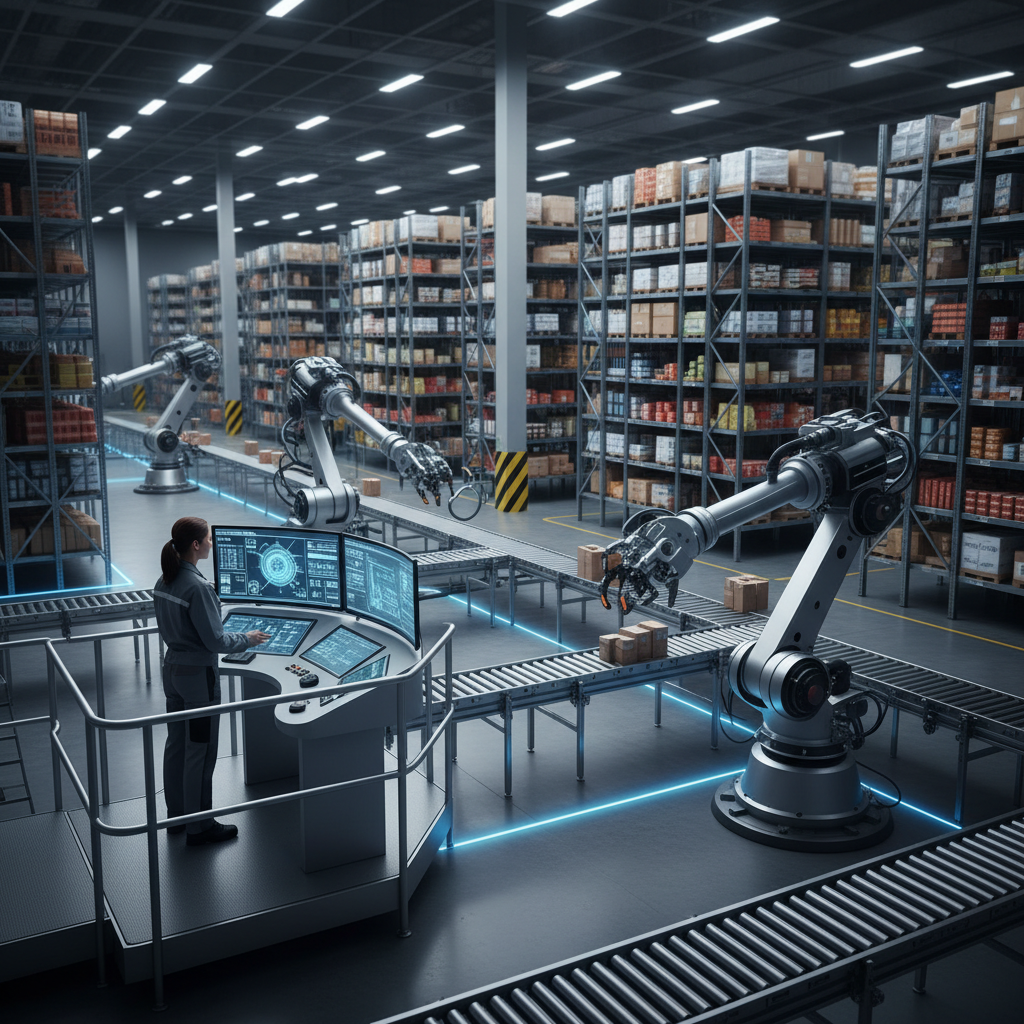
How this impacts the global supply chain
The remarkable growth trajectory of the robotic picking market, with revenues climbing from $1.4 billion in 2024 to $1.7 billion in 2025 – a substantial 28% year-on-year increase – and a forecast to almost triple in size by 2030, heralds a significant transformation in global supply chain dynamics. This surge in automation, particularly in the critical picking function, is poised to redefine traditional operational paradigms across various facets of logistics.
Firstly, regarding flows, the integration of robotic picking solutions fundamentally accelerates the internal movement of goods within warehouses and distribution centers. Manual picking processes, often characterized by human speed limitations, fatigue, and potential for error, become bottlenecks that slow down the entire order fulfillment cycle. Robots, operating with consistent speed and precision 24/7, can dramatically increase throughput, ensuring a more fluid and continuous flow of inventory from storage to outbound staging. This means orders can be processed and prepared for dispatch much faster, reducing dwell times at facilities and compressing lead times for customers. The ripple effect extends to inventory management, allowing for higher inventory turns and potentially reducing the need for extensive safety stock, as goods move through the system more rapidly.
Secondly, the impact on routes might not be immediately apparent in long-haul transportation, but it profoundly influences the efficiency of first-mile and last-mile logistics. With faster order preparation, carriers can adhere to tighter schedules, optimizing their route planning and vehicle utilization. For instance, a distribution center equipped with advanced robotic picking can consolidate shipments more efficiently and load trucks more quickly, enabling earlier departures and more precise delivery windows. This internal efficiency can indirectly influence network design, potentially allowing for fewer, larger, and more strategically located automated hubs rather than a multitude of smaller, manually intensive facilities. The ability to process orders faster also supports emerging fulfillment models like micro-fulfillment centers, which rely heavily on rapid, automated picking to serve dense urban areas.
Thirdly, capacity utilization within existing infrastructure stands to improve significantly. Robotic systems can operate in denser storage configurations and often require less aisle space than human pickers, effectively increasing the storage density of a warehouse. More importantly, by maximizing throughput, these systems enhance the effective capacity of a facility without requiring physical expansion. A warehouse that can process 28% more orders with the same footprint due to automation is essentially operating at a higher capacity. This is crucial in an era where industrial real estate is at a premium and expansion is costly and time-consuming. It also provides scalability, allowing businesses to handle peak demand periods, such as holiday seasons, without the traditional reliance on temporary labor surges, which can be inconsistent in quality and availability.
Finally, operations are undergoing a profound shift. The reliance on a large manual labor force for repetitive, physically demanding tasks is diminishing. Instead, the focus shifts towards managing and maintaining complex robotic systems, requiring a different skill set from the workforce. This includes roles in robotics engineering, data analytics for optimization, and supervisory positions overseeing automated processes. Operational accuracy improves dramatically, as robots are less prone to picking errors, leading to fewer mis-shipments, returns, and customer complaints. The ability to operate continuously, without breaks or shift changes, provides unparalleled operational resilience and consistency, fundamentally altering the rhythm and predictability of supply chain execution. This transformation moves the supply chain towards a more data-driven, automated, and resilient model, where the speed and accuracy of internal processes become a competitive differentiator.
Global financial impact
The burgeoning robotic picking market, projected to nearly triple by 2030 after a robust 28% revenue increase from $1.4 billion in 2024 to $1.7 billion in 2025, carries substantial financial and cost implications across the global trade ecosystem, affecting shippers, carriers, and the broader economy.
For shippers, the financial impact is primarily driven by a strategic shift from high operational expenditure (OPEX) on labor to significant capital expenditure (CAPEX) on automation technology, followed by long-term OPEX savings. The initial investment in robotic picking systems can be substantial, but the returns are compelling. Labor costs, a significant and often volatile component of warehouse operations, are substantially reduced. This includes not only wages but also associated costs like benefits, training, recruitment, and managing absenteeism. Beyond direct labor savings, shippers benefit from improved order accuracy, which translates into fewer costly returns, reduced re-shipping expenses, and enhanced customer satisfaction, preventing revenue loss from dissatisfied customers. Faster order fulfillment cycles, enabled by robotic efficiency, also mean quicker cash conversion cycles and the ability to meet increasingly stringent customer delivery expectations, thereby strengthening market position and potentially increasing sales volume. Furthermore, optimized inventory management due to faster throughput can lead to lower inventory holding costs, freeing up capital that would otherwise be tied up in stagnant stock.
Carriers also stand to gain financially from the widespread adoption of robotic picking. The primary benefit for carriers stems from increased efficiency at the loading dock. When goods are picked and prepared for shipment faster and more accurately, trucks spend less time waiting to be loaded. This reduction in dwell time is critical, as idle trucks represent lost revenue opportunities and increased operational costs (e.g., driver wages for waiting, fuel consumption for idling). Faster turnarounds allow carriers to optimize their fleet utilization, complete more routes per day, and adhere more closely to schedules, improving overall operational efficiency and profitability. Moreover, the consistency and predictability offered by automated picking can lead to more organized and optimized loads, potentially reducing damage in transit and maximizing the utilization of trailer space, further boosting carrier profitability per shipment.
For trade at large, the financial implications are profound and multifaceted. Increased automation in picking contributes to a more efficient global movement of goods, which can lead to lower overall logistics costs. These savings can, in turn, be passed on to consumers through more competitive pricing, stimulating demand and economic growth. Enhanced supply chain resilience, stemming from reduced reliance on manual labor and improved operational consistency, mitigates risks associated with labor shortages, strikes, or other disruptions, thereby protecting economic stability. The growth of the robotic picking market itself represents a burgeoning sector within the technology and logistics industries, driving innovation, creating new high-skilled jobs in automation development and maintenance, and attracting investment. Countries and regions that embrace and invest in this technology are likely to gain a competitive edge in global trade, positioning themselves as leaders in advanced manufacturing and logistics, which can attract foreign direct investment and foster economic development. The overall effect is a more agile, cost-effective, and robust global trade environment, capable of adapting to evolving market demands and challenges.
How MGS can help navigate today's global trade environment
The accelerating adoption of robotic picking, as evidenced by its significant market growth and projected near-tripling by 2030, creates a new paradigm of internal warehouse efficiency. While robots revolutionize the speed and accuracy of operations within a facility, the challenge shifts to ensuring that these internal gains translate into seamless, optimized movement across the broader supply chain. This is precisely where a sophisticated shipment-visibility control tower like MGS becomes indispensable, acting as the crucial bridge between hyper-efficient internal processes and complex external logistics.
MGS provides the critical end-to-end visibility required to capitalize on the speed and precision offered by robotic picking. Once goods are rapidly picked and prepared for dispatch by automated systems, MGS takes over, offering real-time tracking of these shipments as they move through various transportation modes and geographical locations. This ensures that the efficiency gained at the picking stage is not lost due to delays or lack of information once the goods leave the warehouse. Operators can monitor the precise location and status of every shipment, from the moment it's loaded onto a truck to its final delivery point.
Furthermore, with the increased velocity of goods leaving automated facilities, the importance of proactive exception management becomes paramount. If a shipment, efficiently picked by robots, encounters an unexpected delay during transit – perhaps due to port congestion, customs issues, or carrier disruptions – MGS immediately flags these exceptions. This allows supply chain managers to react swiftly, communicating proactively with customers about potential delays, exploring alternative routes, or re-prioritizing other shipments to mitigate the impact. Without this external visibility, the benefits of rapid internal picking could be undermined by unforeseen external challenges, leading to customer dissatisfaction and operational inefficiencies.
MGS also plays a vital role in providing accurate and dynamic Estimated Times of Arrival (ETAs). As robotic picking enables faster processing and earlier dispatch, MGS can leverage this accelerated internal timeline to provide continuously updated and more precise ETAs to all stakeholders, including downstream logistics partners and end customers. This enhanced predictability is crucial for optimizing receiving operations, scheduling labor, and managing inventory at destination points, thereby extending the efficiency gains from the warehouse floor across the entire supply chain. By integrating data from various carriers, ports, and other external sources with the internal dispatch information, MGS ensures that the entire network operates with synchronized intelligence, maximizing the return on investment in advanced automation technologies like robotic picking.
Source: Interact Analysis — https://interactanalysis.com/robotic-picking-market-forecast-triple-in-size/