
Red Sea Tensions Escalate: Houthi Port Seizure Threatens Critical Maritime Choke Point
The recent seizure of Yemen's Mokha port by Iran-backed Houthi militants marks a significant escalation in regional tensions, directly impacting the vital Red Sea shipping lane. This geopolitical development introduces new layers of risk and uncertainty for global cargo movement, particularly for vessels transiting between Asia and Europe.
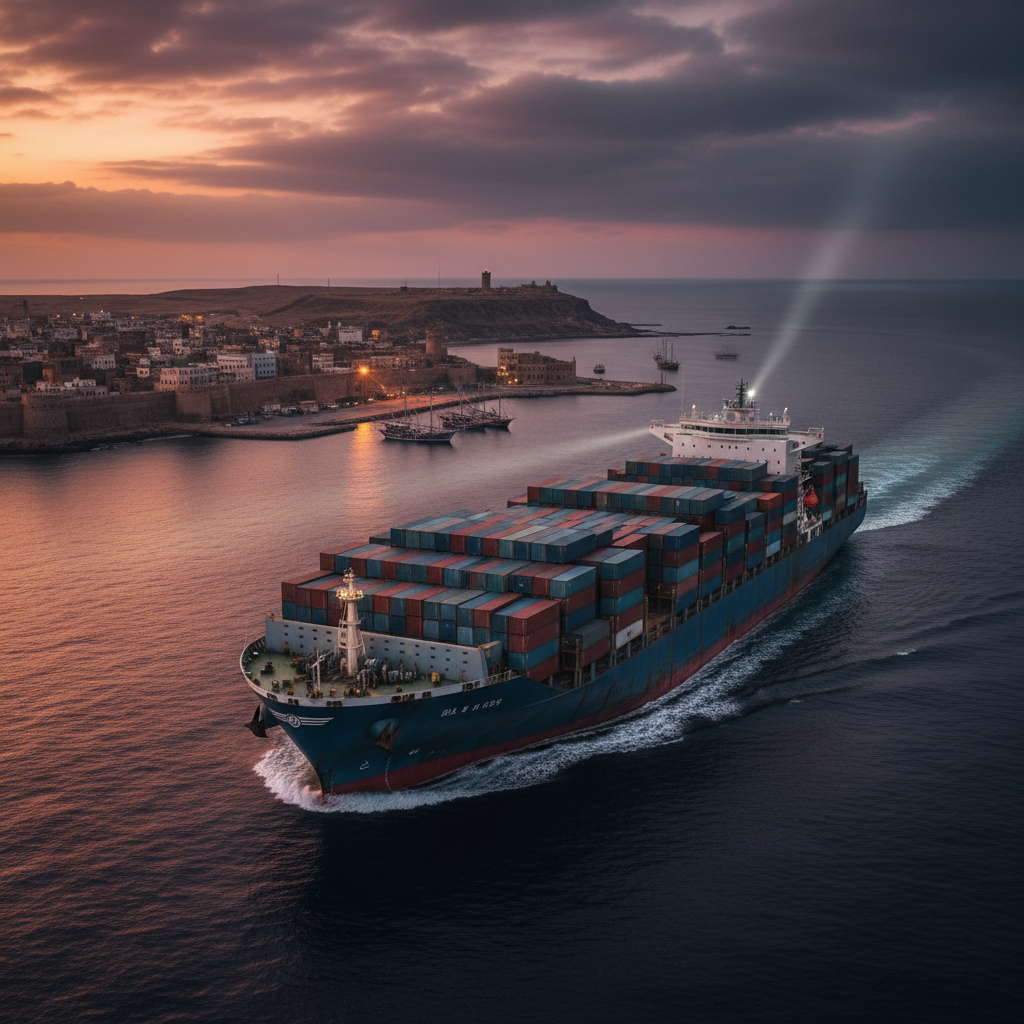
Overview of the Geopolitical Disruption
The strategic landscape of global maritime trade has been significantly altered by recent geopolitical events in the Red Sea region. The Iran-backed Houthi militant group has successfully seized control of Mokha, a key port city situated on Yemen's Red Sea coast. This action, occurring within the context of a six-month-long conflict with the U.S., represents a substantial gain for the Houthis and is widely regarded as a significant setback for Saudi Arabia and the Yemeni forces it supports. Furthermore, reports indicate the Houthis are advancing on another vital oil choke point in the region, signaling an intent to further solidify their leverage and control over crucial maritime passages. This development brings Tehran closer to securing additional strategic influence in a highly sensitive geopolitical arena.
Impact on Key Maritime Lanes
The Red Sea is one of the world's most indispensable maritime arteries, serving as a critical conduit for global trade, particularly for traffic destined for or originating from the Suez Canal. The Houthi's capture of Mokha, combined with their reported advance on another vital oil choke point, directly threatens the stability and security of this essential shipping lane. Increased Houthi presence and control along the Yemeni Red Sea coast introduce heightened risks of disruption to commercial vessels. While the specific 'vital oil choke point' is not named, its proximity to the Red Sea suggests a potential threat to the Bab el-Mandeb Strait, a narrow passage that is a gateway to the Suez Canal and separates the Arabian Peninsula from the Horn of Africa. Any significant disruption or perceived threat in this area can trigger rerouting decisions, impacting transit times and operational costs for thousands of vessels annually.
Affected Port Infrastructure
The port city of Mokha, now under Houthi control, is a notable facility on the Red Sea. Its strategic location means that its operational status, security, and accessibility are now subject to the dynamics of the ongoing conflict. While Mokha may not be a primary global container hub, its seizure signifies an expansion of Houthi influence over coastal infrastructure crucial for regional trade and potentially for military logistics. The implications extend beyond the port itself, creating an environment of uncertainty for any vessel seeking to call at Yemeni ports or navigate adjacent waters. This shift in control can lead to altered port call patterns, increased security protocols, and potential delays for ships operating in the vicinity.
Implications for Maritime Cargo Movement
The escalating geopolitical tensions and the Houthi's expanded control have immediate and far-reaching implications for maritime cargo movement. Shippers can anticipate a significant increase in geopolitical risk premiums, translating into higher insurance costs for vessels traversing the Red Sea. This heightened risk environment may compel some shipping lines to consider alternative, longer routes, such as circumnavigating the Cape of Good Hope, leading to extended transit times and increased fuel consumption. Such diversions would impact delivery schedules for a wide array of goods, from consumer products in containers to bulk commodities and oil tankers. The uncertainty surrounding vessel safety and operational continuity in the Red Sea corridor will necessitate careful planning and potentially more agile decision-making from all stakeholders in the supply chain.
Shipper Strategies for Mitigation
In the face of such dynamic geopolitical disruptions, shippers must adopt proactive and robust mitigation strategies to safeguard their supply chains. Firstly, continuous and real-time risk assessment is paramount, requiring constant monitoring of regional developments and security advisories. Secondly, exploring route diversification options, even if they entail higher costs and longer lead times, becomes a necessary contingency. This might involve pre-planning for diversions around Africa or utilizing multimodal transport where feasible. Thirdly, maintaining open and transparent communication channels with carriers is crucial to stay informed about vessel movements, security updates, and potential changes to schedules. Finally, shippers should review their inventory strategies, potentially increasing safety stock levels for critical goods to build resilience against unforeseen delays and disruptions caused by geopolitical instability.
Leveraging Shipment Visibility for Resilience
In volatile environments like the Red Sea, an MGS shipment-visibility control tower transforms from a valuable tool into an indispensable asset for supply chain resilience. An MGS platform provides real-time, end-to-end visibility into cargo movements, offering immediate alerts on vessel positions, unexpected delays, or forced diversions. This capability is critical for identifying exactly which shipments are impacted by events like the Houthi port seizure. Beyond tracking, MGS platforms leverage predictive analytics to anticipate potential choke points or areas of increased risk, allowing shippers to proactively assess the impact of geopolitical shifts. The ability to model various disruption scenarios, such as rerouting around the Cape of Good Hope, enables data-driven decision-making for inventory management, customer communication, and alternative logistics planning. By consolidating data from multiple sources, an MGS control tower empowers shippers to maintain situational awareness, communicate proactively with stakeholders, and implement agile responses to minimize financial losses and protect customer relationships during periods of heightened geopolitical instability.