
Red Sea Chokepoint: Navigating New Geopolitical Hurdles in Global Shipping
The imposition of a maritime licensing system by Yemen’s Houthis in the Red Sea introduces a significant new layer of complexity for commercial shipping, impacting critical global trade arteries and demanding enhanced supply chain resilience.
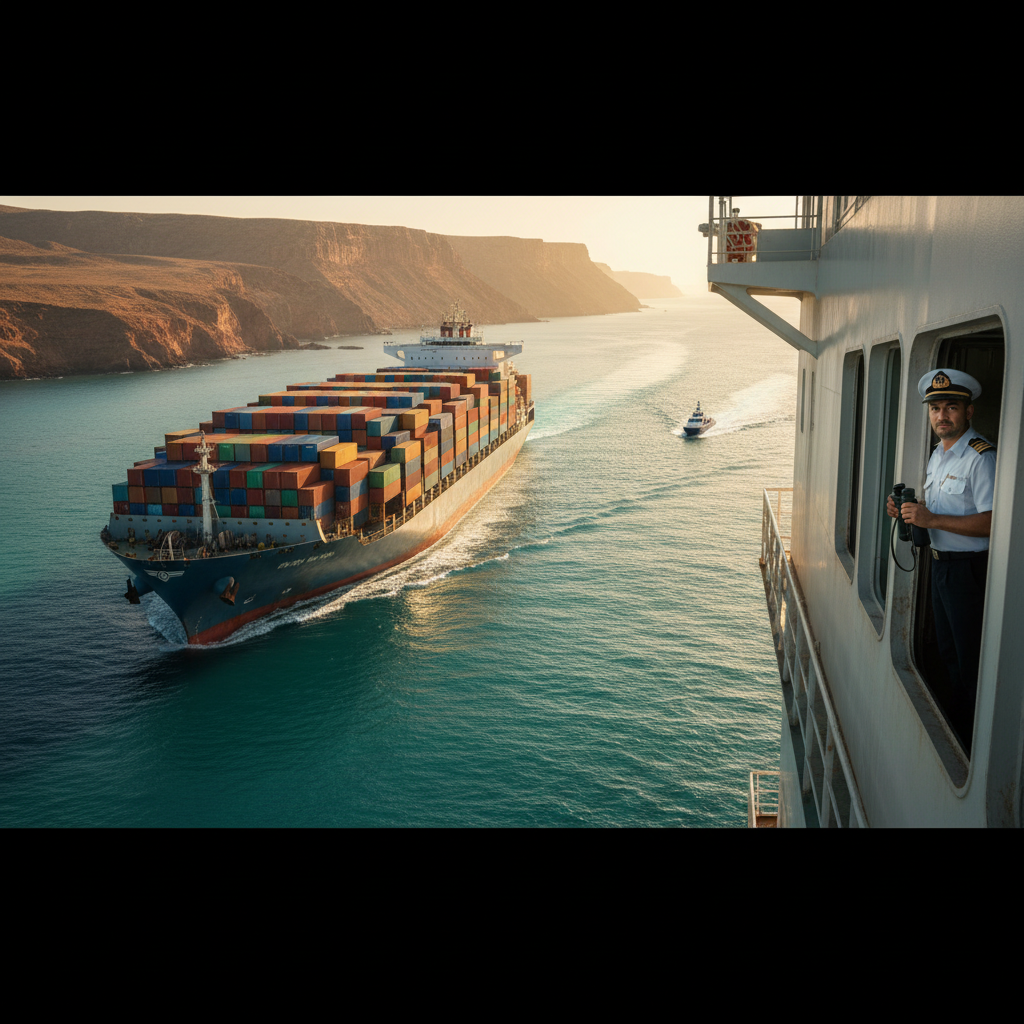
As an MGS supply-chain analyst, it's imperative to highlight emerging threats that reshape global logistics paradigms. While natural phenomena often dominate discussions around supply chain disruptions, geopolitical developments can introduce equally, if not more, profound and unpredictable challenges. The recent move by Yemen’s Houthis to implement a maritime licensing system in the Red Sea exemplifies such a shift, fundamentally altering the operational landscape for commercial shipping through one of the world's most critical waterways. This development is not merely a bureaucratic hurdle; it represents a new layer of control and potential friction that demands immediate attention from shippers and logistics providers worldwide.
The Red Sea, a narrow stretch of water connecting the Suez Canal to the Indian Ocean, is an indispensable artery for global trade, particularly for traffic moving between Asia and Europe. Any disruption here has immediate and far-reaching consequences, extending beyond the immediate vicinity to impact global supply chains. The Houthi's assertion of control through a licensing system, requiring ship captains to obtain permission for safe passage, introduces an unprecedented level of uncertainty and risk into a route previously considered a standard transit. This is a direct challenge to the principles of free navigation and poses significant questions about the future stability and predictability of maritime logistics in the region. Shippers must now contend with an additional, non-commercial entity dictating terms of passage, adding layers of administrative burden, potential delays, and heightened security concerns that were not previously factored into their risk assessments.
The Red Sea's Critical Role Under Threat
The Red Sea is more than just a transit point; it's a strategic chokepoint that facilitates an enormous volume of international trade. Its connection to the Suez Canal makes it the shortest maritime route between Europe and Asia, bypassing the lengthy and costly journey around the Cape of Good Hope. Millions of barrels of oil, vast quantities of containerized goods, and bulk commodities traverse this waterway annually. The imposition of a maritime licensing system by the Houthis, aimed at controlling commercial shipping traffic, directly threatens the efficiency and reliability of this critical artery. This new requirement introduces a layer of political vetting and approval that can lead to unpredictable delays, increased administrative overhead, and potential refusal of passage for certain vessels or cargo. The very notion of needing 'permission' from a non-state actor to transit an international waterway undermines the established norms of maritime law and creates a precedent for other regions facing similar geopolitical tensions. For shippers, this translates into a tangible increase in operational risk, potentially impacting lead times, inventory management, and overall supply chain costs. The 'critical waterway' status of the Red Sea is now challenged not by physical obstacles, but by a new, politically motivated gatekeeper.
Impact on Global Maritime Lanes
The immediate and most significant impact of the Houthi's licensing system is on the global maritime lanes that depend on the Red Sea. The primary East-West trade route, which connects major manufacturing hubs in Asia with consumer markets in Europe and the eastern seaboard of North America, is directly affected. Carriers and shippers now face a stark choice: comply with the new licensing system, which introduces uncertainty and potential political entanglement, or re-route vessels around the southern tip of Africa, via the Cape of Good Hope. The latter option, while avoiding the Red Sea's new complexities, adds thousands of nautical miles to a journey, significantly increasing transit times (by weeks, not days), fuel consumption, and operational costs. This extended journey also demands more vessels to maintain existing service frequencies, putting pressure on global fleet capacity. Furthermore, the diversion of vessels impacts port calls, potentially leading to congestion at alternative ports or disruptions to established schedules. The ripple effect extends to other lanes as well, as vessels and capacity are pulled from their regular rotations to compensate for longer voyages, creating a cascading effect across the global shipping network. The predictability of global maritime schedules, a cornerstone of modern supply chain planning, is severely compromised.
Affected Facilities and Infrastructure
The disruption in the Red Sea will inevitably strain facilities and infrastructure both within the region and at the endpoints of affected trade lanes. Ports along the Red Sea, such as Jeddah, will experience direct impacts, potentially facing reduced traffic if vessels opt for alternative routes, or increased scrutiny and delays if they comply with the licensing system. More broadly, major transshipment hubs and destination ports in the Mediterranean (e.g., Port Said, Piraeus, Valencia) and Northern Europe (e.g., Rotterdam, Hamburg) will feel the effects of delayed arrivals, schedule integrity issues, and potential cargo backlogs. If vessels are re-routed via the Cape of Good Hope, the sheer volume of delayed cargo arriving simultaneously could overwhelm port infrastructure, leading to increased dwell times for containers, chassis shortages, and inland transportation bottlenecks. Conversely, ports along the Cape route, which are not typically equipped for such high volumes of East-West traffic, might face unexpected surges, testing their capacity and efficiency. The entire ecosystem of port operations, including stevedoring, customs clearance, and intermodal connections, becomes more vulnerable to disruption, leading to higher operational costs and reduced throughput efficiency.
Modal Shifts and Operational Challenges
While the primary mode affected is ocean freight, the extended transit times and increased uncertainty stemming from the Red Sea situation could trigger modal shifts for time-sensitive cargo. Shippers with critical, high-value, or perishable goods that traditionally relied on the faster Red Sea/Suez route might consider air freight as a more reliable, albeit significantly more expensive, alternative. This shift could put additional pressure on air cargo capacity and rates, especially for key trade lanes. Beyond modal shifts, operational challenges abound. Carriers face increased fuel costs, higher insurance premiums for vessels transiting the Red Sea, and the complex logistics of managing re-routed fleets. The need for precise coordination with the Houthi licensing system adds an unprecedented administrative burden and introduces a new layer of security risk assessment. For shippers, this means increased freight costs, longer lead times, and a greater need for buffer stock to mitigate delivery uncertainty. The operational environment becomes inherently more complex, demanding greater agility and proactive management from all supply chain stakeholders.
Shipper Strategies for Resilience
In the face of such geopolitical volatility, shippers must adopt robust strategies to build resilience into their supply chains. Diversification of routes and carrier partners is paramount; relying on a single pathway or provider becomes a significant vulnerability. Exploring multi-modal solutions, even if traditionally more expensive, might offer necessary flexibility. Building strategic inventory buffers, where feasible, can help absorb unexpected delays without immediately impacting production or sales. Closer collaboration with logistics partners, sharing real-time information and jointly developing contingency plans, is also crucial. Furthermore, shippers should conduct thorough risk assessments, identifying critical shipments and developing specific mitigation strategies for them. This might include pre-booking alternative transport, securing additional insurance, or even exploring nearshoring or reshoring options for certain components or products to reduce reliance on long, vulnerable supply lines. Proactive communication with customers about potential delays and revised delivery expectations is also key to managing expectations and maintaining trust.
Leveraging Shipment Visibility (MGS)
In an environment defined by geopolitical uncertainty and potential route disruptions, a robust shipment-visibility control tower platform like MGS becomes an indispensable tool. MGS provides real-time, end-to-end tracking of cargo across all modes and lanes, offering unparalleled transparency into the location and status of every shipment. For the Red Sea situation, this means shippers can immediately identify which vessels are impacted by delays or re-routing decisions. Predictive analytics within MGS can then project revised estimated times of arrival (ETAs) for shipments, allowing for proactive adjustments to downstream logistics, inventory planning, and customer communication. The platform can highlight potential bottlenecks at affected ports or identify alternative routes and modes that might be viable. By consolidating data from multiple sources – carriers, port authorities, and even geopolitical risk intelligence – MGS empowers supply chain managers to make informed, data-driven decisions rapidly. This real-time intelligence is critical for assessing the financial implications of delays, optimizing inventory levels to prevent stockouts or overstock, and ensuring business continuity amidst evolving disruptions. MGS transforms raw data into actionable insights, enabling shippers to navigate complex geopolitical landscapes with greater confidence and control.
Source: Marine Insight — https://www.marineinsight.com/ship-captains-e-mail-houthis-to-obtain-permission-for-safe-passage-through-red-sea/?utm_source=rss&utm_medium=rss&utm_campaign=ship-captains-e-mail-houthis-to-obtain-permission-for-safe-passage-through-red-sea