
Philippines' Potential Seafarer Restrictions Threaten Global Shipping Labor Supply
A potential policy shift by the Philippines regarding its seafarers could introduce significant disruptions to global cargo movement. As a major source of maritime labor, any restriction on where Filipino crews can operate, particularly in areas designated as 'NATO waters,' would immediately impact vessel operations, reroute trade, and escalate transport costs for shippers and forwarders worldwide.
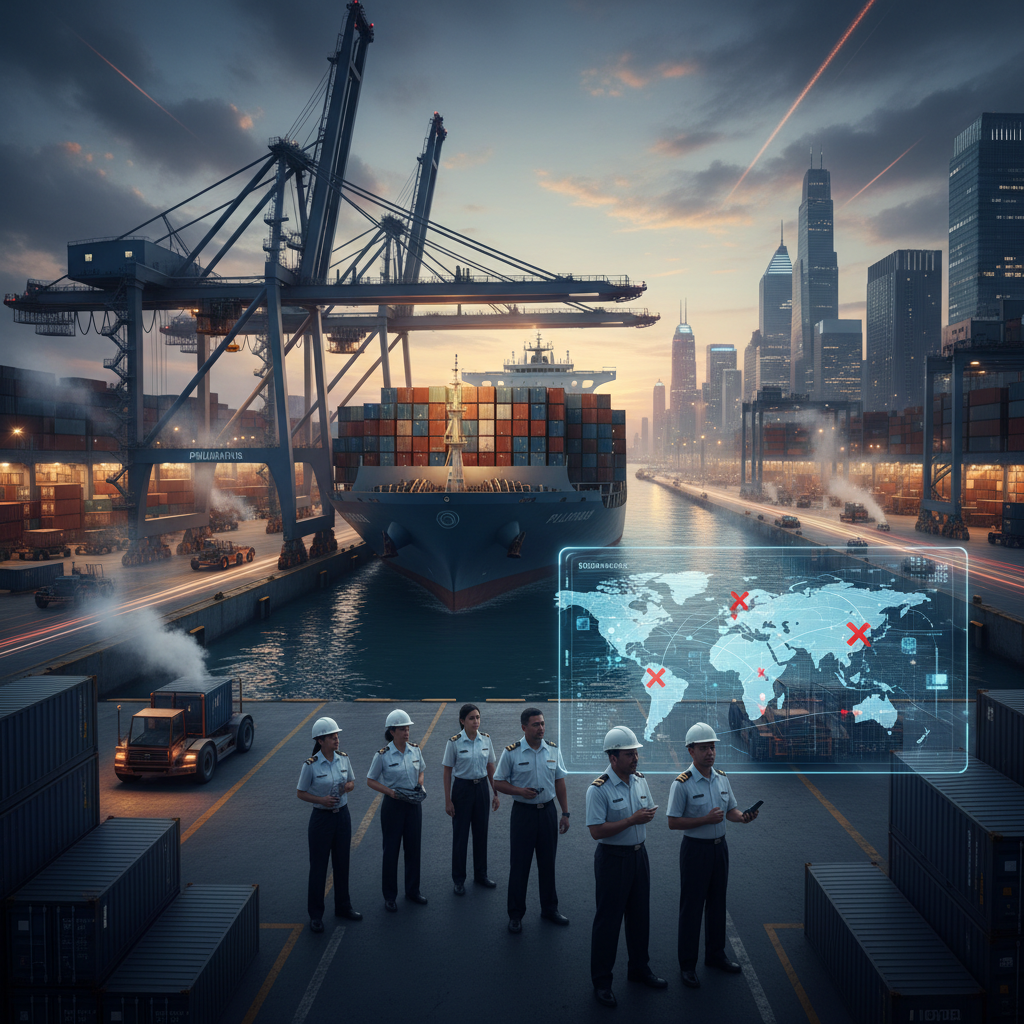
Philippines' Seafarer Policy Shift Creates Global Crewing Shortage
The Philippines stands as a dominant force in global maritime crewing, supplying a substantial portion of the world's seafarers. A potential decision by the Philippine government to define a 'risk line' in what are termed 'NATO waters' could trigger an immediate and severe shortage of qualified personnel across the international shipping fleet. Such a policy would likely restrict Filipino nationals from serving on vessels operating within or transiting these designated areas, or even from working for companies perceived to be aligned with specific geopolitical blocs. The direct consequence for trade and transport would be a sudden reduction in available crew members for thousands of vessels. Many ships, particularly those in the container, bulk, and tanker sectors, rely heavily on Filipino seafarers for their operational continuity. Without these crews, vessels could face delays, be forced to anchor indefinitely, or even be rendered inoperable. This scenario would not only halt cargo movement but also drive up operational expenses as shipping lines scramble to find alternative, often more expensive or less experienced, crews from other nations. The safety implications are also considerable, as a rapid shift to less familiar or less trained personnel could increase the risk of incidents at sea, further impacting cargo integrity and delivery schedules.
Maritime Routes and Transit Times Under Pressure
Should the Philippines implement restrictions on its seafarers operating in 'NATO waters,' the immediate effect on maritime routes would be substantial. Shipping companies would be compelled to reroute vessels to avoid these designated zones, even if the areas are not directly hostile. This avoidance strategy would extend voyage distances, leading to longer transit times for goods. For example, trade lanes connecting major economic hubs that typically traverse or border these 'NATO waters' would experience significant delays. Longer routes mean increased fuel consumption, adding to the operational costs for carriers. These additional costs would inevitably be passed on to shippers through higher freight rates. Furthermore, the diversion of numerous vessels to alternative, potentially less efficient, routes could lead to congestion in previously less-trafficked waterways and ports. This congestion would create new bottlenecks, exacerbating delays and further disrupting supply chain predictability. The ripple effect would be felt across various industries, from manufacturing relying on just-in-time inventory to retail sectors dependent on timely replenishment, as goods spend more time at sea and less time moving through the supply chain.
Escalating Operational Costs and Trade Flow Disruptions
The financial ramifications of a Filipino seafarer restriction would extend beyond increased fuel and crewing expenses. Insurance premiums for vessels and cargo operating in or near the newly defined 'risk line' would likely surge, reflecting the heightened geopolitical uncertainty and operational risks. This increase in insurance costs would further contribute to the overall cost of transporting goods. Moreover, the disruption to established trade flows could lead to imbalances in vessel availability, with some regions experiencing a surplus of ships while others face severe shortages. This imbalance would create volatility in freight rates, making long-term planning and contract negotiations more challenging for shippers and forwarders. The cumulative effect of longer transit times, higher operational costs, and unpredictable freight rates would translate into higher prices for consumers and reduced competitiveness for businesses. Industries dependent on specific raw materials or components transported by sea could face production delays or even shutdowns. While the direct impact on airspace, tariffs, and sanctions might not be immediate, prolonged maritime disruption could indirectly influence air cargo demand as businesses seek faster alternatives, potentially leading to increased air freight costs. Governments might also consider new trade policies or retaliatory measures in response to the economic fallout, further complicating the global trade environment.
Source: Container News — https://container-news.com/explainer-the-country-that-crews-the-ships/