
Oil and Gas Resilience: Navigating Critical Flows with Visibility
The oil and gas sector's pursuit of supply chain resilience is crucial for global stability. This brief explores how maintaining safe, compliant, and economically viable flows amidst deteriorating conditions impacts global trade, financial markets, and how MGS shipment visibility can be a game-changer.
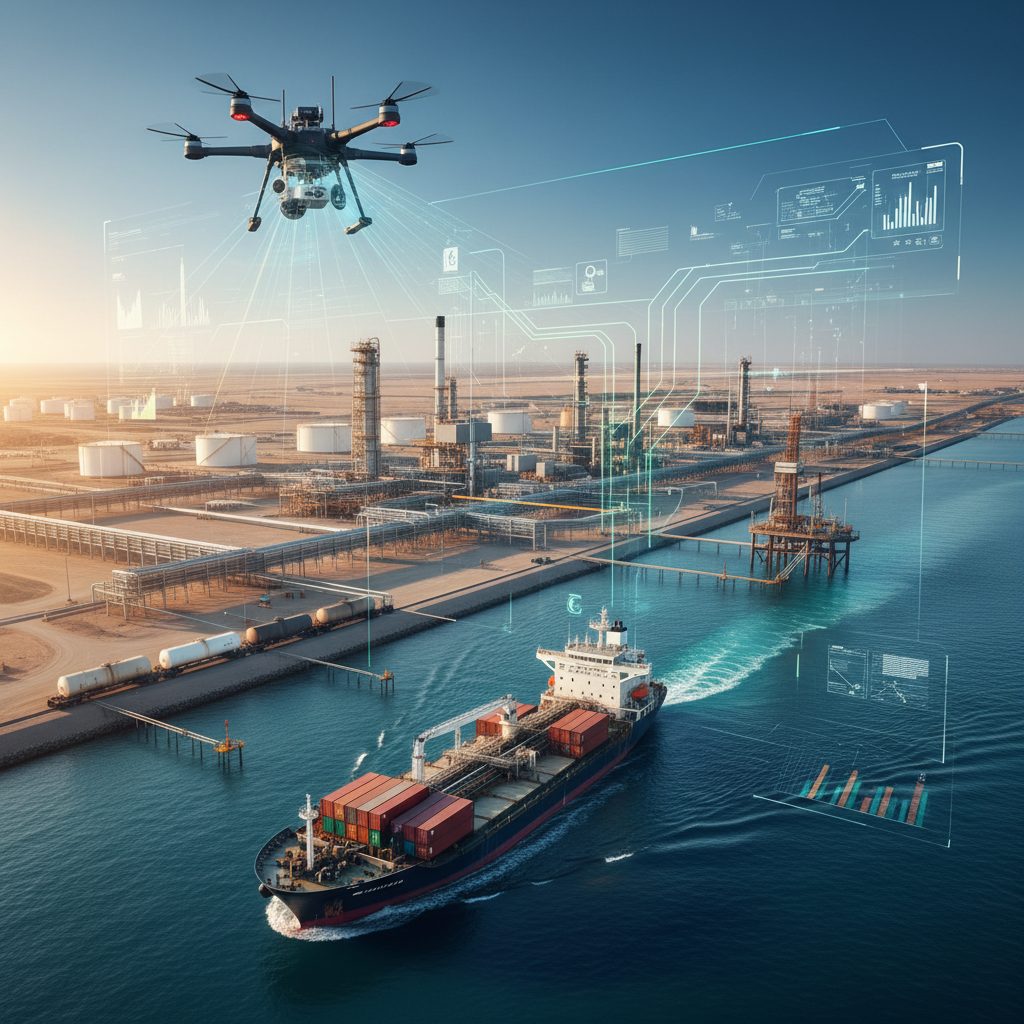
How this impacts the global supply chain
The oil and gas sector's resilience, defined as sustaining safe, compliant, and economically viable flows amidst deteriorating conditions, profoundly shapes the global supply chain. Critical components—crude oil, natural gas, LNG, refined products, petrochemicals—are foundational to global energy security, manufacturing, and transportation. Disruptions here cascade universally. When conditions worsen, established global supply-chain flows are immediately affected. Geopolitical events, extreme weather, or infrastructure failures necessitate extensive rerouting for oil tankers and LNG carriers, increasing transit times and fuel consumption. This strains global shipping capacity, reducing availability and elevating freight rates. Operational complexity intensifies. Refineries may face crude supply interruptions, curtailing output. Petrochemical plants could experience feedstock shortages. The movement of critical "spare parts" and specialized "contractors" can be hampered, leading to prolonged outages. This global interconnectedness means a localized energy disruption can rapidly escalate, triggering a worldwide scramble for alternative sources, price volatility, and ultimately, reduced supply chain efficiency, increased lead times, and inflationary pressures across various economic sectors. Resilience is crucial for safeguarding the stability of the entire global economy.
Global financial impact
The financial implications of oil and gas supply chain disruptions, and the strategic investments in resilience, are significant for all global trade participants. The imperative to maintain "economically viable flows" directly underscores financial stakes during instability. For shippers, financial burdens are immediate: higher transportation costs (freight, fuel, insurance), substantial demurrage charges from delays, penalties for unfulfilled contracts, and inflated spot market procurement. Carriers face escalating operational costs from rerouting and enhanced security. Reduced asset utilization due to unsafe conditions or lack of cargo directly impacts revenue. The risk of damage or loss to high-value cargo also carries significant financial and reputational consequences. For trade at large, disruptions cause increased volatility in global commodity markets. Spikes in oil and gas prices elevate manufacturing and transportation costs, contributing to inflationary pressures and potentially stifling economic growth. Supply chain instability deters investment. The emphasis on "safe, compliant" flows also highlights financial penalties and reputational damage from non-compliance. Insufficient resilience translates into higher costs, reduced profitability, and heightened economic uncertainty globally.
How MGS can help navigate today's global trade environment
In an environment where oil and gas supply chain resilience is paramount, a sophisticated shipment-visibility control tower like MGS is an indispensable tool. Its core capability—real-time, end-to-end visibility—directly supports maintaining critical flows when conditions deteriorate. For crude oil, LNG, refined products, and petrochemicals, MGS instantly identifies deviations from planned routes, unexpected delays, or emerging bottlenecks. If an LNG carrier reroutes due to geopolitical tensions, MGS flags this, providing accurate ETAs and new trajectories. This proactive insight is vital for "limiting" disruption, enabling timely communication and optimizing inventory.
MGS empowers proactive decision-making and rapid response. Operators leverage MGS data to anticipate issues, e.g., diverting a vessel from a congested port, minimizing costly demurrage and optimizing asset utilization. For critical "spare parts" and "contractors," MGS ensures tracking, facilitating expedited delivery or alternative arrangements, preventing costly downtime.
Finally, MGS enhances compliance and safety monitoring. Integrating weather, port conditions, and geopolitical risks, it provides a comprehensive risk profile, ensuring "safe, compliant" flows. It monitors regulatory adherence and alerts if shipments enter high-risk zones. This granular oversight helps prevent incidents, ensures compliance, and protects assets and personnel, directly contributing to the resilience framework by preventing avoidable disruptions and ensuring operational integrity. By transforming raw data into actionable intelligence, MGS enables oil and gas companies to navigate today's volatile global trade environment with greater control and confidence.
Demand–supply analysis & improvement
The imperative to maintain "flows" of critical oil and gas products highlights the delicate demand-supply balance. When "deteriorating conditions" challenge these flows, supply is fundamentally impacted, creating imbalances and potential price volatility. Resilience, as the "capability to limit" such disruptions, necessitates sophisticated demand-supply understanding and robust improvement levers. A primary lever is diversification of supply sources and transportation routes, mitigating over-reliance on single points of failure. Establishing multiple producers and exploring alternative shipping lanes ensures more consistent supply. Another crucial lever is strategic inventory management and stockpiling. For critical products or essential "spare parts," maintaining reserves buffers against short-term shocks, allowing operations to continue. This extends to ensuring redundancy for "data" and "power." Enhanced forecasting and scenario planning are paramount. Leveraging advanced analytics and real-time data, companies better anticipate demand and identify supply network vulnerabilities proactively. An MGS shipment-visibility control tower provides granular data for accurate forecasting and real-time monitoring, highlighting where supply is threatened or demand outstrips capabilities, informing strategic decisions for effective demand-supply balance and resilient network design.
ROI-focused resilience
The concept of oil and gas supply chain resilience, defined by maintaining "economically viable flows" when conditions deteriorate, frames investments in resilience through an ROI lens. The "capability to limit" disruption directly translates to limiting financial losses and protecting revenue. To quantify this ROI, one must identify and cost potential risks: Revenue Loss (delayed shipments, unmet demand), Increased Operational Costs (higher freight, demurrage, expedited shipping, insurance), Penalties and Fines (non-compliance, contract breach), Reputational Damage, and Asset Downtime (idle infrastructure, delayed "spare parts"). An investment in a shipment-visibility control tower like MGS directly mitigates these. The ROI of MGS stems from its ability to: Reduce Demurrage and Detention Costs through proactive alerts and rerouting; Optimize Inventory Levels via precise flow visibility; Minimize Expedited Shipping Costs by early delay identification; Enhance Compliance and Safety for "safe, compliant" flows, preventing fines; Improve Customer Satisfaction through reliable delivery; and Increase Operational Efficiency by optimizing routes and resource allocation. Investing in MGS allows companies to significantly reduce the financial impact of inevitable disruptions, ensuring continued "economically viable flows" critical to the oil and gas sector, transforming potential liabilities into protected assets and sustained profitability.
Source: Logistics Viewpoints — https://logisticsviewpoints.com/2026/07/22/oil-and-gas-supply-chain-resilience-protecting-lng-refined-products-and-critical-flows/