
North American Trade Tensions Resurge: Steel & Aluminum Tariffs Threaten Supply Chain Stability
The re-escalation of trade tensions between the United States and Canada, marked by renewed tariffs on steel and aluminum, injects significant uncertainty into North American supply chains. This MGS Insight brief analyzes the far-reaching implications for global logistics, financial stability, and how advanced shipment visibility platforms can provide crucial clarity amidst the disruption.
How this impacts the global supply chain
The renewed imposition of tariffs on steel and aluminum between the United States and Canada marks a significant disruption to established North American supply chain flows, routes, capacity, and operational norms. The immediate consequence is a forced re-evaluation of sourcing strategies for manufacturers and distributors reliant on these critical raw materials. Companies that have optimized their production and logistics networks around seamless cross-border trade will now face increased costs and complexities.
Flows: The natural flow of steel and aluminum, which previously moved efficiently across the US-Canada border, will be immediately hampered. Businesses on both sides will be compelled to seek alternative suppliers, either domestically within their respective countries or from other international markets. This shift will create new, often less efficient, and more costly material flows. For instance, a US manufacturer previously sourcing steel from Canada might now look to domestic US mills or overseas suppliers in Europe or Asia, fundamentally altering their inbound logistics. Conversely, Canadian manufacturers might face similar dilemmas for aluminum components sourced from the US.
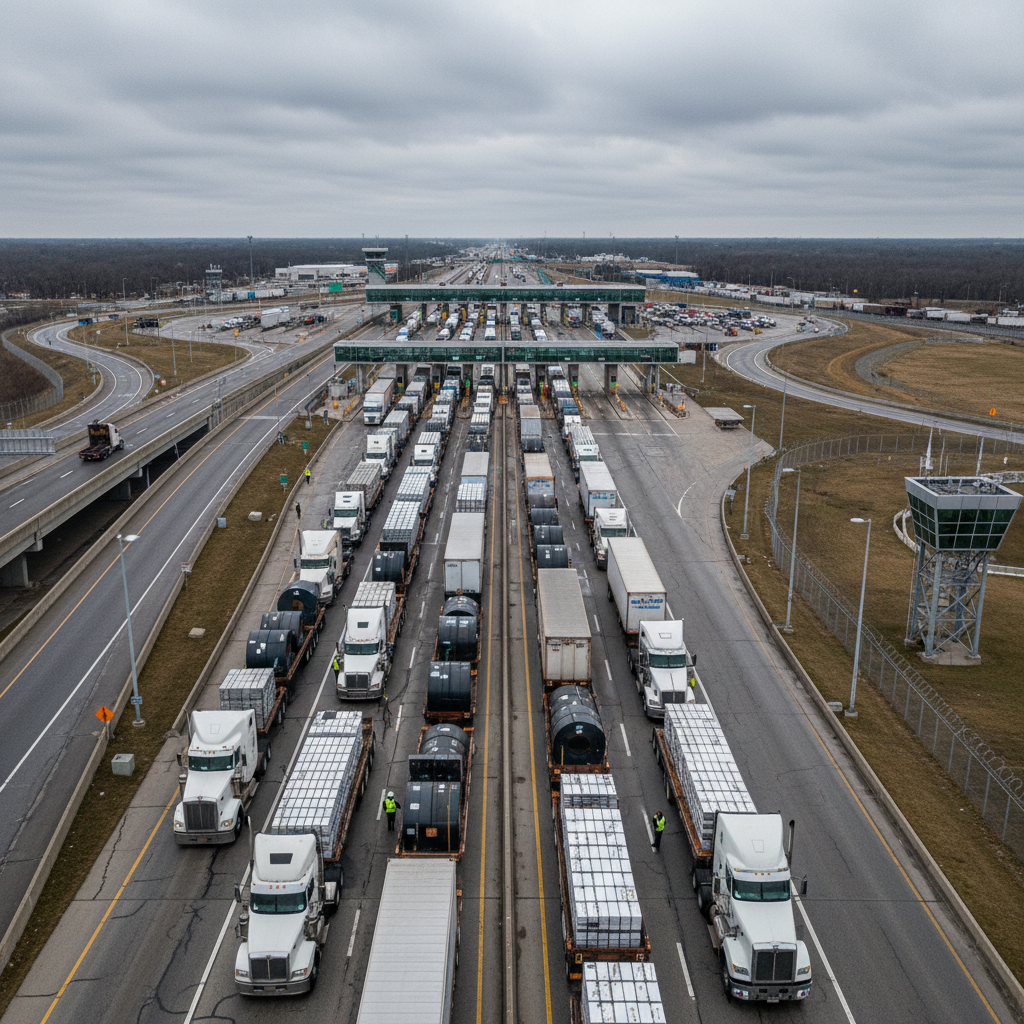
Routes: The rerouting of goods will inevitably lead to changes in transportation routes. Longer distances for raw material procurement will increase reliance on intermodal transport, potentially shifting volumes from efficient cross-border trucking to longer rail or ocean freight routes. This could strain existing infrastructure, particularly ports and rail networks, which may not have the excess capacity to absorb sudden increases in specific commodity volumes. Border crossings, while still active, might experience altered traffic patterns as companies adjust their trade lanes, potentially leading to congestion in unexpected areas as compliance checks become more stringent for goods that might now be considered 'tariff-impacted'.
Capacity: The overall capacity of the North American supply chain will be tested. While some capacity might be freed up on traditional US-Canada routes for these specific commodities, the burden will shift to alternative lanes. Domestic production capacity for steel and aluminum in both countries might be insufficient to fully compensate for reduced cross-border trade, leading to potential shortages or increased lead times. Furthermore, the capacity of logistics providers to handle new, complex, and potentially longer routes will be stretched. This includes not just transportation assets (trucks, railcars, vessels) but also warehousing space for increased safety stock, and customs brokerage services for navigating new tariff codes and regulations.
Operations: Supply chain operations will become inherently more complex and costly. Manufacturers will face increased lead times for raw material acquisition, necessitating adjustments to production schedules and inventory management strategies. Just-in-time (JIT) inventory models, prevalent in many industries, will become more vulnerable to disruption, forcing companies to hold larger safety stocks, tying up capital. The administrative burden will also escalate, involving more detailed customs declarations, tariff calculations, and potential appeals processes. The need to qualify new suppliers, renegotiate contracts, and adapt to new regulatory frameworks will divert significant operational resources, potentially impacting overall efficiency and profitability.
Global financial impact
The re-escalation of tariffs on steel and aluminum between the US and Canada carries significant financial and cost implications across the entire trade ecosystem, affecting shippers, carriers, and the broader economy.
For Shippers: The most direct financial impact for shippers will be the increased cost of goods. Tariffs act as an additional tax, directly raising the landed cost of steel and aluminum, and subsequently, any products manufactured using these materials. This cost burden will either be absorbed by the manufacturers, eroding profit margins, or passed on to consumers, contributing to inflationary pressures. Beyond tariffs, shippers will face higher freight costs due to longer transit routes, potential congestion at alternative ports or borders, and increased demand for specific transportation modes. The need to hold larger inventories to mitigate uncertainty and longer lead times will also increase working capital requirements and warehousing costs. Furthermore, the administrative overhead associated with navigating complex tariff codes, compliance, and potential customs audits will add to operational expenses. Companies may also face reduced competitiveness in global markets if their input costs rise significantly compared to international rivals not subject to similar tariffs.
For Carriers: The impact on carriers will be mixed and highly dependent on their specific routes and service offerings. Carriers specializing in efficient cross-border US-Canada routes for steel and aluminum may experience a decrease in volume for these specific commodities, potentially leading to underutilized capacity. Conversely, carriers serving longer domestic routes or international lanes (e.g., from overseas to North America) might see an increase in demand, potentially allowing them to command higher rates. However, the overall volatility and uncertainty introduced by trade disputes make long-term planning difficult. Carriers may face increased operational costs due to longer transit times, higher fuel consumption, and potential delays at new choke points. The need for specialized equipment or services to handle new trade flows could also present both opportunities and challenges. Ultimately, the unpredictable nature of trade policy can lead to inefficient asset utilization and revenue instability for the transportation sector.
For Trade at Large: The broader financial implications for North American trade are substantial. Reduced trade volumes in steel and aluminum between the US and Canada are a direct consequence, impacting the economic output of both nations. The inflationary pressure stemming from higher input costs for critical industries (e.g., automotive, construction, manufacturing) could dampen consumer spending and investment. This trade friction also introduces an element of economic uncertainty, which can deter foreign direct investment and slow economic growth. There's also the risk of retaliatory tariffs on other goods, which could further broaden the scope of the trade dispute and negatively impact a wider array of industries and commodities. This erosion of predictable trade relations can undermine the stability of integrated supply chains built over decades, leading to a less efficient and more costly global trading environment.
How MGS can help navigate today's global trade environment
In an environment characterized by escalating trade tensions and supply chain disruption, a sophisticated shipment-visibility control tower like MGS becomes an indispensable tool for operators seeking to maintain resilience and mitigate financial impact. Its capabilities are directly relevant to addressing the uncertainties introduced by renewed tariffs.
Firstly, real-time, end-to-end visibility is paramount. As supply chains are forced to reroute and diversify sourcing, MGS provides a unified view of all in-transit shipments—from raw materials like steel and aluminum to finished goods. This allows operators to track goods across new, potentially longer, and more complex routes, whether by ocean, rail, or truck. Knowing the precise location and estimated time of arrival (ETA) of critical inputs is essential for adjusting production schedules, managing inventory levels, and communicating proactively with customers, especially when traditional lead times are no longer reliable.
Secondly, MGS's predictive analytics and exception management capabilities are crucial for anticipating and responding to disruptions. With tariffs creating new choke points and compliance hurdles, MGS can flag potential delays at borders, ports, or customs checkpoints. By analyzing historical data and current events, the platform can forecast the impact of these tariffs on transit times and costs, allowing operators to proactively explore alternative routes or modes of transport before a shipment is critically delayed. This foresight enables quick decision-making, such as rerouting cargo to less congested ports or utilizing alternative carriers, thereby minimizing the financial repercussions of unexpected delays.
Thirdly, MGS facilitates improved inventory optimization in a volatile environment. The uncertainty introduced by tariffs and altered lead times often leads companies to increase safety stock, tying up valuable capital. By providing accurate, real-time data on inbound shipments and supplier performance, MGS enables more precise inventory planning. Operators can make data-driven decisions on optimal stock levels, reducing the need for excessive inventory buffers while still ensuring production continuity. This capability directly impacts working capital efficiency and reduces warehousing costs, offering a tangible financial benefit.
Finally, MGS supports enhanced compliance and cost management. As tariff structures change, ensuring that goods are correctly classified and that all necessary documentation is in order becomes more complex. MGS can integrate with customs data and provide alerts for potential compliance issues, helping to avoid costly fines and delays. Furthermore, by providing a clear overview of transportation costs across different routes and modes, MGS allows operators to identify cost escalations related to tariffs or increased freight rates. This transparency empowers businesses to negotiate better rates, optimize carrier selection, and accurately assess the true landed cost of goods under the new trade conditions, enabling more informed strategic decisions.
Source: Global Trade Magazine — https://www.globaltrademag.com/us-canada-trade-war-escalates-steel-and-aluminum-tariffs-disrupt-north-american-supply-chains/