
Navigating Turbulent Waters: Geopolitical Headwinds and the Shifting Global Supply Chain Landscape
Geopolitical events are increasingly reshaping global cargo movement, forcing supply chains to adapt to new realities across waterways, airspace, and overland routes. From critical chokepoints like the Panama Canal to the complexities of tariffs and sanctions, understanding and mitigating these disruptions is paramount for maintaining trade flows.
The Interconnected Web of Global Trade
In an era defined by intricate global supply chains, the movement of goods from origin to destination is a delicate ballet of logistics, infrastructure, and international cooperation. However, this finely tuned system is increasingly subjected to external pressures stemming from a complex interplay of geopolitical events. These events, ranging from regional conflicts and political tensions to trade disputes and climate-induced operational changes at critical transit points, are not merely isolated incidents. Instead, they create a ripple effect, fundamentally altering established cargo routes, impacting transit times, and escalating operational costs for businesses worldwide. The consequence is a global trade landscape characterized by heightened uncertainty and a constant need for adaptability.
Modern supply chains are designed for efficiency, often prioritizing speed and cost-effectiveness through optimized routes and just-in-time inventory strategies. This optimization, while beneficial in stable times, also exposes inherent vulnerabilities when geopolitical shifts introduce sudden and unpredictable disruptions. The ability to anticipate, monitor, and react swiftly to these changes has become a defining characteristic of resilient supply chains, moving beyond simple risk management to proactive strategic planning.
Chokepoints Under Pressure
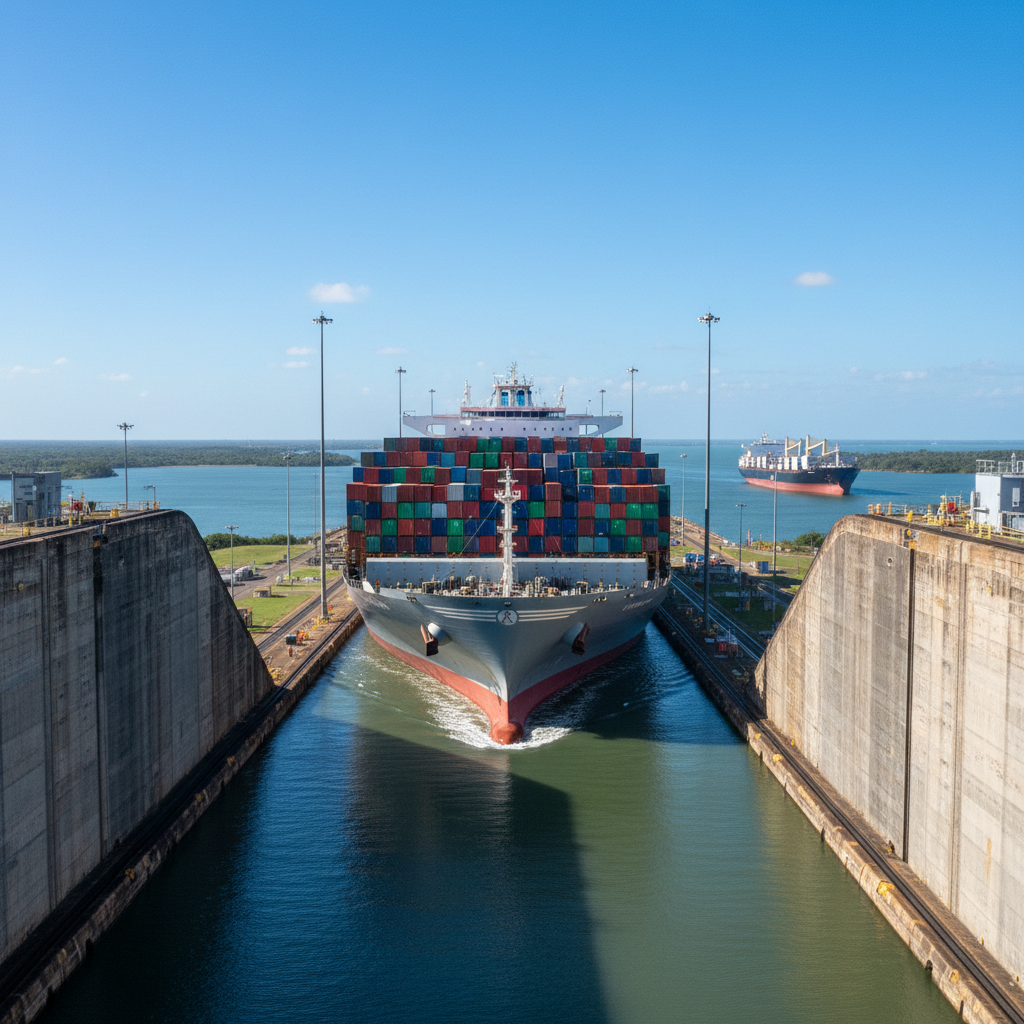
Critical maritime chokepoints, such as canals and straits, are the arteries of global trade. Their unimpeded operation is vital for the smooth flow of goods, and any disruption, regardless of its origin, can have far-reaching consequences. The Panama Canal, a pivotal link between the Atlantic and Pacific oceans, serves as a prime example of a chokepoint whose operational status directly impacts global shipping schedules and costs. While the recent easing of restrictions, allowing for an increase in Neopanamax transit slots to 10 from October 15, offers some relief, it underscores the dynamic nature of these critical passages.
Historically, restrictions at such chokepoints, whether due to environmental factors like drought or geopolitical tensions, force vessels to undertake longer, more expensive voyages, often around continents. This not only adds significant fuel costs and extends lead times but also strains vessel capacity on alternative routes. For instance, a vessel rerouting around South America to avoid Panama Canal restrictions could add weeks to its journey, impacting inventory levels, production schedules, and ultimately, consumer prices. In a broader geopolitical context, the stability of these chokepoints becomes even more critical, as alternative routes may themselves be subject to other forms of disruption or security concerns. A shipment-visibility control tower becomes indispensable here, offering real-time data on vessel movements, chokepoint status updates, and predictive analytics to identify potential delays or the need for rerouting. This allows logistics teams to proactively assess the impact of changes, like the Panama Canal's slot adjustments, on their specific shipments and plan accordingly.
Airspace and Overland Corridors: The Invisible Barriers
Beyond maritime routes, geopolitical events also significantly impact airspace and overland corridors, creating invisible yet formidable barriers to cargo movement. Airspace closures, often a direct consequence of regional conflicts or political disputes, force air cargo carriers to re-route, adding considerable flight time, fuel consumption, and operational expenses. These extended routes can push aircraft to their maximum range, necessitate additional refueling stops, and complicate crew scheduling, all of which contribute to higher freight costs and longer delivery times for time-sensitive goods.
Similarly, overland transport, particularly across vast continental expanses, is highly susceptible to geopolitical instability. Border closures, heightened security checks, or even direct conflict in certain regions can render established road and rail networks impassable. This forces cargo to be rerouted through less efficient or more costly alternative corridors, or in some cases, necessitates a complete shift to different modes of transport. Such disruptions can severely impact landlocked regions, create bottlenecks at alternative border crossings, and delay critical supplies. The cumulative effect is a fragmented logistics network where predictability is diminished, and the cost of moving goods escalates substantially.
Tariffs, Sanctions, and the Cost of Uncertainty
Geopolitical tensions often manifest as trade policy instruments, with tariffs and sanctions emerging as powerful tools that directly impact cargo movement and supply chain viability. Tariffs, essentially taxes on imported goods, can drastically alter the economic feasibility of sourcing from certain regions, prompting companies to seek new suppliers or reconfigure their manufacturing footprints. This leads to shifts in trade flows, potentially creating new, less efficient routes or increasing reliance on domestic production, which may not always be cost-effective.
Sanctions, on the other hand, are more restrictive, often prohibiting trade with specific countries, entities, or individuals. These measures can completely block certain trade lanes, force companies to divest from sanctioned markets, and necessitate complex compliance checks for every shipment. The legal and financial penalties for non-compliance are severe, compelling businesses to invest heavily in due diligence and supply chain transparency. The uncertainty surrounding the imposition or lifting of tariffs and sanctions creates a volatile environment, making long-term planning challenging and increasing the overall risk profile of international trade. An MGS control tower, integrated with trade compliance data, can help organizations navigate this complexity by providing real-time alerts on changing tariff codes, sanction lists, and regulatory requirements, enabling proactive adjustments to sourcing and routing strategies.
Building Resilience Through Visibility and Agility
The pervasive nature of geopolitical disruptions necessitates a fundamental shift in how supply chains are managed. The era of optimizing solely for cost and speed is giving way to a focus on resilience and agility. This means building supply chains that are not only efficient but also robust enough to withstand shocks and flexible enough to adapt quickly to unforeseen circumstances. A core component of this resilience is enhanced visibility across the entire supply chain.
Real-time shipment-visibility control tower platforms are crucial tools in this new paradigm. By providing end-to-end transparency, these platforms enable logistics professionals to monitor cargo movements across all modes, track vessel progress through critical chokepoints like the Panama Canal, and receive immediate alerts regarding airspace closures or overland route disruptions. This granular visibility empowers businesses to make informed decisions rapidly – whether it's rerouting a container, adjusting inventory levels, or communicating proactively with customers about potential delays. The ability to see and understand the impact of geopolitical events as they unfold, rather than reacting retrospectively, is the cornerstone of maintaining consistent trade flows and mitigating the financial and reputational damage that disruptions can inflict. In a world where the only constant is change, agility, underpinned by comprehensive visibility, is no longer a luxury but a strategic imperative for global trade.