
Navigating the Volatile Seas: MGS Insights into 2027 Ocean Freight Challenges
Global ocean shipping faces escalating Middle East conflict, persistent port congestion, and carrier capacity controls, complicating freight-rate negotiations for shippers heading into 2027. This brief analyzes the profound impacts on supply chains and the global economy, detailing how advanced visibility platforms like MGS are essential for resilience and strategic decision-making.
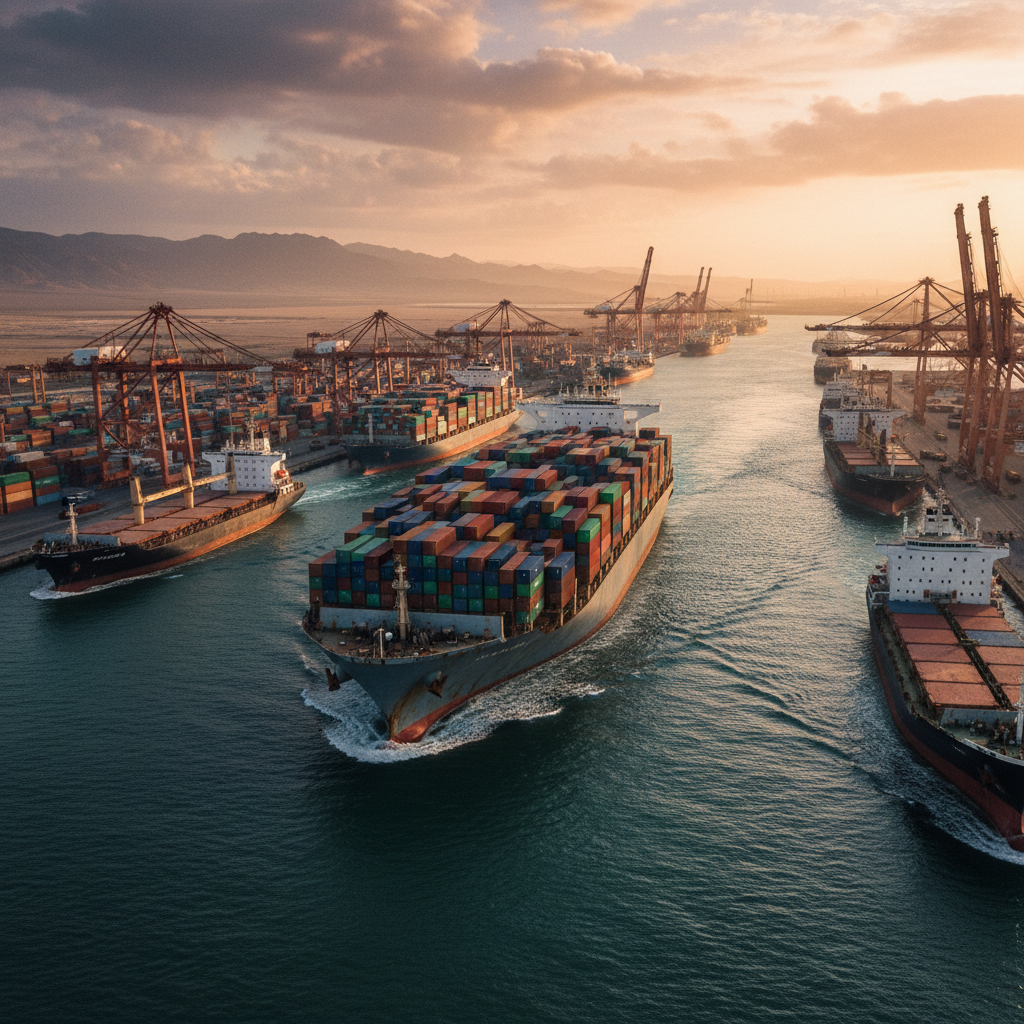
How this impacts the global supply chain
The current landscape of global ocean shipping presents a complex web of disruptions that fundamentally reshape supply chain flows, capacity utilization, and operational strategies. The ongoing geopolitical tensions in the Middle East, particularly affecting key maritime chokepoints, necessitate significant rerouting for vessels, leading to considerably longer transit times. This directly impacts the efficiency of East-West trade lanes, as ships must navigate alternative, often lengthier, passages. Such diversions not only extend delivery schedules but also increase fuel consumption and operational costs for carriers, ultimately influencing the cost structure for shippers.
Simultaneously, the global network is grappling with persistent port congestion, notably in key Asian and European hubs. This congestion acts as a significant bottleneck, delaying vessel turnaround times and creating a ripple effect across schedules. When ships are held up at port, their effective capacity is reduced, as they cannot be deployed for subsequent voyages as planned. This exacerbates existing capacity challenges, making it harder for shippers to secure timely slots for their cargo. The cumulative effect of these delays means goods spend more time in transit or awaiting processing, leading to increased inventory holding costs and a higher risk of stockouts or missed market opportunities.
Further compounding these issues is the uncertainty surrounding critical infrastructure like the Panama Canal. Fluctuating water levels or operational restrictions can severely limit transit options for vessels traversing between the Atlantic and Pacific oceans. This introduces an element of unpredictability for routes that traditionally rely on this shortcut, forcing shippers and carriers to consider alternative, often longer and more expensive, routes or to contend with potential delays and backlogs. The impact is particularly felt in trade between Asia and the US East Coast, as well as parts of South America.
Finally, carrier capacity controls represent a strategic response by shipping lines to manage market dynamics. These controls, which can include blank sailings or slow steaming, aim to balance supply with demand and maintain freight rate stability. However, from a shipper's perspective, they introduce further unpredictability and can limit available options, making it more challenging to plan and execute shipments efficiently. The combination of these factors – geopolitical rerouting, port bottlenecks, canal uncertainty, and carrier-imposed limitations – creates an environment where traditional, optimized supply chain models are under constant strain, demanding greater agility and real-time adaptability from all participants.
Global financial impact
The confluence of current global shipping challenges is exerting substantial financial pressure across the entire trade ecosystem, directly affecting shippers, carriers, and the broader global economy. For shippers, the most immediate and tangible impact is the upward pressure on freight rates. The need for longer voyages due to Middle East conflict, combined with reduced effective capacity from port congestion and carrier controls, creates a tighter market where demand often outstrips available supply. This translates into higher per-container costs, which can significantly erode profit margins, particularly for goods with lower value density. Beyond the base freight, shippers are also likely to face increased ancillary charges, such as demurrage and detention fees, as delays at congested ports become more common. The extended transit times also necessitate higher working capital tied up in goods in transit, and potentially larger safety stock levels to mitigate unpredictability, leading to elevated inventory holding costs. The complexity introduced into freight-rate negotiations for contracts extending into 2027 suggests a period of heightened financial risk and uncertainty, where securing favorable terms will be more challenging than in stable market conditions.
Carriers, while seemingly benefiting from higher rates, are simultaneously grappling with increased operational expenditures. Longer routes mean higher fuel consumption and extended vessel deployment, impacting fleet efficiency. Port congestion leads to longer port stays, incurring additional port charges and reducing the number of voyages a vessel can complete within a given period. The uncertainty surrounding key waterways like the Panama Canal also introduces planning complexities and potential rerouting costs. While capacity controls can help stabilize rates, they also represent a deliberate reduction in revenue-generating voyages, and the overall volatility makes long-term financial forecasting and investment planning more difficult.
At a macro level, these financial pressures contribute to inflationary trends as the increased cost of transportation is often passed on to consumers. This can dampen consumer demand and impact global trade volumes. Businesses may re-evaluate sourcing strategies, potentially leading to nearshoring or reshoring efforts if international shipping costs become prohibitively high and unpredictable. The overall effect is a less efficient, more expensive global trade environment, which can hinder economic growth and contribute to supply-side inflation, impacting everything from manufacturing costs to retail prices.
How MGS can help navigate today's global trade environment
In this highly volatile and unpredictable global trade environment, a sophisticated shipment-visibility control tower like MGS becomes an indispensable tool for operators seeking to maintain efficiency and mitigate risks. MGS provides real-time, end-to-end visibility into the movement of goods, offering a critical advantage when traditional routes are disrupted or capacity is constrained.
For instance, with the Middle East conflict forcing rerouting, MGS can track vessels taking alternative paths, providing accurate estimated times of arrival (ETAs) that account for the extended transit. This allows shippers to proactively adjust downstream logistics, manage inventory expectations, and communicate revised delivery schedules to customers, minimizing the impact of delays. Similarly, when facing Asian and European port congestion, MGS's granular data can highlight which ports are experiencing the most severe bottlenecks, allowing operators to identify potential alternative discharge points or prioritize critical shipments for faster processing upon arrival. The platform can issue alerts for vessels approaching congested areas, enabling early intervention or contingency planning.
The uncertainty surrounding the Panama Canal further underscores the need for such visibility. MGS can provide up-to-the-minute information on vessel positions and potential delays at the canal, or identify shipments that may need to be diverted. This intelligence empowers shippers to make informed decisions about route optimization or to re-evaluate their reliance on specific transit points. Furthermore, in an environment characterized by carrier capacity controls, MGS offers the data necessary to understand the true impact of these measures on specific lanes and services. By consolidating information on vessel schedules, blank sailings, and actual transit performance, MGS helps shippers assess the reliability of different carriers and services, informing their freight-rate negotiations for 2027. This data-driven approach allows shippers to negotiate from a position of strength, armed with insights into actual service levels and market conditions, rather than relying solely on carrier projections. Ultimately, MGS transforms raw, disparate shipping data into actionable intelligence, enabling operators to react swiftly to disruptions, optimize their logistics networks, and maintain control over their supply chains amidst global turbulence.
Demand–supply analysis & improvement
The current ocean freight market, as described, reveals a significant imbalance between effective supply and persistent demand, driven by a combination of external pressures and strategic carrier actions. On the supply side, the Middle East conflict directly reduces available capacity by forcing longer voyages, effectively tying up vessels for extended periods. This is compounded by port congestion in Asia and Europe, which further diminishes effective capacity by increasing vessel dwell times and creating backlogs. The uncertainty surrounding the Panama Canal adds another layer of supply constraint, as it limits the efficient movement of goods through a critical global artery. Moreover, "carrier capacity controls" represent a deliberate management of supply, where shipping lines strategically adjust vessel deployment, often through blank sailings or slow steaming, to influence market rates and operational efficiency. Collectively, these factors shrink the pool of available and timely shipping capacity.
While the source doesn't explicitly detail demand levels, the context of "freight-rate negotiations" suggests a scenario where demand for shipping services, even if not surging, remains robust enough to be significantly impacted by reduced supply. When effective capacity is constrained by geopolitical events, infrastructure limitations, and carrier strategies, even stable demand can lead to a supply-shortage scenario. This dynamic creates an environment where securing space on vessels becomes more challenging and expensive.
To improve this situation and navigate these dynamics, several levers can be pulled. Firstly, enhancing forecasting accuracy for both demand and supply is crucial. Shippers need better tools to predict their own shipping needs and anticipate carrier capacity adjustments. Secondly, diversification of sourcing and shipping lanes can reduce reliance on single points of failure (e.g., specific ports, canals, or conflict zones). Exploring multimodal options or alternative origin/destination pairs can provide flexibility. Thirdly, optimizing inventory management by leveraging real-time visibility to reduce safety stock where possible, or strategically increasing it for critical goods, can cushion against transit delays. Finally, closer collaboration with carriers and leveraging data from platforms like MGS to gain transparency into their operational plans can help shippers anticipate capacity changes and negotiate more effectively. By understanding the true state of supply and demand, businesses can make more informed decisions to mitigate risks and maintain operational continuity.
ROI-focused resilience
In the face of escalating global shipping disruptions, investing in supply chain resilience is no longer merely a best practice; it's a strategic imperative with clear financial returns. The "complicating freight-rate negotiations for shippers heading into 2027" explicitly highlights a quantified risk: the potential for significantly higher shipping costs if not managed proactively. Resilience actions, particularly those enabled by advanced visibility platforms like MGS, can directly protect against and mitigate these financial exposures, offering a tangible return on investment.
Consider the risk of increased freight rates. Without real-time insights into vessel movements, port congestion, and carrier capacity, shippers are at a disadvantage in negotiations. MGS, by providing comprehensive data on actual transit times, vessel reliability, and market capacity, empowers shippers to negotiate 2027 contracts from a position of strength. This allows them to challenge unjustified rate increases or identify carriers offering more reliable service at competitive prices. The ROI here is measured by the delta between the higher rates that might otherwise be accepted and the more favorable terms secured through data-backed negotiation. Even a modest percentage reduction in annual freight spend can translate into millions for large enterprises.
Furthermore, the financial impact of port congestion and rerouting includes elevated demurrage and detention charges, as well as increased inventory holding costs due to extended lead times. MGS's ability to provide early warnings of potential delays allows shippers to take proactive steps: rerouting shipments, expediting customs clearance, or adjusting warehouse operations to minimize demurrage fees. The ROI is the direct avoidance of these penalty charges. Similarly, by providing more accurate ETAs, MGS reduces the need for excessive safety stock, freeing up working capital and lowering warehousing expenses. The investment in MGS pays off by reducing capital tied up in inventory and optimizing storage costs.
Finally, the risk of lost sales due to unpredictable delivery schedules is significant. When goods are delayed or uncertain, customer satisfaction plummets, and orders can be cancelled. MGS provides the clarity needed to communicate accurate delivery windows to customers, manage expectations, and even proactively offer alternative solutions, thereby protecting revenue streams and brand reputation. The ROI here is the prevention of lost sales and the preservation of customer loyalty, which are critical for long-term profitability. By framing resilience not as an overhead but as an investment that directly reduces costs, avoids penalties, and protects revenue, businesses can clearly see the financial justification for adopting advanced visibility solutions in today's volatile trade environment.
Source: AJOT — https://www.ajot.com/insights/full/ai-freightos-ocean-freight-update-escalating-me-conflict-port-congestion-volume-and-rate-trends