
Navigating the Volatile Seas: Geopolitical Events and Supply Chain Disruption
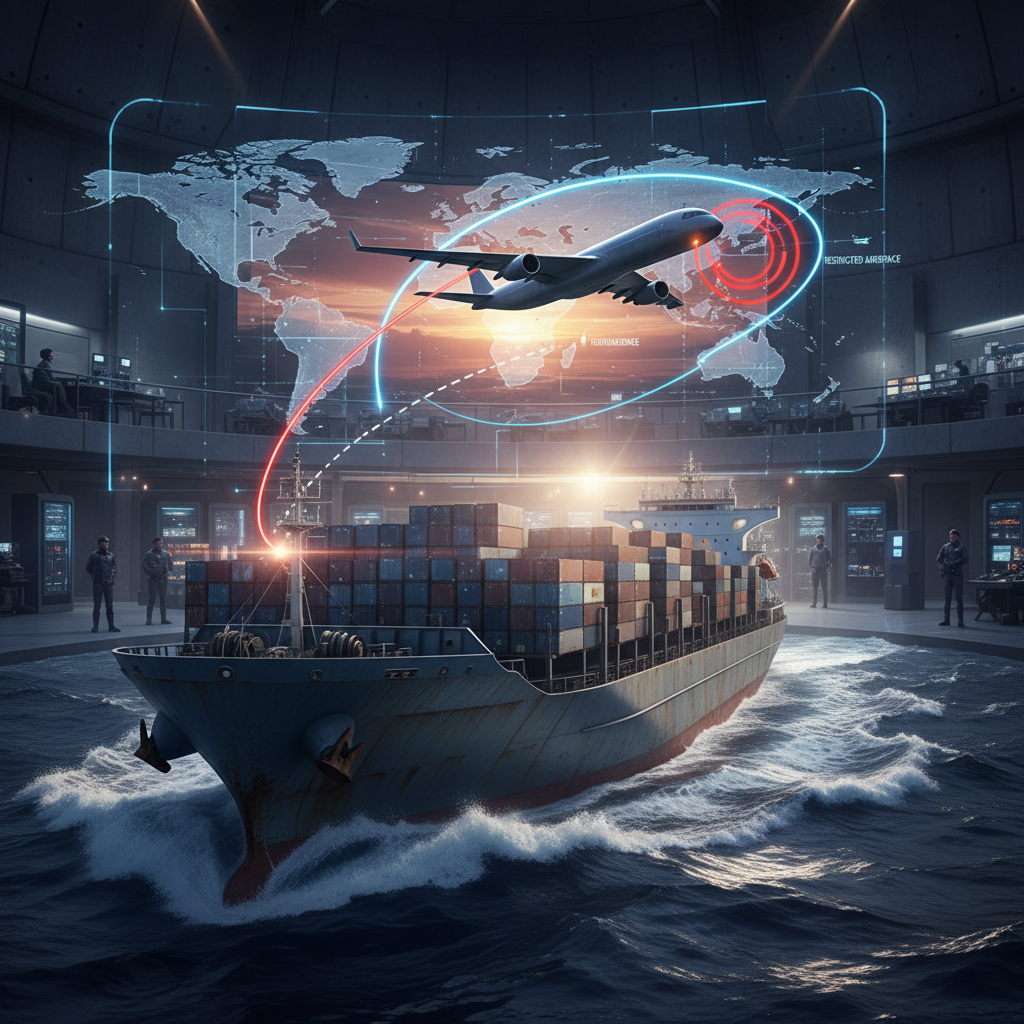
Geopolitical events are fundamentally reshaping global cargo movement, forcing supply chains to adapt to new realities across maritime routes, airspace, waterways, and trade policies. This brief explores the tangible consequences for trade and transport, and how advanced shipment visibility platforms are crucial for resilience.
The New Geopolitical Landscape for Global Logistics
The global supply chain, once optimized for efficiency and cost-effectiveness, is now increasingly defined by volatility stemming from geopolitical events. From regional conflicts to shifting international relations, these developments are not mere political footnotes; they are direct drivers of operational complexity and financial risk for cargo movement worldwide. The predictability that once underpinned global logistics has eroded, replaced by a dynamic environment where routes, transit times, and costs can change overnight. For businesses reliant on the seamless flow of goods, understanding and adapting to these disruptions is no longer an advantage but a fundamental requirement for continuity and competitiveness. This brief examines the multifaceted impact of geopolitical forces on cargo movement, focusing on the tangible consequences for trade and transport, rather than the political drivers themselves.
Maritime Route Diversions and Extended Transit
One of the most immediate and impactful consequences of geopolitical tensions is the forced alteration of established maritime routes. Critical international waterways, often chokepoints for global trade, can become high-risk zones due to piracy, military activity, or direct conflict. This necessitates significant rerouting of vessels, leading to considerably longer voyages. For instance, avoiding certain passages can add thousands of nautical miles and weeks to transit times for container ships, bulk carriers, and tankers. These extended journeys translate directly into increased fuel consumption, higher operational costs, and greater wear and tear on vessels. Furthermore, the heightened risk in specific areas often triggers substantial increases in war risk insurance premiums, adding another layer of financial burden to cargo owners and carriers. The ripple effect includes schedule disruptions, port congestion at alternative hubs, and a general reduction in the reliability of delivery windows, impacting inventory management and production schedules globally.
Airspace Restrictions and Air Cargo Constraints
Just as maritime routes are affected, geopolitical events frequently lead to the closure or restriction of significant swathes of international airspace. Overflight bans, often imposed in response to conflicts or diplomatic disputes, compel air cargo carriers to reroute flights around vast territories. These diversions extend flight durations, increase fuel consumption, and reduce the effective payload capacity of aircraft due to the need for more fuel. The cumulative effect is a reduction in available air cargo capacity on key trade lanes and a sharp increase in air freight rates. For time-sensitive and high-value goods, which rely heavily on air transport, these constraints can severely impact supply chain velocity and cost-efficiency. Businesses face longer lead times for critical components, higher shipping expenses, and the potential for delays in product launches or replenishment, underscoring the fragility of air logistics in a politically charged world.
Economic Warfare: Tariffs and Sanctions
Beyond physical routes, geopolitical events manifest as economic instruments designed to exert pressure, namely tariffs and sanctions. Tariffs, essentially taxes on imported goods, directly increase the landed cost of products, making them less competitive or forcing consumers to bear higher prices. These can be strategically applied to specific goods or entire sectors, disrupting established trade relationships and incentivizing companies to seek alternative sourcing or manufacturing locations. Sanctions, on the other hand, are more restrictive, prohibiting trade with specific countries, entities, or individuals, and can target particular goods or technologies. The implementation of sanctions creates complex compliance challenges for businesses, requiring meticulous due diligence to avoid penalties. Companies must navigate a labyrinth of regulations, often leading to the complete cessation of trade with sanctioned regions, forcing a complete overhaul of supply chains, and potentially stranding assets or investments. Both tariffs and sanctions introduce significant uncertainty, forcing businesses to continuously re-evaluate their global sourcing, production, and distribution strategies.
Compounding Costs and Supply Chain Fragility
The cumulative effect of these disruptions is a significant increase in the overall cost and fragility of global supply chains. Longer transit times, higher fuel costs, elevated insurance premiums, increased air freight rates, and the financial burden of tariffs all contribute to a substantial rise in logistics expenditures. This directly impacts profitability for businesses and can lead to higher consumer prices. Furthermore, the unpredictability introduced by geopolitical events undermines the principles of just-in-time (JIT) inventory management, forcing companies to hold larger buffer stocks, which ties up capital and increases warehousing costs. The risk of sudden route closures or trade restrictions means that supply chains are constantly operating under a cloud of potential disruption, demanding greater agility and adaptability. Reliability, once a cornerstone of global trade, has become a premium commodity, with lead times becoming increasingly difficult to guarantee.
Enhancing Resilience with Shipment Visibility
In this era of heightened geopolitical risk, the ability to maintain real-time visibility into cargo movement is paramount. A sophisticated shipment-visibility control tower, like MGS, provides the critical intelligence needed to navigate these complex challenges. By offering comprehensive, granular tracking of goods across all modes of transport, MGS enables businesses to identify potential disruptions – such as vessel rerouting, airspace closures, or delays at critical chokepoints – as they unfold. This proactive insight allows for immediate assessment of risk leg by leg, factoring in threat and weather drivers, and flagging war-risk considerations. With this intelligence, supply chain managers can make informed decisions on alternative routes, adjust inventory levels, communicate proactively with customers, and even initiate dynamic rerouting to mitigate delays and avoid high-risk areas. The control tower transforms raw data into actionable insights, empowering organizations to maintain control, reduce financial exposure, and build greater resilience against the unpredictable nature of geopolitical events.
Conclusion
The landscape of global trade and transport is irrevocably shaped by geopolitical forces. The days of static, predictable supply chains are over. Businesses must embrace a proactive, intelligence-driven approach to logistics, recognizing that flexibility and real-time visibility are key to mitigating the consequences of disrupted routes, restricted airspace, challenged waterways, and evolving trade policies. Adapting to this new reality is not just about survival, but about securing a competitive edge in an increasingly uncertain world.
Source: Dryad Global — https://channel16.dryadglobal.com/voyage-risk-intelligence-finance-trading