
Navigating the Storm: Hormuz Attack Highlights Urgent Need for Supply Chain Visibility
A recent attack sinking a containership in the Strait of Hormuz signals escalating threats to global trade. This brief analyzes the profound impacts on supply chain flows, financial costs, and how advanced visibility platforms like MGS are crucial for navigating such volatile environments.
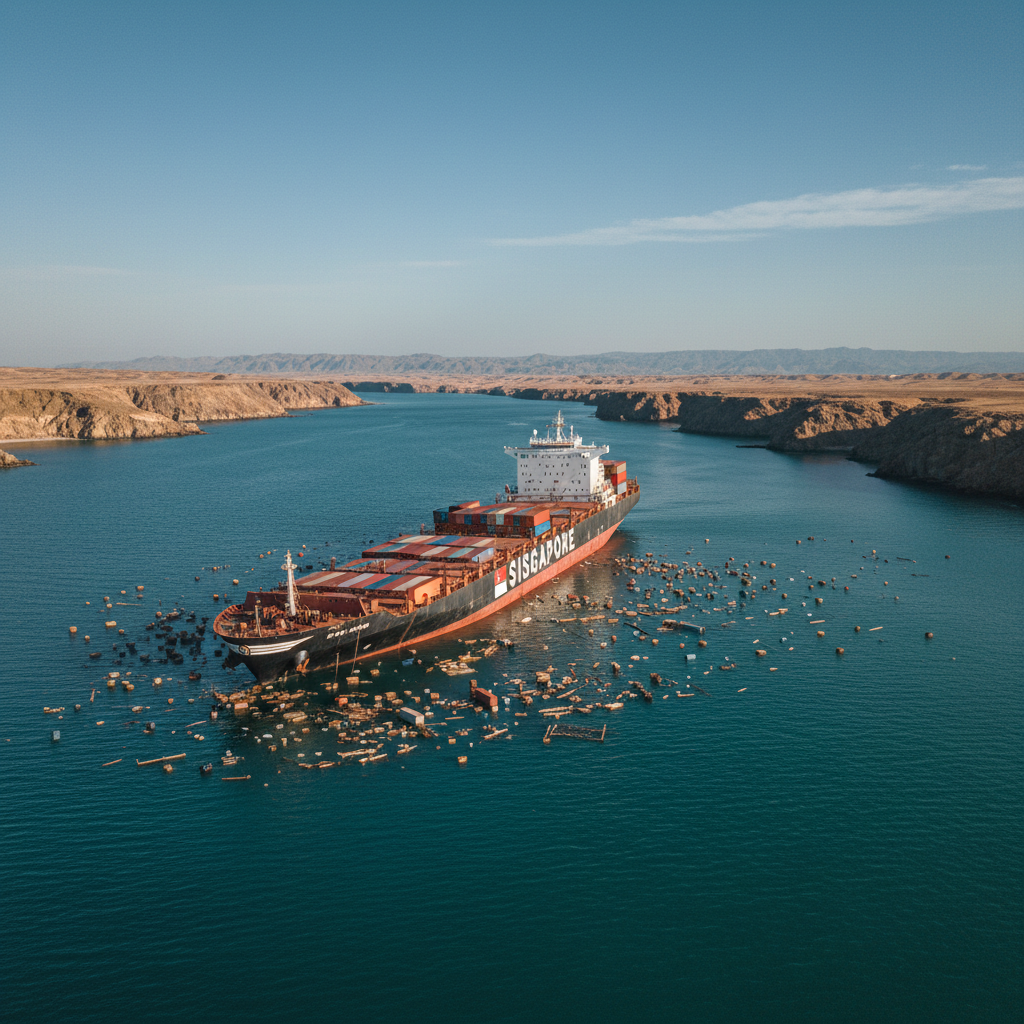
The recent sinking of a Singapore-flagged containership following an attack in the Strait of Hormuz represents a stark and concerning escalation in maritime threats. This incident, occurring in one of the world's most critical shipping chokepoints, sends ripples across the global supply chain, demanding immediate attention and robust adaptive strategies from all stakeholders. For supply chain professionals, understanding the multifaceted implications of such an event is paramount to maintaining operational continuity and mitigating financial exposure in an increasingly unpredictable global trade landscape.
How this impacts the global supply chain
The Strait of Hormuz is an indispensable artery for global commerce, connecting the major oil-producing regions of the Middle East with markets worldwide, and serving as a vital passage for containerized cargo. The sinking of a containership due to an attack in this strategic waterway introduces immediate and profound disruptions across several dimensions of the global supply chain.
Firstly, supply-chain flows and routes are directly impacted. Even if not all vessels immediately divert, the perceived risk will lead many carriers to re-evaluate their routes. This could result in longer transit times as ships take alternative, often significantly longer, paths around the Arabian Peninsula, such as the Cape of Good Hope. Such diversions add thousands of nautical miles to journeys, increasing fuel consumption and delaying cargo arrival. Furthermore, increased security measures or naval escorts, if implemented, could slow down passage through the Strait itself, creating bottlenecks and further delays for vessels that continue to use the route. The incident creates an environment of uncertainty, compelling logistics managers to consider less efficient but safer alternatives.
Secondly, capacity within the global shipping network will be indirectly but significantly affected. While the loss of a single containership, while tragic, does not drastically reduce overall global capacity, the knock-on effects do. Longer transit times due to rerouting mean that vessels are tied up for extended periods, effectively reducing the available capacity of the global fleet. This 'ghost capacity' reduction can lead to tighter vessel availability, especially for specific trade lanes. Additionally, the heightened risk environment may lead to increased insurance premiums for vessels operating in the region, which carriers will likely pass on to shippers, further impacting the cost-effectiveness of capacity.
Finally, operations will face considerable challenges. Shippers must contend with extended lead times, making inventory planning and just-in-time strategies more difficult to execute. Port operations could experience congestion as rerouted vessels arrive off-schedule or at unexpected ports. Supply chain managers will need to rapidly assess their exposure, identify affected shipments, and communicate potential delays to downstream customers. The incident underscores the fragility of globalized supply chains and the critical need for agile, data-driven operational responses to maintain resilience in the face of geopolitical instability. Real-time visibility becomes not just a convenience, but a critical operational imperative to identify impacted shipments and initiate contingency plans swiftly.
Global financial impact
The financial ramifications of an attack in a critical chokepoint like the Strait of Hormuz are extensive, affecting shippers, carriers, and the broader global trade ecosystem. The “escalation in threats” mentioned in the source text suggests these impacts are likely to be sustained and systemic, rather than isolated.
For shippers, the most immediate financial burden will come in the form of increased costs. Freight rates are almost certain to rise as carriers factor in higher operational expenses, including elevated insurance premiums for vessels and cargo traversing high-risk zones. Longer transit times due to rerouting translate directly into higher fuel costs, which are invariably passed on. Furthermore, extended lead times necessitate increased inventory holding costs, as businesses must carry larger buffer stocks to guard against unpredictable delays. There's also the potential for lost sales or penalties due to missed delivery windows, especially for time-sensitive goods. Cargo insurance premiums for shipments passing through the region will also see an uptick, adding another layer of cost.
Carriers will face a direct hit to their operating margins. Their primary costs will surge due to higher war risk insurance premiums, increased security outlays, and significantly greater fuel consumption for longer routes. The potential for vessel damage or loss, as demonstrated by this incident, represents an extreme financial risk, even with insurance. Crew wages might also increase for voyages through dangerous waters, reflecting the heightened personal risk. While carriers will endeavor to pass these costs onto shippers, competitive pressures and contractual obligations may limit their ability to fully recover expenses, impacting profitability.
For trade at large, the incident contributes to an environment of economic uncertainty and potential inflationary pressures. Increased shipping costs for goods transiting the Strait of Hormuz will ultimately be borne by consumers, leading to higher prices for a wide range of products. This can dampen consumer demand and reduce overall trade volumes in affected lanes. The broader perception of increased risk in global maritime trade can also deter investment and lead to a re-evaluation of global sourcing strategies, potentially favoring regionalization or nearshoring, which could restructure trade patterns over the long term. The financial stability of companies heavily reliant on this particular trade route will come under scrutiny, potentially impacting their creditworthiness and investment appeal.
How MGS can help navigate today's global trade environment
In an environment characterized by escalating threats and unpredictable disruptions, a sophisticated shipment-visibility control tower like MGS becomes an indispensable tool for navigating the complexities of global trade. Its capabilities are directly relevant to mitigating the impacts of incidents such as the containership sinking in the Strait of Hormuz.
Firstly, real-time, end-to-end visibility is paramount. MGS provides immediate insights into the location and status of every shipment, allowing operators to quickly identify which containers or vessels are currently in or approaching the affected Strait of Hormuz region. This instant awareness enables proactive decision-making, rather than reactive scrambling. For example, if a vessel is identified as being near the incident zone or on a route now deemed high-risk, MGS can flag it, allowing logistics teams to assess potential impacts on specific purchase orders and customer commitments.
Secondly, MGS facilitates proactive risk mitigation and re-routing. Upon an incident like this, MGS can immediately highlight all shipments that were planned to transit the Strait. Supply chain analysts can then use the platform to model alternative routes, compare new estimated times of arrival (ETAs), and assess the associated cost implications (e.g., increased fuel, potential port surcharges). This capability allows for rapid re-routing decisions, potentially diverting vessels before they enter the danger zone or optimizing new routes to minimize delays and costs, thereby protecting cargo and ensuring continuity of supply.
Furthermore, MGS enhances stakeholder communication and expectation management. With accurate, real-time data on shipment status and revised ETAs, MGS empowers logistics teams to provide timely and transparent updates to customers, suppliers, and internal sales teams. This level of communication is crucial during disruptions, helping to manage expectations, maintain trust, and prevent costly misunderstandings or penalties. Instead of waiting for carrier updates, operators can access a single source of truth, consolidating information and streamlining communication workflows.
Finally, MGS supports data-driven resilience planning. By aggregating data on historical transit times, chokepoint performance, and carrier reliability during disruptions, MGS provides valuable insights for long-term strategic planning. This data can inform decisions on diversifying sourcing locations, pre-positioning inventory in strategic hubs, or evaluating the resilience of different carriers. In the context of escalating threats, MGS helps operators move beyond reactive crisis management to building inherently more robust and adaptive supply chain networks, ensuring that future incidents have a less severe impact on operations and profitability.
Demand–supply analysis & improvement
The attack in the Strait of Hormuz, and the broader “escalation in threats” it signifies, introduces significant shifts in both demand and supply dynamics, necessitating concrete improvement levers for supply chain resilience.
On the supply side, the immediate impact is a reduction in reliability and predictability for goods transiting the affected region. Longer lead times due to rerouting or increased security measures effectively reduce the available supply of goods at their intended destination at the expected time. This can lead to stockouts, production delays for manufacturers relying on components from Asia or the Middle East, and a general tightening of supply for various commodities. Over time, persistent threats could prompt a strategic re-evaluation of sourcing locations, pushing companies towards nearshoring or friendshoring to reduce reliance on volatile maritime chokepoints. The incident highlights the vulnerability of highly centralized supply chains and the need for geographical diversification of manufacturing and logistics hubs.
On the demand side, the implications are more nuanced. In the short term, widespread disruptions can trigger a surge in demand for expedited shipping options as companies try to mitigate delays, further straining capacity and driving up costs. There might also be a tendency for companies to increase their safety stock levels to buffer against future uncertainties, leading to an artificial spike in inventory demand. Conversely, prolonged uncertainty and increased costs could eventually dampen consumer demand for certain goods, or shift demand towards locally sourced alternatives if global supply chains become too unreliable or expensive.
Concrete improvement levers emerge from this analysis. Firstly, route diversification and multimodal options are critical. Companies should actively explore and pre-qualify alternative shipping lanes and consider shifting certain cargo to air freight or rail (where feasible) for time-sensitive goods, even at a higher cost. Secondly, dynamic inventory management strategies are essential. Rather than static safety stock levels, businesses need to implement systems that can adjust inventory buffers based on real-time risk assessments and projected lead times. Thirdly, supplier resilience programs should be prioritized, working collaboratively with key suppliers to ensure they also have robust contingency plans for disruptions. MGS plays a vital role here by providing the data and visibility needed to implement these levers – tracking performance of alternative routes, monitoring inventory levels across the network, and evaluating supplier risk profiles based on their exposure to geopolitical hotspots.
ROI-focused resilience
Investing in supply chain resilience, particularly through advanced visibility platforms like MGS, can yield significant returns by protecting against quantifiable risks in volatile environments. The sinking of a containership in the Strait of Hormuz underscores the tangible costs of inadequate resilience and the clear ROI of proactive measures.
The quantified risks associated with an event like this include:
- Increased Freight Costs: Rerouting can add thousands of dollars per container in fuel and surcharges. For a company shipping hundreds or thousands of containers annually, these costs can quickly escalate into millions.
- Demurrage and Detention Charges: Delays at ports due to rerouting or congestion can lead to substantial daily fees for containers and vessels.
- Lost Sales and Market Share: Stockouts due to delayed shipments can result in immediate revenue loss and long-term damage to customer relationships and market position. The cost of a lost customer is notoriously high.
- Expedited Shipping Costs: The need to air freight critical components or finished goods to compensate for maritime delays can be exponentially more expensive than ocean freight.
- Inventory Holding Costs: Maintaining larger safety stocks to buffer against uncertainty ties up capital and incurs storage expenses.
- Reputational Damage: Failure to deliver on time or communicate effectively during a crisis can erode brand trust and customer loyalty.
An investment in an MGS shipment-visibility control tower directly addresses these risks, offering a compelling ROI through avoided costs and enhanced operational efficiency.
For instance, by providing immediate alerts and real-time tracking, MGS enables prompt re-routing decisions, potentially saving hundreds of thousands of dollars in avoided demurrage and detention charges for delayed vessels. The ability to proactively communicate delays and revised ETAs to customers, facilitated by MGS, can prevent lost sales and maintain customer satisfaction, protecting revenue streams that would otherwise be at risk. By optimizing inventory levels based on real-time risk assessments and transit times, companies can reduce unnecessary inventory holding costs while still maintaining adequate buffers against disruption.
Furthermore, MGS empowers supply chain teams to identify and mitigate risks before they escalate into full-blown crises. This proactive approach can reduce the reliance on costly expedited shipping, translating into significant savings. While precise quantification of avoided costs requires specific company data, the cumulative impact of preventing stockouts, minimizing demurrage, optimizing routes, and maintaining customer loyalty can easily offset the investment in a visibility platform many times over, especially when considering the potential multi-million dollar losses that a major, unmanaged disruption can incur. The return on investment for MGS is found not just in efficiency gains, but crucially, in the substantial financial protection it offers against the escalating and unpredictable risks inherent in today's global trade environment.
Source: Global Trade Magazine — https://www.globaltrademag.com/singapore-flagged-containership-sinks-after-attack-in-strait-of-hormuz/