
Navigating the Smart Vehicle Supply Storm: Financial and Operational Imperatives for Carmakers
Chinese smart vehicle manufacturers face a critical juncture as component shortages and surging raw material costs, fueled by the AI boom, threaten their financial health and operational agility. This brief outlines key strategies to mitigate impact on cost, cash flow, margin, productivity, and growth.
Working capital optimization
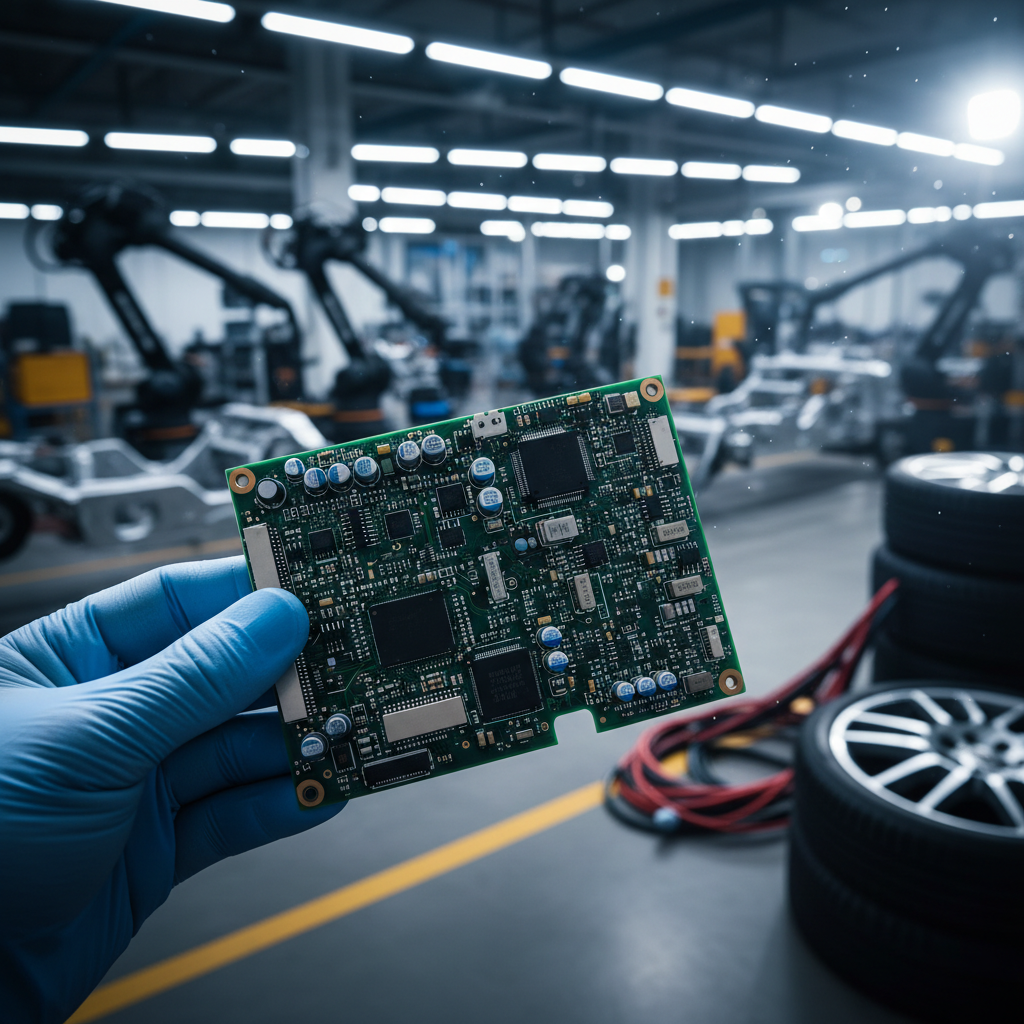
The current climate of component scarcity and escalating prices presents significant challenges to working capital management for smart vehicle manufacturers. With key parts like printed circuit boards (PCBs) and multilayer ceramic capacitors (MLCCs) experiencing a global shortage, companies may be compelled to increase inventory levels to secure supply and prevent production halts. This strategic stockpiling, while necessary for continuity, ties up more cash in inventory, extending the cash conversion cycle. Furthermore, the “surging prices of raw materials” mean that each unit of inventory now represents a higher financial investment. The projected “at least a year” for the global supply chain to normalize production implies that these elevated inventory costs and prolonged holding periods are not a short-term issue. To optimize working capital, leaders must balance the need for supply security against the financial burden of excess inventory. This involves meticulously forecasting demand and supply, exploring consignment agreements with suppliers where feasible, and potentially negotiating more favorable payment terms to defer cash outflow. A robust shipment-visibility control tower (MGS) could provide real-time insights into incoming component shipments, enabling more precise inventory planning and reducing the need for excessive safety stock, thereby freeing up capital.
Operation efficiency
Operational efficiency is under direct assault from the “components crunch.” A shortage of “key parts” like PCBs and MLCCs inevitably leads to disruptions on the production line. Without a steady flow of these critical components, manufacturing processes can slow down, or even halt, resulting in underutilized capacity and increased per-unit production costs. The “at least a year” timeline for supply chain recovery suggests that these inefficiencies are not transient but a persistent challenge that requires strategic intervention. To bolster operational efficiency, carmakers must explore alternative component sourcing, even if it involves qualifying new suppliers or redesigning certain modules to accommodate different specifications. Implementing flexible manufacturing processes that can adapt to component availability fluctuations is crucial. Furthermore, optimizing production scheduling to align with anticipated component deliveries can minimize idle time and maximize throughput with available resources. The goal is to maintain a consistent output despite external supply chain volatility, ensuring that existing assets and labor are utilized to their fullest potential.
Cost reduction
The “rising costs” driven by “surging prices of raw materials” and the “global components shortage” directly erode the cost structure of smart vehicle production. PCBs and MLCCs, as “key parts,” have a disproportionate impact on the overall bill of materials. The AI boom, while a driver of innovation, is simultaneously inflating the cost base for these essential components. In this environment, traditional cost reduction strategies become even more critical. This includes rigorous value engineering to identify opportunities for component standardization or substitution where performance is not compromised. Negotiating long-term supply agreements, even at higher prices, can provide cost predictability and potentially secure better terms than spot market purchases. Exploring vertical integration for certain critical components, or investing in supplier development programs to increase capacity, could be long-term cost mitigation strategies. While direct “procurement savings” might be challenging in a seller's market, focusing on total cost of ownership, including logistics and inventory holding costs, can still yield reductions.
Organizational productivity
When production lines face a “components crunch,” organizational productivity suffers across multiple functions. Engineering teams may be diverted from new product development to redesign existing modules or qualify alternative components. Procurement teams are under immense pressure to source scarce parts, often at higher prices, consuming significant time and resources. Manufacturing personnel might experience periods of reduced activity or be redeployed, leading to inefficiencies. The overall output per employee can decline if the primary constraint is external supply. To maintain organizational productivity, companies need to empower cross-functional teams to rapidly respond to supply chain disruptions. Investing in advanced planning and scheduling tools can help optimize resource allocation even when faced with unpredictable component availability. Furthermore, fostering a culture of continuous improvement and problem-solving allows teams to adapt quickly and find innovative solutions to overcome supply bottlenecks, ensuring that human capital remains focused on high-value activities.
Cash flow optimization
The twin pressures of “rising costs” and a “global components shortage” directly impact cash flow. Higher component prices mean increased cash outflow for every vehicle produced. Simultaneously, the scarcity of parts, and the “at least a year” timeline for supply chain recovery, can delay vehicle production and subsequent sales, thereby delaying cash inflow. This creates a double squeeze on liquidity. To optimize cash flow, companies must rigorously manage their accounts payable and receivable cycles. Negotiating extended payment terms with suppliers, where possible, can defer cash outflows. Conversely, expediting collections from customers can accelerate inflows. Implementing a robust sales and operations planning (S&OP) process is crucial to align production capabilities with market demand, minimizing the risk of building inventory that cannot be sold or missing sales opportunities due to lack of components. Exploring financing options, such as supply chain finance, could also help bridge liquidity gaps caused by increased working capital requirements.
Procurement savings
The current market conditions, characterized by “surging prices of raw materials” and a “global components shortage” of “key parts” like PCBs and MLCCs, make traditional procurement savings extremely difficult. The AI boom is creating unprecedented demand, shifting negotiating power significantly towards suppliers. Instead of direct price reductions, procurement efforts must focus on mitigating cost increases and securing supply. This involves strategic supplier relationship management, potentially offering long-term commitments or joint development agreements to ensure preferential access to scarce components. Diversifying the supplier base, even for small volume purchases, can reduce reliance on single sources and provide contingency options. Exploring regional sourcing strategies could also mitigate some global supply chain risks. While outright “savings” might be elusive, the goal shifts to “cost avoidance” – preventing even higher price increases and ensuring continuity of supply, which is paramount to avoiding costly production stoppages. A shipment-visibility control tower (MGS) could be invaluable here, providing early warnings of potential delays or disruptions, allowing procurement teams to proactively seek alternatives or expedite existing orders, thereby preventing even greater costs from production line halts.
High-growth opportunities
The “intelligence edge” in vehicles, driven by components like PCBs and MLCCs, clearly points to a high-growth segment within the automotive industry. The “AI boom” is fueling demand for these smart features, indicating a strong market appetite for advanced functionalities. However, the “components crunch” and “rising costs” represent a significant “setback” that directly impedes the ability of Chinese smart vehicle makers to fully capitalize on these high-growth opportunities. The challenge is not a lack of market demand for intelligent vehicles, but rather the operational and financial constraints in meeting that demand. To navigate this, companies must prioritize which intelligent features are most critical for market differentiation and allocate scarce components accordingly. Investing in R&D for next-generation components or exploring strategic partnerships to secure future supply could be vital for sustaining growth in this competitive landscape. The “at least a year” timeline for supply chain recovery means that strategic planning for growth must account for prolonged supply constraints.
High-margin opportunities
The pursuit of an “intelligence edge” in vehicles typically aligns with high-margin opportunities, as advanced features often command premium pricing. Consumers are willing to pay more for sophisticated infotainment systems, advanced driver-assistance systems (ADAS), and other AI-driven functionalities. However, the “rising costs” of “key parts” like PCBs and MLCCs directly threaten these potentially high margins. The increased cost of goods sold (COGS) will compress profitability unless these costs can be fully passed on to the consumer, which might impact market competitiveness and sales volume. To protect high-margin opportunities, companies must focus on optimizing the value proposition of their intelligent features. This includes ensuring that the premium charged for these features is justified by superior performance and customer experience. Furthermore, exploring innovative pricing strategies, such as subscription models for certain intelligent services, could help decouple revenue generation from the fluctuating hardware costs, thereby safeguarding margins in the long term.
Source: SCMP Business — https://www.scmp.com/business/china-evs/article/3364766/components-crunch-chinas-carmakers-face-rising-costs-keep-intelligence-edge?utm_source=rss_feed