
Navigating the New Normal: COSCO's Profit Dip Signals Evolving Ocean Freight Landscape
COSCO Shipping Holdings' H1 2026 profit dropped 34% despite higher volumes, highlighting a challenging environment for ocean carriers. This analysis explores the implications for global supply chains, financial markets, and how visibility platforms can help.
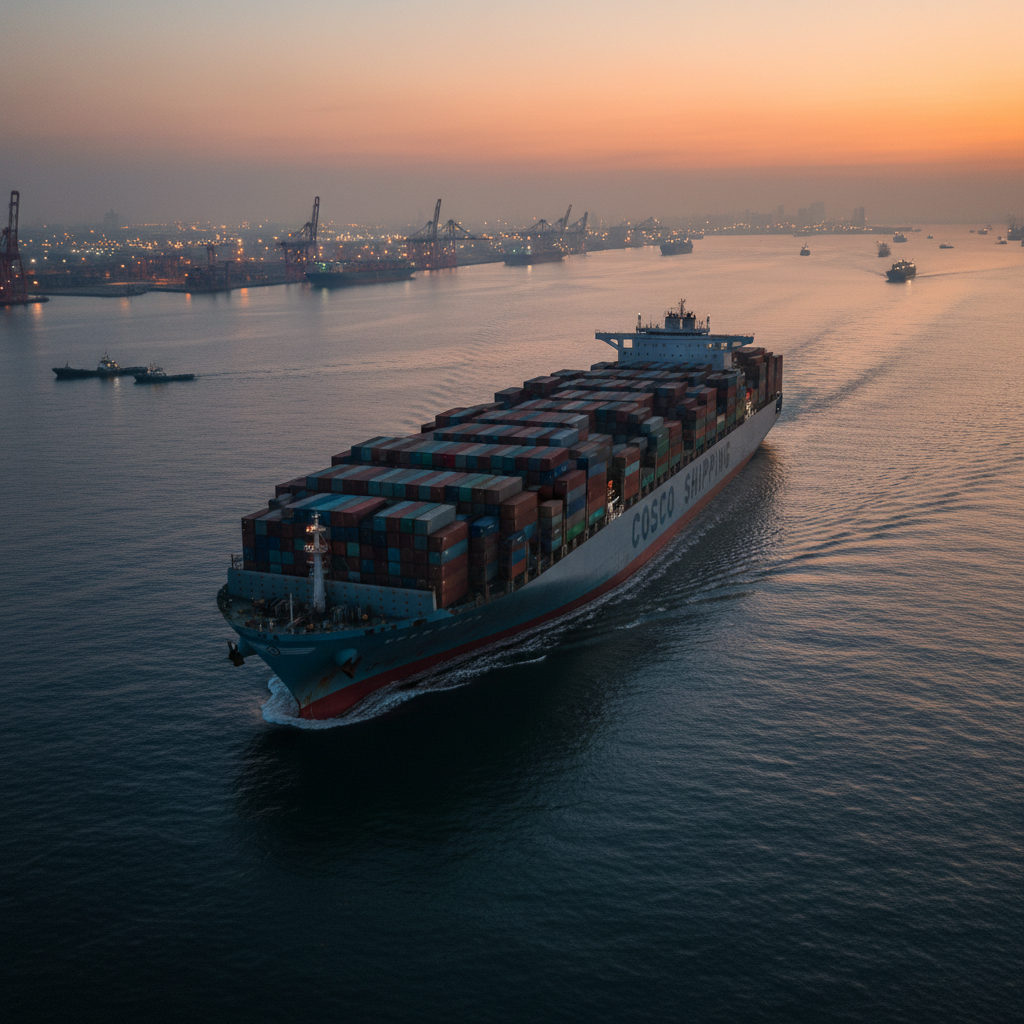
How this impacts the global supply chain
The significant 34% drop in COSCO Shipping Holdings' H1 2026 net profit, despite an increase in box volumes, signals a critical shift in global supply chain dynamics. This development points to a market where robust cargo movement no longer guarantees carrier profitability, with profound implications for logistics operations worldwide.
Firstly, regarding global supply chain flows and routes, the erosion of carrier margins suggests intense competition and potential overcapacity on key trade lanes. This will likely compel carriers to strategically re-evaluate and consolidate their service networks. Shippers may experience changes in transit times, service frequency, or port rotation schedules as carriers prioritize efficiency and cost reduction over sheer volume. This could mean fewer direct services on certain routes, potentially increasing transshipment and adding complexity to logistics planning for businesses.
Secondly, the impact on capacity is nuanced. While "higher volumes" indicate sustained demand for goods movement, the profit decline implies that available vessel capacity might be outpacing demand at sustainable rates, or operating costs have surged. This scenario intensifies downward pressure on freight rates. Carriers may respond with more aggressive capacity management strategies, such as increased blank sailings, slow steaming, or temporary vessel lay-ups. For shippers, this could offer lower transportation costs but also introduces the risk of service disruptions if capacity withdrawals become too aggressive or carrier financial health deteriorates.
Finally, operational implications for both carriers and shippers are substantial. Carriers, facing squeezed margins, will prioritize operational efficiency, optimizing vessel utilization, improving port turnaround times, and rigorously managing fuel consumption. Shippers will need a more strategic approach to logistics, facing stricter booking deadlines and a greater emphasis on accurate forecasting to secure optimal rates and reliable service. The overall trend points towards a market where operational excellence and data-driven decision-making are paramount.
Global financial impact
COSCO Shipping Holdings' 34% profit drop in H1 2026, despite increased container volumes, has significant financial and cost implications across the global trade ecosystem, impacting carriers, shippers, and the broader economy. This downturn signals a recalibration of the ocean freight market following the pandemic-era boom.
For carriers, the immediate impact is on profitability and financial stability. A substantial reduction in net profit, even with higher cargo volumes, indicates sharply falling revenue per container or escalating operating costs. This hinders their ability to reinvest in fleet modernization, sustainable technologies, or infrastructure. Prolonged low profitability could lead to financial distress, potentially triggering industry consolidation or even bankruptcies, impacting credit ratings and access to financing.
Shippers might initially view this as positive, as downward pressure on freight rates translates to lower transportation costs. This can improve profit margins for businesses or lead to lower consumer prices. However, this benefit carries risks. A financially weakened carrier sector could compromise service reliability, leading to potential delays, increased damage rates, or reduced service quality. Shippers might face fewer carrier options and less flexible service offerings, necessitating greater due diligence in selecting financially stable partners.
For global trade, the financial implications are complex. While lower shipping costs might temporarily boost trade, the long-term health of the logistics backbone is crucial. A struggling shipping industry could slow innovation, particularly in decarbonization, and lead to more frequent and unpredictable disruptions. This environment underscores a return to a highly competitive and challenging freight market, demanding strategic financial planning and risk management from all stakeholders.
How MGS can help navigate today's global trade environment
In an environment where carrier profitability is declining despite rising volumes, as highlighted by COSCO's H1 2026 results, enhanced visibility and data-driven decision-making are critical. A shipment-visibility control tower platform like MGS is uniquely positioned to help operators — both shippers and carriers — navigate these turbulent waters by providing the insights necessary to optimize operations, control costs, and mitigate risks.
Firstly, with profit margins under pressure, cost control is essential. MGS empowers shippers with granular insight into logistics cost drivers. Real-time tracking allows businesses to monitor actual transit times against planned schedules, identify recurring delays, and understand the impact of various routes and carriers on overall lead times. This data is invaluable for optimizing inventory levels, reducing warehousing costs, and minimizing expensive expedited shipping. For instance, if COSCO's profit dip suggests rate volatility or service adjustments, MGS can help shippers quickly adapt by providing alternative route or carrier performance data, ensuring efficiency without compromising delivery schedules.
Secondly, operational efficiency is paramount when higher volumes don't translate to higher profits. MGS offers a comprehensive view of the entire supply chain, from origin to destination, enabling both carriers and their clients to pinpoint inefficiencies like prolonged dwell times at ports or customs bottlenecks. Proactive identification allows for targeted improvements, better negotiation with logistics partners, or process redesigns. For carriers, MGS can reveal where increased volumes are offset by inefficiencies, optimizing vessel scheduling and port operations to improve margins. For shippers, it means holding carriers accountable and proactively managing exceptions.
Finally, in a market where carrier financial health is stressed, risk mitigation is central. The potential for service disruptions due to carrier instability or capacity adjustments increases. MGS provides the capability to monitor shipments across a diversified carrier portfolio, offering early warnings of potential issues. If a carrier faces delays or service adjustments, MGS provides the visibility to quickly assess impacts and initiate contingency plans, such as rerouting. This proactive risk management is essential for maintaining supply chain resilience and business continuity in a challenging global trade environment.
Demand–supply analysis & improvement
COSCO Shipping Holdings' H1 2026 performance, showing a 34% profit drop despite increased box volumes, starkly illustrates the current demand-supply dynamics in the global ocean freight market. This paradox reveals a critical imbalance that requires strategic responses from all stakeholders.
The core dynamic is that while the physical demand for shipping, measured by container volumes, remains robust, the effective demand — the demand that can command profitable freight rates — is not keeping pace with the available supply of vessel capacity. This points to two primary factors, likely in combination: excess capacity from a growing global fleet post-pandemic, and escalating operating costs like fuel, port charges, and labor, which erode margins even with full vessels.
To navigate these dynamics, both carriers and shippers must implement strategic improvement levers:
For Carriers:
- Strategic Capacity Management: Implement disciplined capacity deployment, including blank sailings, slow steaming, and potential vessel lay-ups, to rebalance supply with profitable demand.
- Operational Cost Efficiency: Pursue aggressive cost-cutting through route optimization for fuel, better port service agreements, streamlined administration, and digital solutions for enhanced visibility.
- Diversification of Revenue Streams: Expand into integrated logistics services, offering end-to-end solutions, warehousing, and value-added services for more stable revenue.
For Shippers:
- Enhanced Forecasting and Planning: Improve demand forecasting to optimize inventory and reduce reliance on volatile spot market shipping, enabling more favorable long-term contracts.
- Strategic Carrier Relationships: Diversify partnerships and foster collaboration for flexibility and resilience, leveraging market conditions to negotiate balanced contracts.
- Leveraging Supply Chain Visibility: Platforms like MGS are indispensable, providing data to understand true lead times, identify cost drivers, and assess carrier performance for data-driven decisions on route optimization, carrier selection, and inventory management.
By understanding these dynamics and implementing these levers, stakeholders can adapt to a market where volumes no longer guarantee profitability, fostering a more resilient and efficient global trade environment.
Source: Global Trade Magazine — https://www.globaltrademag.com/cosco-shipping-holdings-h1-2026-profit-drops-34-despite-higher-volumes/