
Navigating the 2026 Supply Chain Landscape: A Control Tower Perspective
The global supply chain is facing a confluence of disruptive forces, from tariffs and reshoring to fuel volatility and intermodal congestion. This brief examines how these challenges are reshaping logistics and how a shipment-visibility control tower can provide critical clarity and resilience.
How this impacts the global supply chain
The global supply chain is currently navigating a complex confluence of pressures that are fundamentally reshaping its flows, capacity, and operational strategies. Tariffs, for instance, are not merely adding costs but are actively re-drawing trade maps. Companies are increasingly scrutinizing established sourcing routes, leading to a diversification of suppliers or, more significantly, driving decisions towards reshoring. This shift impacts global shipping lanes, potentially reducing long-haul international freight for certain goods while simultaneously increasing demand for domestic transportation and warehousing infrastructure in regions like North America and Europe. The ripple effect includes a re-evaluation of port utilization, with some ports seeing reduced volumes for specific commodities and others experiencing increased throughput for domestic-bound goods.
Fuel volatility injects a significant element of unpredictability into transportation planning. Carriers face fluctuating operational costs, which are inevitably passed on to shippers through dynamic surcharges. This uncertainty can lead to less reliable budgeting, pressure to optimize routes for fuel efficiency, and a renewed focus on multimodal transportation to leverage the most cost-effective options. Capacity, already strained by other factors, becomes less stable as carriers adjust services based on profitability.
Food traceability requirements introduce a layer of complexity, particularly for perishable goods. These mandates necessitate more granular data capture and real-time reporting throughout the cold chain and beyond. This impacts warehousing operations, requiring advanced inventory management systems, and transportation, demanding specialized equipment and stricter adherence to handling protocols. The entire food supply chain becomes more data-intensive and compliance-driven, potentially slowing down flows if not managed efficiently.
Finally, intermodal congestion at critical hubs – ports, rail yards, and major distribution centers – acts as a significant bottleneck. This congestion leads to extended dwell times, delays in onward movement, and a reduction in the effective capacity of the transportation network. Shippers are forced to build in larger lead times, explore alternative, often more expensive, routes or modes, and contend with increased demurrage and detention charges. The cumulative effect of these factors is a less predictable, more costly, and inherently more fragile global supply chain, demanding greater agility and real-time insight from all participants.
Global financial impact
The financial implications of the current supply chain environment are substantial, affecting profit margins, operational expenditures, and overall trade economics. Tariffs represent a direct cost increase for imported goods, which can either erode the margins of importers and retailers or be passed on to consumers, potentially dampening demand. Beyond the direct duties, tariffs can trigger retaliatory measures, leading to trade disputes that reduce overall trade volumes and create significant market uncertainty, deterring long-term investment. The decision to reshore, while offering long-term benefits like reduced lead times and greater supply chain control, involves significant upfront capital expenditure in new manufacturing facilities, equipment, and workforce training. This investment, though strategic, can strain immediate financial resources and alter global capital flows.
Fuel volatility directly inflates transportation costs. Carriers face unpredictable expenses for diesel and jet fuel, leading to frequent adjustments in freight rates and the application of fuel surcharges. For shippers, this translates into higher landed costs for goods, making accurate budgeting challenging and potentially impacting product pricing strategies. The inability to forecast transportation costs accurately can lead to financial instability for logistics providers and pressure on the profitability of goods across various industries. This financial unpredictability can also influence mode selection, pushing companies towards less carbon-intensive but potentially slower forms of transport.
Food traceability requirements, while crucial for safety and compliance, necessitate investment in new technologies, such as advanced sensors, data management platforms, and specialized handling equipment. Companies must also allocate resources for training personnel and ensuring continuous compliance. Non-compliance carries the risk of substantial fines, product recalls, and severe reputational damage, all of which have significant financial repercussions. These requirements add a layer of operational cost that must be absorbed or passed along the supply chain.
Intermodal congestion imposes a range of direct and indirect financial burdens. Direct costs include increased demurrage and detention fees at ports and rail yards, as well as higher storage charges for goods awaiting movement. Indirect costs stem from delayed deliveries, which can lead to stockouts, lost sales, and expedited shipping expenses to mitigate customer impact. Furthermore, the need to hold larger buffer inventories to guard against unpredictable delays ties up working capital, increasing inventory carrying costs. Collectively, these factors create an upward pressure on the total cost of goods sold, impacting competitiveness and profitability across multiple sectors.
How MGS can help navigate today's global trade environment
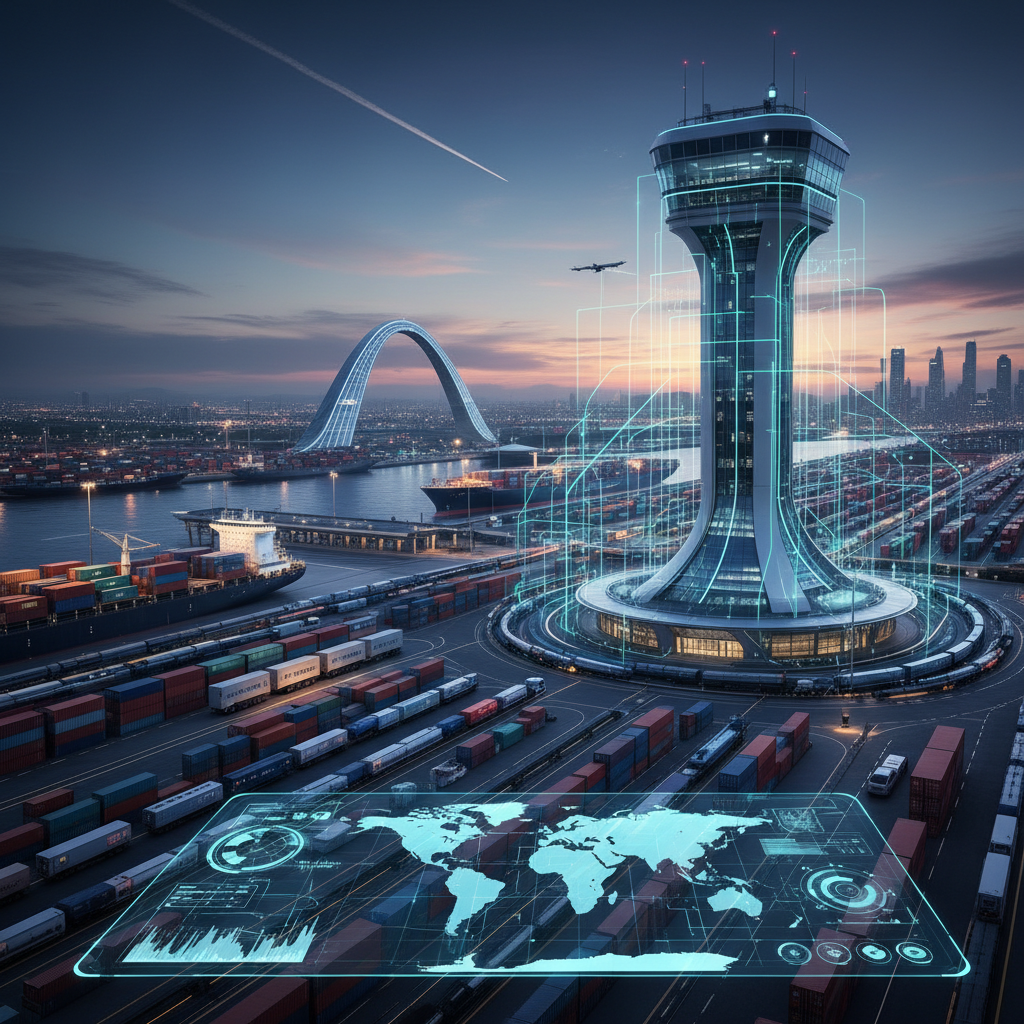
In an environment characterized by tariffs, reshoring, fuel volatility, stringent traceability, and pervasive congestion, a shipment-visibility control tower like MGS becomes an indispensable tool for proactive management and strategic response. MGS provides real-time, end-to-end visibility across the entire supply chain, offering a single source of truth for all in-transit and in-warehouse inventory.
Regarding tariffs and reshoring, MGS can track the exact origin and destination of shipments, providing the data necessary to manage compliance with evolving tariff regulations and identify goods subject to new duties. As companies reshore operations, MGS offers a unified view of both international and newly established domestic supply routes, enabling seamless transition and optimization of the new logistics network. This visibility helps in assessing the effectiveness of new sourcing strategies and managing the dual-supply chain during the transition phase.
For fuel volatility, MGS's real-time tracking capabilities allow for dynamic route optimization. By providing immediate insights into shipment progress and potential delays, operators can make informed decisions to reroute freight, select alternative modes, or adjust schedules to minimize fuel consumption and mitigate the impact of fluctuating prices. The platform's data can also be leveraged to analyze carrier performance and negotiate more favorable rates based on actual service levels and fuel efficiency.
Addressing food traceability requirements, MGS can integrate data from various sources, including IoT sensors for temperature and humidity, warehouse management systems, and carrier updates. This provides an immutable, auditable trail for every product, from farm to fork. In the event of a quality issue or recall, MGS can quickly pinpoint affected batches and their locations, significantly reducing response times and minimizing potential financial and reputational damage by ensuring compliance and rapid action.
Against the backdrop of intermodal congestion, MGS offers predictive analytics and proactive alerting. The platform can identify potential bottlenecks at ports, rail yards, or distribution centers before they cause significant delays, allowing operators to reroute shipments, communicate proactively with customers, or arrange for alternative pickup/delivery options. By providing insights into dwell times and throughput at critical nodes, MGS empowers decision-makers to optimize planning, reduce demurrage and detention charges, and maintain consistent service levels even amidst widespread disruptions. The ability to see and understand the entire network in real-time transforms reactive problem-solving into proactive risk mitigation, enhancing operational efficiency and resilience.
Demand–supply analysis & improvement
The current supply chain dynamics reveal significant shifts in both demand and supply patterns, necessitating strategic adjustments to maintain equilibrium. Tariffs and reshoring, for instance, directly influence the geographical distribution of supply. As production shifts closer to consumption markets due to tariffs or strategic reshoring initiatives, the demand for international long-haul shipping may decrease for certain goods, while demand for domestic warehousing, trucking, and rail services intensifies. This creates an imbalance where traditional international freight capacity might be underutilized, while domestic logistics networks face increased pressure and potential capacity shortages. The implication is a need for re-balancing logistics infrastructure and investment to align with these new supply origins.
Intermodal congestion, on the other hand, effectively reduces the available supply of transportation capacity. Even if physical assets (ships, trains, trucks) exist, their efficiency is hampered by bottlenecks, leading to longer transit times and reduced throughput. This creates an artificial scarcity of transport, driving up prices and extending lead times, which in turn impacts the ability to meet end-consumer demand consistently. Fuel volatility further compounds this by making the cost of supplying goods unpredictable, influencing carrier decisions on routes and service levels, and potentially leading to a reduction in available capacity if operating costs become prohibitive.
Concrete improvement levers to address these dynamics include:
- Supply Chain Regionalization/Localization: Companies can mitigate tariff risks and leverage reshoring trends by investing in regional manufacturing and distribution hubs. This reduces reliance on distant, potentially tariff-affected supply lines and shortens lead times, aligning supply closer to regional demand.
- Multimodal and Route Optimization: To counter fuel volatility and intermodal congestion, businesses should prioritize flexible transportation strategies. This involves dynamically selecting the most efficient and cost-effective modes (e.g., rail for long hauls, truck for last mile) and optimizing routes in real-time to avoid congested areas and minimize fuel consumption. Leveraging predictive analytics can forecast congestion and allow for proactive rerouting.
- Enhanced Data Sharing and Collaboration: For food traceability and overall supply chain visibility, fostering greater data exchange among all partners—from suppliers to carriers to retailers—is crucial. This transparency allows for quicker identification of issues, more accurate demand forecasting, and better coordination of supply efforts.
- Strategic Inventory Management: While lean principles are valuable, the current environment necessitates a re-evaluation of inventory strategies. Building strategic buffer stock for critical components or finished goods, particularly those susceptible to tariff changes or long transit times, can mitigate the impact of supply disruptions and congestion, ensuring demand fulfillment.
- Investment in Digitalization: Implementing advanced technologies like shipment-visibility control towers allows for real-time monitoring and data-driven decision-making, enabling companies to adapt swiftly to changing demand and supply conditions, optimize resource allocation, and enhance overall operational efficiency.
ROI-focused resilience
Building resilience in today's volatile supply chain environment is not merely a defensive strategy but a critical investment with clear returns on investment (ROI). Framing resilience actions in financial terms helps prioritize initiatives and justify necessary expenditures.
-
Investment in Diversified Sourcing and Regional Manufacturing: The cost of investing in new supplier relationships or establishing regional production facilities (e.g., $X million in capital expenditure over 3 years) protects against the quantified risk of tariffs (e.g., 10-25% duty on imported goods, potentially adding $Y million to annual costs) and geopolitical disruptions. The ROI is realized through reduced tariff exposure, stable supply, shorter lead times, and avoidance of potential market access loss, leading to sustained revenue streams and competitive pricing.
-
Investment in Real-time Shipment Visibility and Predictive Analytics (e.g., MGS Control Tower): The cost of implementing such a platform (e.g., $Z annual subscription/licensing) protects against the risks associated with intermodal congestion (e.g., $A million in annual demurrage/detention fees, $B million in lost sales due to stockouts, $C million in expedited shipping costs). The ROI is derived from reduced operational costs, improved on-time delivery performance, enhanced customer satisfaction, and the ability to proactively mitigate disruptions, thereby safeguarding revenue and brand reputation. This also helps in optimizing routes against fuel volatility, saving $D million in fuel costs annually.
-
Investment in Advanced Food Traceability Systems: The expenditure on technology, training, and compliance for robust traceability (e.g., $E million over 2 years) protects against the significant financial risks of regulatory fines (potentially $F million per incident), product recalls (estimated $G million per recall event), and severe brand damage. The ROI is seen in avoided penalties, minimized recall costs, maintained consumer trust, and adherence to market access requirements, ensuring continued sales and market share.
-
Strategic Inventory Buffering: The cost of holding additional inventory for critical components or finished goods (e.g., $H million in increased carrying costs annually) protects against the risk of supply chain disruptions caused by congestion, unforeseen delays, or sudden demand spikes (e.g., $I million in lost sales due to stockouts). The ROI is in ensuring continuous production, meeting customer demand, maintaining market share, and avoiding the higher costs associated with emergency procurement or expedited shipping.
By quantifying the potential losses from supply chain disruptions and comparing them against the investment required for resilience, organizations can make data-driven decisions that not only protect against risk but also contribute positively to their long-term financial health and competitive advantage.
Source: WSI Wire — https://www.wsinc.com/blog/wsi-warehouse-wire-july-24-2026/