
Navigating Rail Demurrage: Strategies for Supply Chain Resilience
Rail demurrage poses significant challenges to global supply chains, stemming from misalignments in car arrivals, track capacity, labor, and railroad service. This brief explores the operational and financial impacts of demurrage and outlines how strategic approaches, including advanced visibility platforms, can help shippers and 3PLs mitigate costs and enhance supply chain resilience.
How this impacts the global supply chain
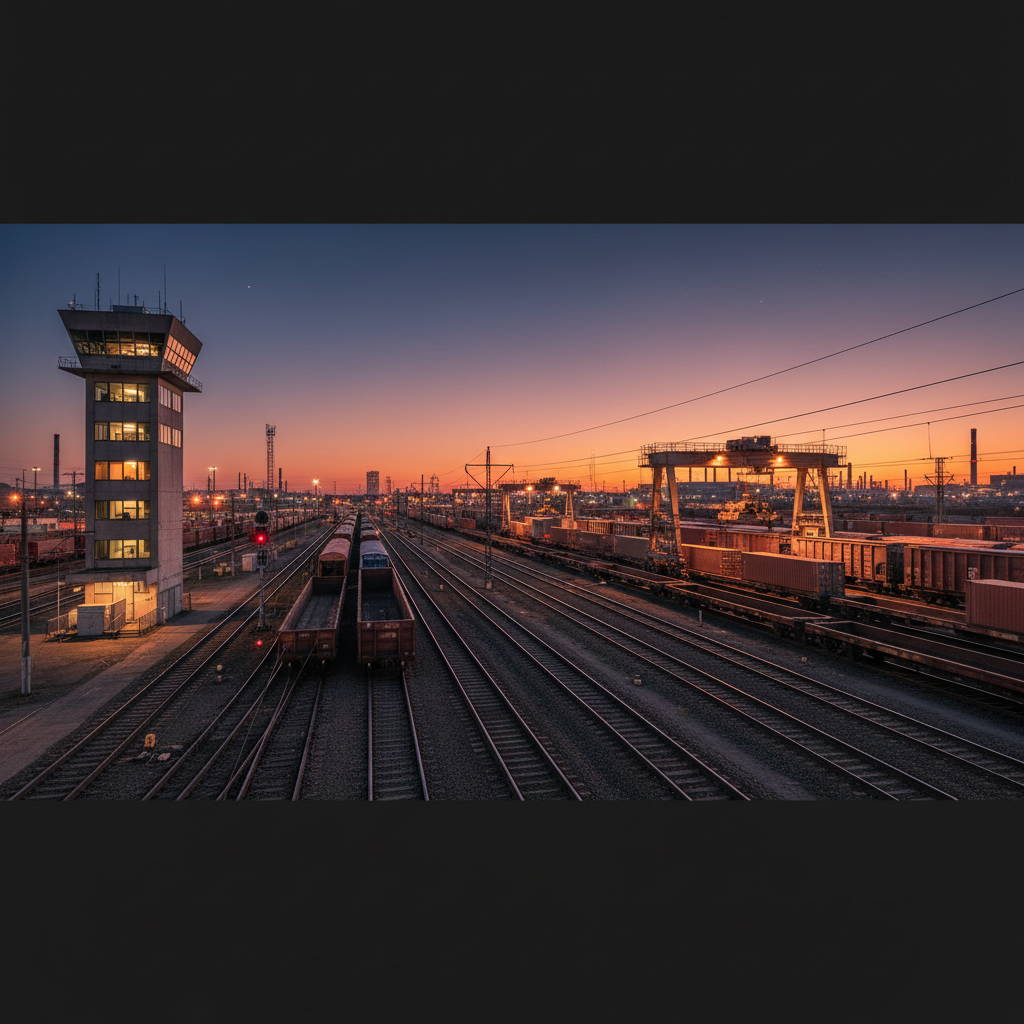
Rail demurrage, as highlighted by the WSI Wire, is a direct consequence of critical operational components—car arrivals, track capacity, labor availability, and railroad service—falling out of alignment. This misalignment has profound implications for global supply chains, extending far beyond the immediate rail network. When railcars are held beyond their allotted free time, it creates significant bottlenecks within the logistics ecosystem. This directly impedes the smooth flow of goods, causing delays in the delivery of raw materials to manufacturing plants or finished products to distribution centers and end-consumers.
These delays inevitably impact lead times, making supply chains less predictable and more challenging to manage. Shippers may experience slower inventory velocity, tying up capital in goods that are not moving. Furthermore, prolonged dwell times can strain available track capacity at rail yards and intermodal terminals, exacerbating congestion and potentially forcing other shipments to be delayed or rerouted. Such rerouting often involves shifting to more expensive and less environmentally friendly modes of transport, like long-haul trucking, which can further strain road infrastructure and increase fuel consumption.
The operational disruptions caused by demurrage can cascade throughout the entire supply chain. Manufacturing schedules might be interrupted due to delayed inputs, leading to production slowdowns or even shutdowns. For industries operating on just-in-time (JIT) principles, even minor rail delays can have significant financial and operational repercussions. Ultimately, these issues compromise the efficiency and reliability of global trade routes, making it harder for businesses to meet demand, manage costs, and maintain competitive advantage in a complex global marketplace. The systemic nature of these disruptions underscores the need for proactive management and enhanced visibility across the rail network.
Global financial impact
The financial ramifications of rail demurrage extend across the entire trade spectrum, directly affecting shippers, carriers, and the broader economy. For shippers and 3PLs, demurrage charges represent an unbudgeted and often substantial increase in transportation costs. These charges directly erode profit margins, making the movement of goods less economically viable. When demurrage becomes a recurring issue, it forces businesses to either absorb these costs, which impacts their bottom line, or pass them on to consumers, potentially leading to higher prices for goods and services. This inflationary pressure can subtly but significantly impact consumer spending and overall economic stability.
Beyond the direct charges, there are numerous indirect financial costs. The capital tied up in delayed inventory represents a lost opportunity cost, as funds could be otherwise invested or utilized. The administrative burden of managing exceptions and disputing charges also incurs labor costs and diverts resources from core business activities. Furthermore, the need to build “stronger documentation for disputes,” as noted, implies that resolving these issues is not straightforward and often requires significant effort and resources, adding another layer of financial strain.
For carriers, while they are the recipients of demurrage fees, persistent service issues that lead to demurrage can damage their reputation and lead to loss of business as shippers seek more reliable alternatives. The overall impact on trade is a reduction in efficiency and an increase in the total cost of logistics. This can make certain trade lanes or commodities less competitive, potentially shifting sourcing strategies or even impacting global trade flows. In essence, rail demurrage acts as a hidden tax on the supply chain, increasing the cost of doing business and adding an element of financial unpredictability that complicates long-term planning and investment decisions.
How MGS can help navigate today's global trade environment
In an environment where rail demurrage can quickly escalate costs and disrupt operations, a sophisticated shipment-visibility control tower like MGS becomes an indispensable tool for proactive management and mitigation. MGS provides real-time, end-to-end visibility into railcar movements, offering precise data on estimated arrival times, current location, and dwell times within rail yards. This granular insight directly addresses the "car arrivals...fall out of sync" challenge by giving shippers and 3PLs the foresight needed to anticipate potential delays or early arrivals.
By continuously monitoring the status of railcars, MGS enables operators to "manage exceptions" effectively. If a car is delayed, MGS can flag it, allowing for immediate adjustments to labor scheduling, track capacity allocation, and drayage arrangements. Conversely, if a car arrives unexpectedly early, MGS alerts can prevent it from incurring demurrage by facilitating prompt unloading. This proactive management minimizes the chances of railcars sitting idle beyond their free time.
Furthermore, MGS excels at building "stronger documentation for disputes." The platform meticulously records timestamps for arrival, departure, and all intermediate movements, along with any associated service disruptions or delays attributable to the railroad. This verifiable data serves as irrefutable evidence when disputing demurrage charges, ensuring that shippers only pay for delays truly within their control. By providing a single source of truth for all rail shipments, MGS empowers businesses to optimize their rail logistics, reduce unnecessary costs, and negotiate more effectively with carriers, thereby enhancing their resilience in a complex global trade landscape.
Demand–supply analysis & improvement
The prevalence of rail demurrage, as described, fundamentally stems from a misalignment between the demand for efficient rail transport and the available supply of critical resources and services. The "out of sync" condition of car arrivals, track capacity, labor, and railroad service points directly to a demand-supply imbalance. Shippers demand timely and predictable railcar movement, adequate space for unloading, sufficient labor for handling, and reliable service from railroads. When any of these supply-side elements falter or are insufficient to meet the dynamic demand, demurrage ensues.
For instance, a surge in car arrivals (demand) without a corresponding increase in track capacity or labor (supply) at a destination yard inevitably leads to congestion and extended dwell times. Similarly, inconsistent railroad service, characterized by unpredictable transit times or missed switching windows, creates uncertainty that makes it difficult for shippers to align their internal resources, further exacerbating the imbalance.
Concrete improvement levers involve enhancing synchronization and predictability. On the demand side, shippers can improve forecasting of inbound railcar volumes and communicate these projections more effectively with railroads and their own operational teams. On the supply side, railroads can invest in infrastructure to boost track capacity, optimize scheduling to improve service reliability, and ensure adequate labor availability. For shippers and 3PLs, leveraging technology like MGS provides the visibility to better match their internal demand for unloading resources with the actual supply of incoming railcars, thereby optimizing yard operations and minimizing idle time. Proactive communication and collaborative planning between all stakeholders—shippers, 3PLs, and railroads—are essential to bridge these demand-supply gaps and foster a more fluid and cost-effective rail logistics environment.
ROI-focused resilience
Addressing rail demurrage through strategic action represents a clear case of ROI-focused resilience. The "quantified risk" in this scenario is the direct financial penalty of demurrage charges, which can accumulate rapidly and unpredictably, alongside the indirect costs of operational disruptions, delayed inventory, and administrative overheads associated with dispute management. Investing in strategies to mitigate these risks offers a tangible return on investment by directly reducing or eliminating these avoidable expenses.
For example, implementing advanced planning and visibility tools, such as a shipment-visibility control tower like MGS, constitutes an investment. The ROI is realized through several channels: a direct reduction in demurrage fees due to improved anticipation and proactive management of railcar movements; cost savings from optimized labor and equipment utilization at facilities; and enhanced cash flow from faster inventory turns. The ability to build "stronger documentation for disputes" also contributes to ROI by increasing the success rate of challenging unwarranted charges, effectively recovering funds that would otherwise be lost.
Furthermore, improved operational predictability, a byproduct of effective demurrage management, translates into resilience against broader supply chain shocks. By ensuring rail assets are utilized efficiently and goods move as planned, businesses can better withstand unexpected disruptions elsewhere in the chain. This resilience protects against potential revenue losses from missed sales opportunities due to stockouts and safeguards customer satisfaction. The investment in demurrage reduction strategies is not merely about cutting costs; it's about building a more robust, predictable, and financially sound supply chain capable of navigating the inherent complexities and uncertainties of global trade.
Source: WSI Wire — https://www.wsinc.com/blog/4-strategies-to-reduce-rail-demurrage-costs/