
Navigating Energy Volatility: Strategic Imperatives for Business Resilience
Rising electricity costs and grid instability are reshaping business energy strategies. This brief explores how embracing energy independence through solutions like solar can drive operational efficiency, optimize cash flow, and unlock new growth opportunities, moving beyond traditional ROI considerations.
Operation efficiency
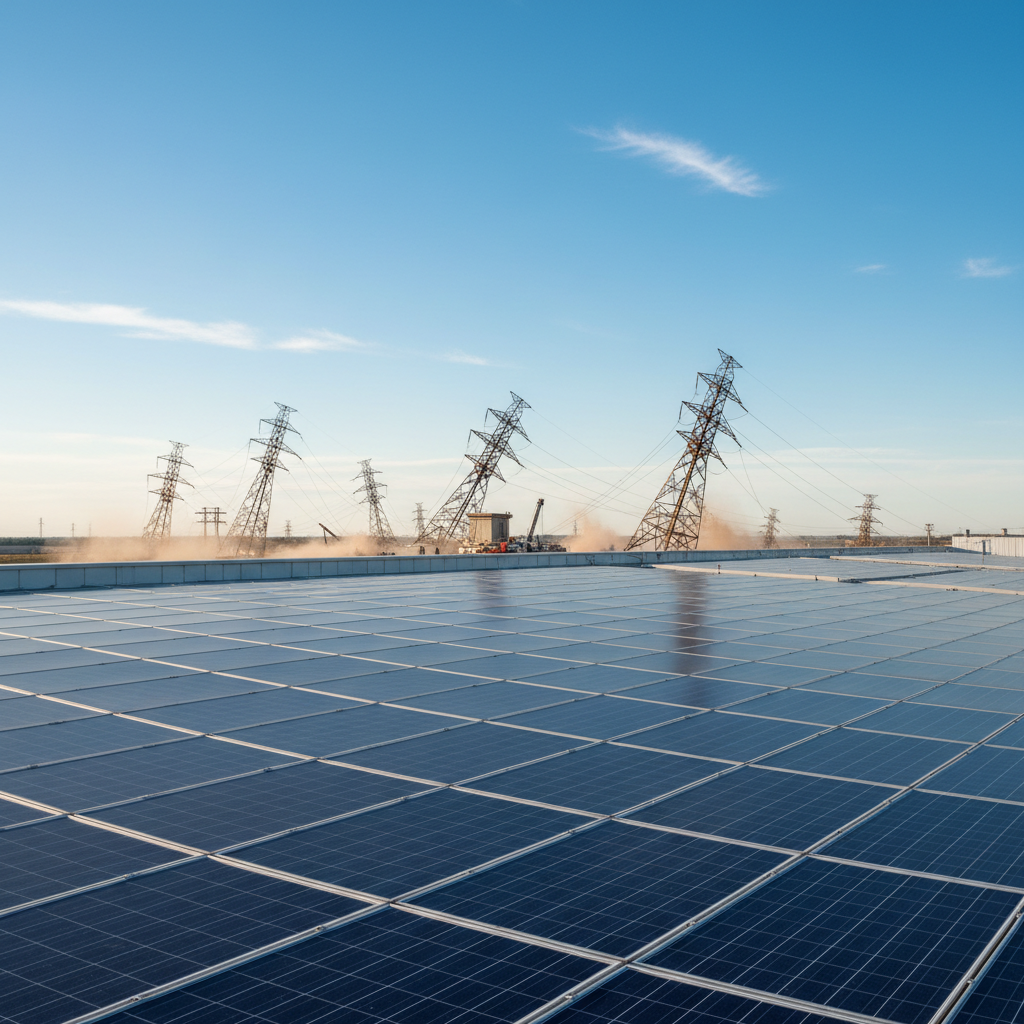
The increasing unreliability of the power grid presents a significant threat to operational continuity and efficiency for businesses across all sectors. Grid instability, characterized by unpredictable outages or voltage fluctuations, can directly lead to production stoppages, equipment damage, and disruptions in critical processes. For organizations heavily reliant on consistent power supply for manufacturing, data centers, retail operations, or even office functions, such interruptions translate into lost output, delayed deliveries, and increased overheads associated with recovery efforts. Shifting towards energy independence, particularly through on-site solar generation, offers a robust solution to mitigate these risks. By generating a significant portion, if not all, of their own power, businesses can insulate themselves from the vagaries of the public grid. This self-sufficiency ensures a more consistent and reliable energy supply, thereby safeguarding operational uptime. The ability to maintain continuous operations, even when the external grid falters, directly enhances overall operational efficiency, allowing businesses to meet production targets, maintain service levels, and avoid costly downtime. This strategic shift moves beyond merely reducing energy bills; it's about fortifying the very foundation of daily business operations against external shocks.
Cost reduction
The landscape of energy costs is undergoing a fundamental transformation, with "rising electricity costs" becoming a persistent challenge for businesses. These escalating costs directly impact operating expenses, eroding profitability and making financial planning more complex. Traditional reliance on grid electricity means businesses are exposed to market volatility, regulatory changes, and infrastructure upgrade costs that are often passed on to consumers. The strategic move towards energy independence, as highlighted by the shift to solar, offers a powerful lever for long-term cost reduction. While the initial investment in solar infrastructure might be substantial, it effectively converts a variable, escalating operational expense into a more predictable, fixed capital expenditure. Once installed, the primary "fuel" for solar energy—sunlight—is free. This significantly reduces the reliance on purchasing electricity from the grid, thereby mitigating exposure to future price hikes and providing a hedge against energy inflation. Furthermore, by generating their own power, businesses can reduce or even eliminate demand charges and transmission fees typically associated with grid consumption. This long-term cost predictability and reduction in variable energy expenses can free up capital for other strategic initiatives, enhancing the financial health of the organization. The emphasis shifts from short-term ROI calculations to the enduring benefit of cost stability and insulation from market fluctuations.
Organizational productivity
Organizational productivity is intrinsically linked to a stable and predictable operating environment. When the power grid is unreliable, as indicated by "grid instability," the ripple effects can severely hamper employee effectiveness and overall organizational output. Unplanned outages can bring work to a standstill, forcing employees to wait idly, reschedule tasks, or even cease operations entirely. This not only leads to direct loss of productive hours but also impacts morale and creates inefficiencies as teams struggle to recover and catch up. For businesses with critical digital infrastructure, data loss or system resets due to power interruptions can be particularly damaging, requiring significant time and resources to restore. Adopting solutions that foster "energy independence," such as on-site solar power with battery storage, ensures a consistent power supply, thereby minimizing disruptions. This reliability allows employees to work without interruption, maintaining focus and momentum on their tasks. A stable power environment also supports the continuous operation of essential IT systems, communication networks, and climate control, all of which are crucial for a productive workforce. By providing an uninterrupted work environment, businesses can protect their human capital investments and ensure that organizational goals are met without the drag of energy-related setbacks.
Cash flow optimization
The twin pressures of "rising electricity costs" and "grid instability" directly impinge on a business's cash flow. Unpredictable and increasing energy bills create significant variability in operational expenditures, making accurate cash flow forecasting challenging. Furthermore, unexpected grid failures can trigger additional costs, such as expenses for backup generators, spoiled inventory, or lost production, leading to unplanned cash outlays. The pursuit of "energy independence" through solar adoption offers a compelling pathway to cash flow optimization. By generating a substantial portion of their own electricity, businesses can significantly reduce their monthly utility payments, converting a large variable expense into a more manageable, often lower, fixed cost over the long term. This reduction in variable energy outflow provides greater predictability and stability to the cash flow statement. While there is an initial capital investment for solar infrastructure, this can often be amortized or financed, leading to predictable payments that replace volatile utility bills. Moreover, the resilience gained from energy independence mitigates the risk of cash flow shocks associated with grid failures, such as emergency equipment repairs or revenue loss from downtime. This strategic shift allows for better financial planning, improved liquidity management, and the ability to allocate capital more effectively to growth initiatives rather than being reactive to energy market volatility.
High-growth opportunities
The prevailing environment of "rising electricity costs" and "grid instability" is not merely a challenge but also a catalyst for identifying "high-growth opportunities" for businesses that strategically embrace "energy independence." In a world where reliable and affordable power is becoming a competitive differentiator, businesses that secure their energy supply can gain a significant advantage. For instance, companies might be able to expand operations into regions with underdeveloped or highly unreliable grid infrastructure, where competitors are hesitant to venture due to power concerns. Energy independence can de-risk such expansions, opening up new markets or production locations. Furthermore, by demonstrating a commitment to sustainable and resilient energy practices, businesses can enhance their brand reputation, attracting environmentally conscious customers and talent. This can translate into market share gains and premium pricing opportunities in certain segments. For industries where energy is a major input, achieving energy independence can unlock the ability to scale operations without being constrained by grid capacity or escalating costs, enabling faster growth. It also allows for greater flexibility in business model innovation, for example, by offering products or services that rely on uninterrupted power, which competitors reliant on an unstable grid cannot guarantee. This strategic foresight transforms a potential vulnerability into a springboard for aggressive, sustainable growth.
High-margin opportunities
In an era defined by "rising electricity costs" and persistent "grid instability," the strategic pursuit of "energy independence" can unlock significant "high-margin opportunities" for businesses. Energy costs represent a fundamental input for nearly all businesses, and their escalation directly compresses profit margins. By shifting to solar and achieving a degree of energy self-sufficiency, businesses can effectively stabilize, and often reduce, one of their most significant variable operating expenses. This cost control acts as a direct margin enhancer. When competitors are struggling with unpredictable and increasing utility bills, a business with stable or lower energy costs can maintain or even expand its profit margins. This allows for greater pricing flexibility, potentially enabling competitive pricing strategies while still achieving desired profitability levels. Moreover, the reliability afforded by energy independence—the ability to operate continuously despite grid failures—translates into consistent production and service delivery. This consistency prevents revenue loss due to downtime, thereby protecting potential margins. For businesses operating in sectors where energy consumption is particularly high, or where operational uptime is paramount, securing energy independence can transform a cost center into a strategic asset that underpins superior profitability. It allows management to focus on value creation and innovation, rather than constantly battling energy cost volatility, ultimately supporting a more robust and predictable margin profile.
Source: Kiplinger — https://www.kiplinger.com/real-estate/home-improvement/solar-energy-independence-power-grid