
Mega-Merger on the Rails: Navigating Uncharted Territory for Supply Chain Visibility
A proposed mega-merger between Union Pacific and Norfolk Southern railroads could reshape global supply chains. This brief analyzes the potential impacts on freight flows, capacity, costs, and how a shipment-visibility control tower like MGS can help operators navigate this unprecedented change.
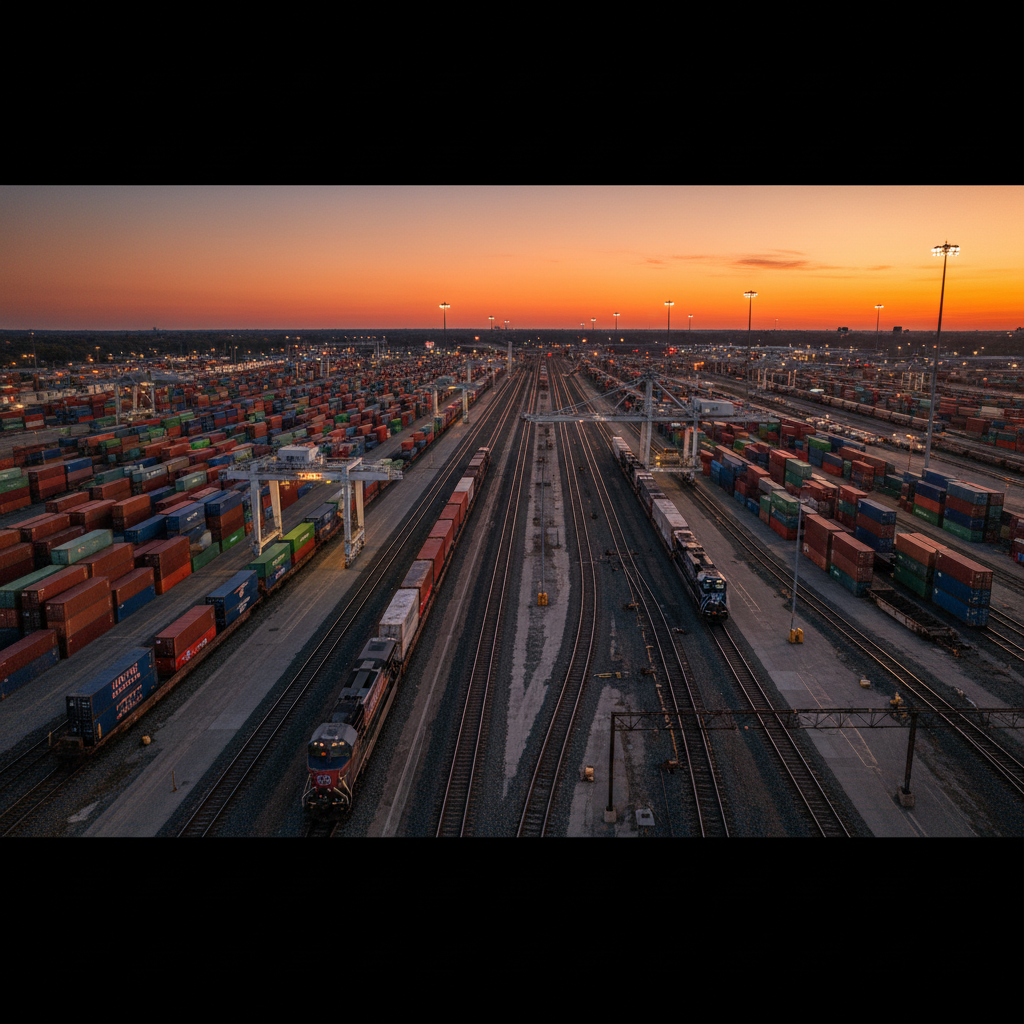
The prospect of a mega-merger between two of North America's largest Class 1 railroads, Union Pacific (UP) and Norfolk Southern (NS), has sent ripples of concern and speculation throughout the shipping and supply chain communities. This potential consolidation, currently under review by the Surface Transportation Board (STB), represents a significant shift into "uncharted territory." Stakeholders, from shippers and labor unions to politicians, are raising critical questions about competition, capacity, safety, job security, increased costs, and potentially reduced services. This analysis explores the profound implications of such a merger and outlines how advanced visibility solutions can empower supply chain operators to adapt and thrive.
How this impacts the global supply chain
The proposed consolidation of Union Pacific (UP) and Norfolk Southern (NS) railroads signals a significant shift for global supply chains, particularly those relying on North American intermodal rail. This mega-merger could profoundly alter freight flows, capacity, and operational dynamics.
Firstly, regarding flows and routes, a merger would likely streamline some long-haul intermodal routes by eliminating interchanges. However, it could also lead to fewer routing options for shippers, potentially forcing cargo onto a single dominant network for certain corridors. This consolidation might create new bottlenecks at critical hubs as the merged entity rationalizes its vast infrastructure, demanding a complete re-evaluation of current logistics strategies by shippers.
Secondly, the impact on capacity is a major concern. While a unified entity could theoretically optimize asset utilization, the initial integration phase often brings disruption. The source highlights "capacity" as a key question, and fears exist that reduced competition might lessen the incentive for robust investment in new capacity. Furthermore, "reduced services" could translate to a practical reduction in effective capacity through fewer train departures, longer transit times, or declining service reliability, straining existing supply chain capabilities.
Lastly, operations for shippers would face substantial transformation. Fewer competitive choices could diminish shippers' leverage in negotiating service level agreements (SLAs). The integration process itself would likely introduce operational adjustments in scheduling, equipment, and customer service, leading to unpredictability in transit times. For global supply chains, where precision and reliability are crucial, any degradation in operational consistency on the North American rail network could have cascading effects on manufacturing, inventory, and customer satisfaction. Navigating this "uncharted territory" demands heightened adaptability in managing these evolving operational challenges.
Global financial impact
A mega-merger between Union Pacific and Norfolk Southern would send financial ripples throughout the supply chain, affecting shippers, other carriers, and broader trade. The primary concern, explicitly noted in the source, is "increased costs," primarily driven by reduced competition.
For shippers, the most immediate financial impact would be the potential for higher freight rates. With two major Class 1 railroads combining, the competitive landscape for intermodal rail services would shrink, granting the merged entity greater pricing power. Beyond direct freight costs, "reduced services" could introduce significant indirect financial burdens. Delays, missed deliveries, and less reliable service might lead to increased inventory carrying costs, demurrage charges, and the need for more expensive, expedited transport options. These hidden costs could erode profit margins and impact competitiveness.
The financial implications for other carriers would be mixed. Trucking companies might see increased demand if rail service quality declines or costs rise, as shippers seek alternatives. Conversely, other remaining Class 1 railroads could either gain market share or face a more formidable competitor.
At the level of trade at large, the consolidation could fuel inflationary pressures. Higher transportation costs for raw materials and goods moved by rail would likely be passed down the supply chain, affecting consumer prices. Disruptions during integration could also impede efficient trade flows, slowing economic activity. The uncertainty surrounding service levels and costs in this "uncharted territory" could deter long-term investment in rail-reliant industries, impacting broader economic stability.
How MGS can help navigate today's global trade environment
In the "uncharted territory" of a potential mega-merger between Union Pacific and Norfolk Southern, where concerns about competition, capacity, costs, and service loom, a shipment-visibility control tower like MGS becomes an indispensable tool for operators. Its capabilities are genuinely relevant for mitigating risks and adapting to a transformed logistics landscape.
Firstly, MGS provides real-time, end-to-end visibility. As rail networks consolidate and operations change, shippers need precise cargo location data. MGS aggregates information from various carriers, enabling accurate tracking of intermodal containers and railcars. This is vital when facing potential "reduced services" or unexpected delays during integration, allowing for immediate exception identification and proactive communication.
Secondly, MGS's predictive analytics are critical. With concerns about "capacity" and service degradation, accurate ETA predictions are challenging. MGS leverages data and machine learning to offer more reliable ETAs, even amidst disruptions. This foresight empowers operators to anticipate delays, reroute shipments, or adjust production schedules, mitigating the financial impact of "increased costs" from expedited shipping or penalties.
Thirdly, MGS facilitates performance monitoring and benchmarking. As the rail landscape shifts, shippers must meticulously evaluate the merged entity's service quality. MGS tracks KPIs like on-time delivery and transit times, providing objective data to assess "reduced services" and support contract negotiations against "increased costs" not matched by service quality.
Finally, MGS supports proactive risk management and contingency planning. In a consolidated rail environment with potentially fewer alternatives, identifying multimodal options is paramount. MGS highlights bottlenecks or service degradation on the rail network, enabling operators to quickly pivot to alternative modes or adjust inventory strategies. By visualizing the entire network and modeling scenarios, MGS provides the intelligence needed to navigate this "uncharted territory" and maintain supply chain resilience.
Demand–supply analysis & improvement
The proposed UP/NS merger significantly impacts demand-supply dynamics in intermodal rail. While demand for reliable, cost-effective freight movement remains high, the merger primarily affects supply. Concerns about "capacity" and "reduced services" suggest a potential imbalance. A merged entity might have less incentive to invest in expanding capacity or improving service, leading to fewer schedules, longer transit times, or declining reliability, effectively diminishing high-quality rail transport supply.
To navigate this, shippers can use improvement levers:
- Data-Driven Network Optimization: Leverage analytics (e.g., MGS) to identify efficient routes and minimize single points of failure.
- Carrier Diversification: Qualify alternative carriers (trucking, regional rail) to reduce dependence.
- Strategic Inventory Management: Optimize safety stock to buffer against increased transit variability.
- Proactive Engagement: Advocate with regulatory bodies like the STB for accountability on capacity and service.
ROI-focused resilience
The UP/NS mega-merger introduces risks like "increased costs" and "reduced services." Framing resilience actions with an ROI focus is crucial. Risks include higher freight costs, service degradation (leading to increased inventory costs, stockouts, expedited shipping), and operational disruptions.
Resilience actions with ROI:
- Investment in Visibility Platforms (e.g., MGS):
- Protected Risk: Prevents financial losses from unknown delays, missed deadlines, and inefficient resource allocation (e.g., avoiding costly expedited air freight, demurrage, lost sales).
- ROI: Achieved by preventing these direct and indirect costs, optimizing inventory, and ensuring on-time delivery, safeguarding revenue.
- Diversifying Carrier Portfolio:
- Protected Risk: Reduces reliance on a dominant rail provider, mitigating "increased costs" or "reduced services."
- ROI: Maintains competitive freight costs and ensures supply chain continuity, providing negotiation leverage.
- Strategic Inventory Buffering:
- Protected Risk: Buffers against transit variability and potential stockouts from "reduced services."
- ROI: Maintains customer satisfaction, avoids lost sales, and prevents costly last-minute expedited shipments, often outweighing increased carrying costs.
Source: DC Velocity — https://www.dcvelocity.com/transportation/shippers-intermodal-rail-operators-heading-into-uncharted-territory-as-prospect-of-mega-merger-looms