
Malaysia’s Semiconductor Moment: Turning Export Strength Into Supply-Chain Resilience
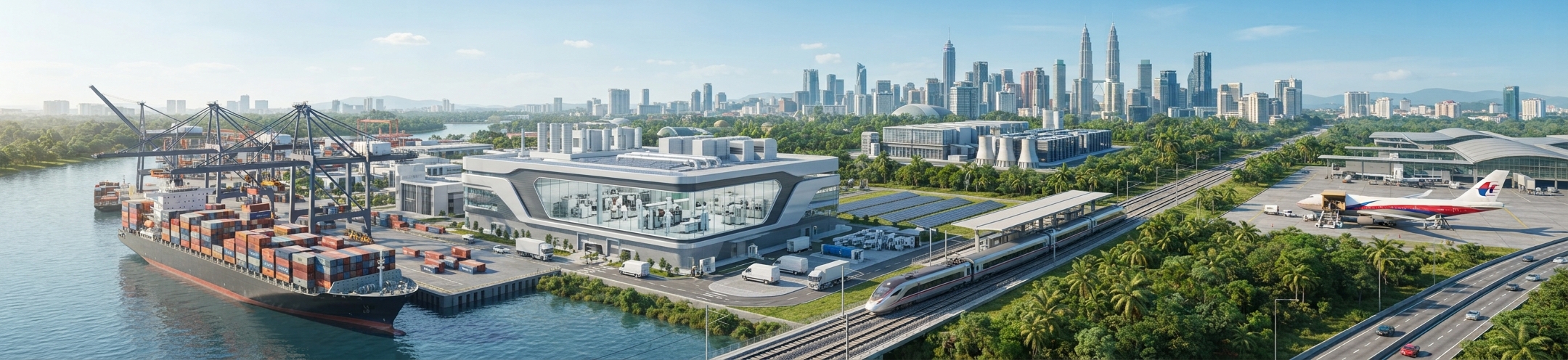
Malaysia is transforming into a strategic hub for AI-driven semiconductors and digital infrastructure. By leveraging its manufacturing base, energy exports, and compliance capabilities, it is building durable global supply-chain resilience.
By Heidi Chong, Quantium Solutions Malaysia
Malaysia is no longer merely a beneficiary of the global electronics cycle; it is becoming a strategically important link in the AI-driven semiconductor supply chain. October’s 61.1% year-on-year export growth—driven overwhelmingly by electrical and electronics products—shows how deeply the country’s trade performance is now tied to global demand for chips, data centers, cloud infrastructure, and AI hardware.
For supply-chain leaders, the message is clear: Malaysia’s value lies not only in its manufacturing capacity, but in its ability to connect global semiconductor demand, regional production networks, energy exports, and fast-growing digital infrastructure.
Electronics anchor the economy
Electrical and electronics products account for more than half of Malaysia’s total exports and surged 87.2% year on year in October, contributing nearly two-thirds of the overall export increase. Integrated circuits represented more than half of E&E shipments, making Malaysia’s export engine increasingly dependent on the global semiconductor cycle.
This is a meaningful shift. Malaysia is not simply exporting finished electronics; it is embedded in the production, testing, packaging, and movement of components that ultimately support global technology platforms. Its ports, industrial parks, logistics providers, and skilled workforce therefore have a direct bearing on how quickly global electronics supply chains can respond to demand shocks.
AI demand raises the stakes
The AI and semiconductor cycle is now a central driver of Malaysia’s trade outlook. Sustained investment in data centers, cloud computing, and supporting digital infrastructure is expected to continue supporting demand for semiconductors and related electrical components.
That creates opportunities across the value chain: semiconductor packaging and testing, power electronics, sensors, networking equipment, cooling systems, power infrastructure, and data-center construction. It also raises the strategic importance of Johor and the Klang Valley, where hyperscale data centers, GPU clusters, and high-performance computing facilities are becoming increasingly concentrated.
For companies building AI infrastructure, Malaysia offers proximity to Asian manufacturing networks, established electronics capabilities, and a growing digital-economy ecosystem. But it also concentrates risk: a disruption in power supply, logistics, skilled labor, or access to advanced chips could ripple through regional AI deployment plans.
Export controls are the key risk
Malaysia’s semiconductor sector is relatively insulated from the latest US export restrictions because most exports consist of mature-node chips, power semiconductors, sensors, and backend packaging services. These segments remain essential to automotive, industrial, energy, consumer electronics, and infrastructure applications, giving Malaysia a broad base beyond cutting-edge AI chips.
However, the country’s growing AI ecosystem is more exposed. Any prolonged tightening in access to advanced US semiconductors, or concerns that Malaysia could be used as a transshipment route, could weigh on chip imports, dampen downstream electronics exports, and raise compliance costs across the industry.
This is where supply-chain governance becomes a competitive advantage. Companies operating in Malaysia need robust export-control screening, end-use and end-user verification, supplier due diligence, and clear documentation across the movement of semiconductors and high-performance computing equipment.
Energy adds a second pillar
Malaysia’s supply-chain significance is not limited to semiconductors. Strong demand for liquefied natural gas and petroleum products continues to support exports, reinforcing the country’s role in regional energy supply chains.
That matters because AI infrastructure is energy-intensive. Data centers require reliable electricity, cooling capacity, grid investment, and increasingly low-carbon power sources. Malaysia’s ability to combine electronics manufacturing with energy exports and infrastructure investment gives it a potentially powerful position in the digital-economy supply chain.
What leaders should do
Businesses should treat Malaysia as a strategic node, not simply as a low-cost manufacturing location. They should map their exposure to semiconductor components, backend services, data-center capacity, and energy inputs, while identifying alternative suppliers and transport routes in case of disruption.
Manufacturers should invest in compliance readiness, especially around semiconductor export controls and transshipment risk. Technology firms should secure power, land, connectivity, and skilled talent early, because these constraints may become more binding than chip availability as AI infrastructure expands.
Policymakers and investors should also focus on resilience: grid reliability, port capacity, workforce development, cybersecurity, and transparent trade-compliance systems will determine whether Malaysia can convert today’s export surge into durable supply-chain leadership.
The outlook
Economists expect exports to remain strong through the rest of the year, and several have revised full-year growth forecasts upward. Yet growth is likely to moderate in 2027 because of high base effects, rising interest rates, and potentially tighter fiscal policies in the United States and other major economies.
Malaysia’s opportunity is therefore time-sensitive. If the country strengthens its infrastructure, compliance capabilities, and talent pipeline while the AI investment cycle remains strong, it can move from being a high-growth export economy to a indispensable hub in the global semiconductor and digital-infrastructure network.
Source: https://www.klsescreener.com/v2/news/view/1832189/malaysia-poised-for-another-quarter-of-above-5-gdp-growth-on-strong-export-performance-economists-say