
Maersk's Rotor Sail Initiative: Navigating a Greener, More Visible Supply Chain
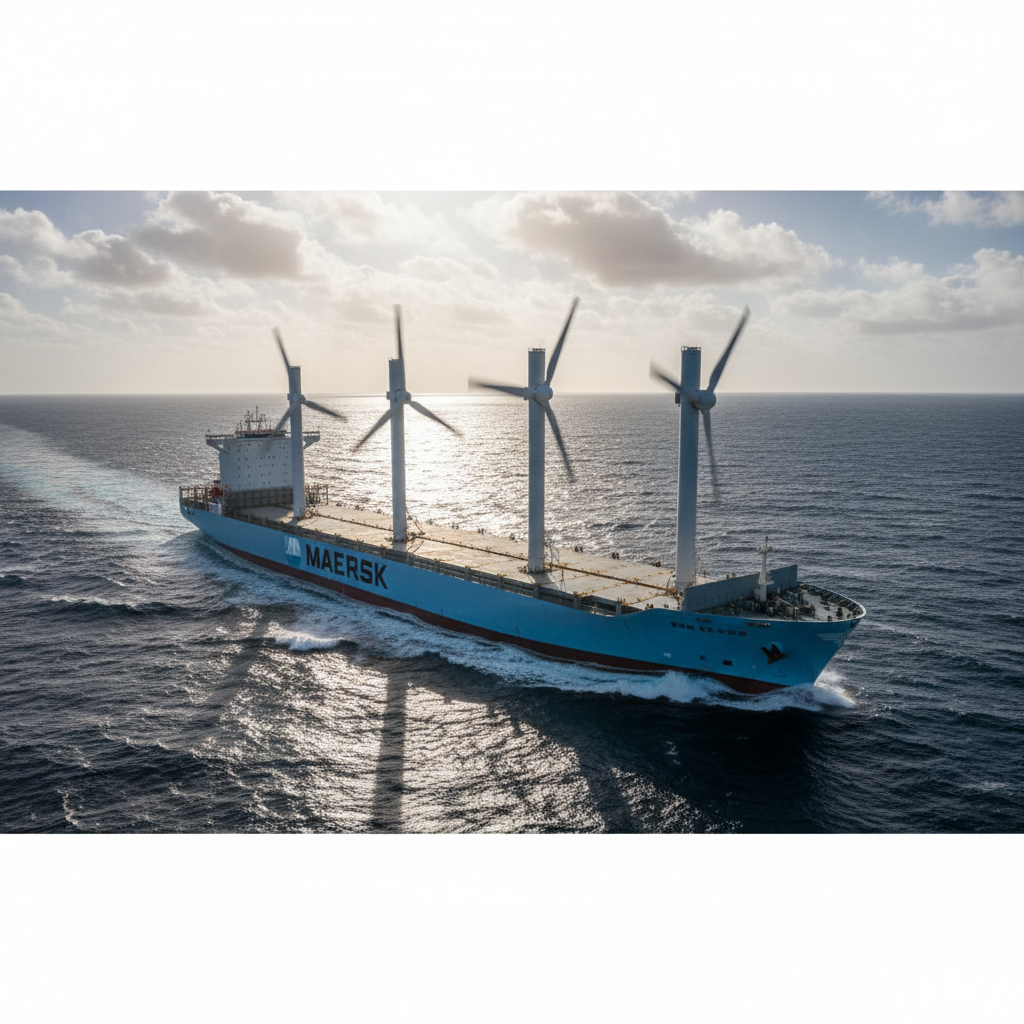
Maersk's decision to equip an 8,700 TEU containership with Anemoi rotor sails marks a pivotal moment for sustainable maritime logistics. This brief explores the profound implications for global supply chains, financial dynamics for shippers and carriers, and how advanced shipment visibility platforms like MGS can empower stakeholders to adapt and thrive in this evolving environment.
How this impacts the global supply chain
Maersk's adoption of Anemoi rotor sails on an 8,700 TEU containership introduces a new dimension to global maritime logistics, primarily influencing operational strategies and the broader ecosystem of supply chain flows. While the physical capacity of the vessel remains at 8,700 TEU, the integration of wind-assisted propulsion technology signals a shift towards optimizing vessel performance for fuel efficiency rather than solely speed.
This development is likely to affect global supply chain flows by potentially introducing more variable transit times. Depending on wind conditions and strategic routing decisions, vessels might prioritize fuel savings over maintaining maximum speed, which could lead to slightly extended voyages on certain legs. Conversely, in favorable wind corridors, the sails could contribute to maintaining consistent speeds with reduced engine power, potentially enhancing schedule reliability by mitigating the impact of engine-related issues or minor delays. This necessitates a more dynamic approach to route planning, where weather data, specifically wind patterns, becomes an even more critical input than before. Carriers might increasingly opt for routes that maximize wind assistance, subtly altering established trade lanes or optimizing existing ones for new efficiency gains.
From an operational standpoint, the introduction of rotor sails requires significant adjustments. Crew training will be essential for the operation and maintenance of this new technology. Port operations might also see minor impacts, such as considerations for sail deployment during port calls or specific maintenance requirements. The overall effect on capacity is not a direct increase in the number of containers a ship can carry. Instead, it's an optimization of the effective capacity, making the operation of existing capacity more economically and environmentally sustainable. This could, in the long run, support the viability of certain routes or services that might otherwise be less competitive due to fuel costs, indirectly bolstering the overall supply of shipping capacity in a greener context.
Global financial impact
The financial implications of Maersk's rotor sail adoption extend across the entire global trade landscape, affecting carriers, shippers, and the broader economic framework.
For carriers like Maersk, the primary financial driver is the potential for significant fuel cost savings. Marine fuel constitutes a substantial portion of a vessel's operating expenses, and any technology that reduces consumption directly impacts profitability. While the initial investment in fitting rotor sails will be considerable, the long-term operational savings could provide a competitive advantage, allowing carriers to potentially offer more attractive rates or improve their profit margins. Furthermore, this move positions carriers favorably in anticipation of stricter environmental regulations and carbon pricing mechanisms, potentially avoiding future penalties or benefiting from incentives for green shipping. It also enhances brand reputation, attracting environmentally conscious clients and investors. The risk, however, lies in the actual performance of the technology in diverse operational conditions and the return on this substantial capital expenditure.
Shippers stand to benefit from these advancements, albeit indirectly. Over time, if fuel savings are substantial and widespread, they could translate into more stable, or even reduced, freight rates, insulating shippers from some of the volatility of global fuel markets. As carriers become more fuel-efficient, the 'green premium' associated with sustainable shipping might become more accessible or less impactful on total shipping costs. Shippers are also increasingly under pressure to demonstrate sustainable supply chains, and partnering with carriers employing such technologies can enhance their own environmental credentials and meet consumer and regulatory demands. However, there might be initial concerns about potential transit time variations if fuel optimization leads to slower voyages, requiring adjustments to inventory management and supply chain planning.
For trade at large, the widespread adoption of technologies like rotor sails contributes to the decarbonization of the shipping industry, a critical step towards global climate goals. This can foster greater stability in international trade by making it more resilient to fossil fuel price shocks and regulatory changes. It also encourages innovation within the maritime sector, potentially leading to further advancements that make global trade more efficient and environmentally sound. The long-term effect could be a slight reduction in the carbon footprint of goods moved globally, contributing to a more sustainable global economy and potentially influencing trade policies and consumer preferences towards greener logistics solutions.
How MGS can help navigate today's global trade environment
The introduction of innovative technologies like rotor sails into mainstream shipping operations creates new layers of complexity and opportunity that a robust shipment-visibility control tower platform like MGS is uniquely positioned to address.
Firstly, MGS enhances real-time visibility and predictability for shipments on vessels equipped with rotor sails. As carriers optimize routes for wind conditions, transit times might become more dynamic. MGS can integrate real-time vessel tracking with advanced weather data, providing shippers and carriers with accurate, updated Estimated Times of Arrival (ETAs) that account for wind-assisted propulsion. This allows for proactive planning, mitigating potential delays, and optimizing downstream logistics, such as port operations, warehousing, and last-mile delivery. Shippers can monitor the precise location and progress of their 8,700 TEU containers, understanding how environmental factors are influencing their journey.
Secondly, MGS facilitates operational efficiency and decision-making. For carriers, the platform can aggregate performance data from rotor-sail-equipped vessels, providing insights into actual fuel savings, operational efficiency under various wind conditions, and maintenance requirements. This data is crucial for optimizing fleet management, validating the ROI of new technologies, and refining future deployment strategies. For shippers, this translates into better information for choosing routes and carriers that align with their sustainability goals and service level requirements.
Finally, MGS supports sustainability reporting and compliance. While the source doesn't provide specific emission reduction figures, the inherent purpose of rotor sails is to reduce fuel consumption and thus carbon emissions. An MGS platform can track the journey of goods on these greener vessels, providing verifiable data points for Scope 3 emissions reporting. This enables shippers to demonstrate their commitment to sustainability, meet regulatory demands, and communicate their environmental impact transparently to stakeholders. The ability to differentiate between shipments carried on conventional vessels versus those leveraging advanced green technologies becomes a powerful tool for strategic decision-making and brand positioning in an increasingly environmentally conscious market.
Source: Global Trade Magazine — https://www.globaltrademag.com/maersk-to-equip-containership-with-anemoi-rotor-sail/