
Long-Term Commitment at Port of LA: Implications for Global Supply Chains and Sustainable Operations
The Port of Los Angeles' 30-year lease approval for Yusen Terminals, coupled with a significant investment in zero-emission equipment, signals a strategic move towards stability and sustainability in a critical global trade gateway. This analysis explores the far-reaching impacts on supply chain flows, financial dynamics, and how advanced visibility platforms can help navigate these evolving conditions.
How this impacts the global supply chain
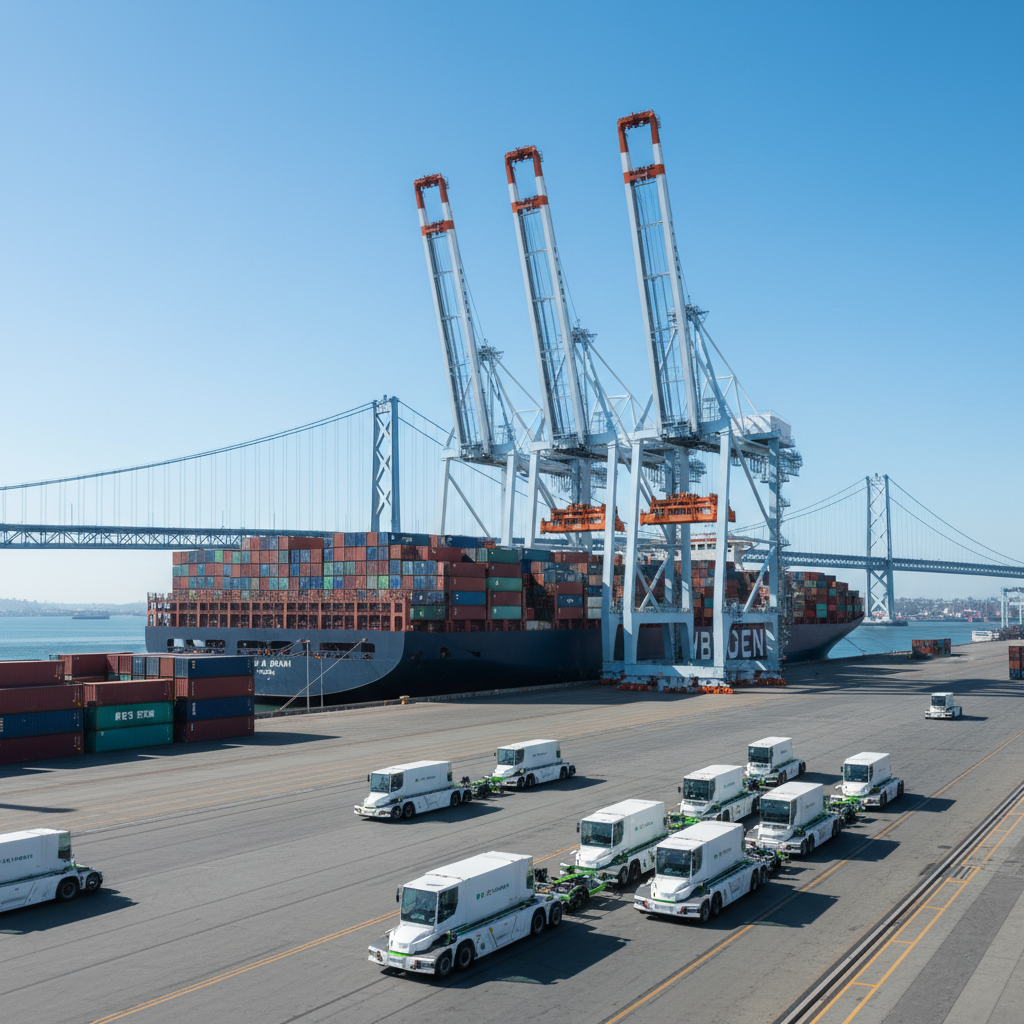
The Port of Los Angeles' decision to extend its lease with Yusen Terminals for an additional three decades, securing its presence through 2056, represents a significant reinforcement of a critical node in the global supply chain, particularly for trans-Pacific trade. This long-term commitment provides a foundational layer of stability for cargo flows into and out of the largest container port in the Western Hemisphere. For shippers and carriers, the certainty of a major terminal operator remaining in place for such an extended period helps solidify planning and operational strategies, reducing the inherent volatility often associated with port infrastructure. It ensures that a substantial 232-acre operational footprint at Berths 212-224 will continue to serve as a reliable gateway.
While this development doesn't fundamentally alter global shipping routes, it deepens the strategic importance of the Port of Los Angeles within existing East-West trade lanes. The long-term lease, particularly for a terminal operated by a subsidiary of Ocean Network Express (ONE), suggests a continued focus on optimizing vessel calls and cargo handling for one of the world's major container lines. This vertical integration can lead to more streamlined operations for ONE's own vessels, potentially influencing scheduling and port calls across their network.
From a capacity perspective, the $200 million investment earmarked for zero-emission cargo-handling equipment is pivotal. While the physical acreage of 232 acres remains constant, this investment is designed to enhance operational capacity and efficiency. Modern, environmentally friendly equipment typically offers improved reliability, faster turnaround times for vessels, and quicker processing of containers. This modernization can effectively increase throughput capacity without expanding the physical footprint, mitigating potential bottlenecks and improving the overall flow of goods. It signals a move towards a more efficient and sustainable operational model, which could set a precedent for other terminals and ports globally, influencing how future infrastructure investments are prioritized.
Global financial impact
The financial implications of this long-term lease and investment ripple through the entire supply chain, affecting shippers, carriers, and the broader trade environment. For shippers, the enhanced stability and potential for increased efficiency at Yusen Terminals could translate into more predictable transit times and potentially more stable shipping costs. Reduced dwell times and faster cargo handling, driven by the $200 million investment in advanced equipment, can minimize demurrage and detention charges, offering tangible cost savings. However, the long-term lease also grants Yusen Terminals a strong, entrenched position within the Port of Los Angeles, which could influence pricing dynamics for terminal services over time.
Carriers, particularly Ocean Network Express (ONE) as the parent company of Yusen Terminals, stand to gain significant financial advantages. Securing a 30-year lease for a crucial 232-acre terminal asset in a primary market like Los Angeles provides ONE with long-term operational control, cost predictability, and strategic priority for its own vessel calls. This vertical integration allows for greater optimization of their supply chain, potentially leading to lower operational costs and improved service reliability for their customers. For other carriers utilizing Yusen's services, the investment in zero-emission equipment could lead to more efficient operations, indirectly benefiting their bottom line through faster vessel turnarounds and reduced port-related delays. Furthermore, the move towards zero-emission equipment aligns with global sustainability mandates, potentially mitigating future carbon-related taxes or penalties, which represents a proactive financial hedge.
For global trade at large, this development underscores confidence in the sustained importance of the Port of Los Angeles as a gateway for international commerce. Long-term infrastructure commitments and significant capital investments signal a robust outlook for trade volumes. The focus on zero-emission technology, backed by a $200 million commitment, also highlights a growing financial imperative for environmental sustainability in global logistics. This trend suggests that future trade will increasingly factor in the cost of carbon emissions and the benefits of green operations, potentially influencing trade routes, carrier selection, and port development strategies worldwide. The investment is a substantial capital outlay, but it's a strategic one aimed at long-term operational and environmental dividends, ensuring the terminal's competitiveness and compliance through 2056.
How MGS can help navigate today's global trade environment
Even with the long-term stability and efficiency improvements promised by Yusen Terminals' extended lease and $200 million investment, the global trade environment remains susceptible to myriad disruptions, from unexpected weather events to equipment malfunctions or labor issues. A shipment-visibility control tower like MGS plays a crucial role in helping operators navigate these complexities, ensuring that the intended benefits of such port investments are fully realized.
Firstly, MGS provides granular, real-time visibility into cargo movements within and beyond the Port of Los Angeles. While Yusen's investment aims to streamline operations at Berths 212-224, MGS can track individual containers as they move through the terminal, from vessel discharge to gate-out. This allows shippers to monitor actual dwell times, identify any unexpected delays despite the new equipment, and understand the precise status of their cargo. For instance, if a specific piece of the new zero-emission equipment experiences a temporary outage, MGS can alert operators to potential bottlenecks that might not be immediately apparent through traditional tracking methods.
Secondly, MGS enables proactive decision-making. By providing a comprehensive view of cargo flow, including estimated times of arrival (ETAs) at the terminal and subsequent departure, operators can anticipate and mitigate potential issues. If MGS data indicates that a particular vessel calling at Yusen Terminals is experiencing delays, or if there's an unusual spike in container dwell times, logistics managers can proactively adjust inland transportation, warehouse staffing, or customer communication. This is particularly valuable in a modernized terminal environment where expectations for efficiency are higher, allowing operators to quickly identify if the $200 million investment is delivering its promised improvements or if new challenges are emerging.
Finally, MGS assists in performance monitoring and optimization. By aggregating data on terminal performance, such as average gate times, crane productivity, and vessel turnaround times at Yusen Terminals, MGS users can gain insights into the effectiveness of the new zero-emission equipment and overall operational improvements. This data-driven approach helps validate the ROI of such investments and informs future strategic decisions regarding carrier selection, port choices, and supply chain design, ensuring that operators continuously leverage the most efficient and reliable pathways for their goods.
Demand–supply analysis & improvement
The 30-year lease extension for Yusen Terminals at the Port of Los Angeles, coupled with the significant $200 million investment, provides clear insights into the dynamics of demand and supply within a critical global trade hub. The very act of securing a long-term lease through 2056 indicates a strong underlying demand for container handling services at the Port of Los Angeles, particularly from Ocean Network Express (ONE) and its customers. This long-term commitment reflects confidence in sustained or growing trade volumes through this major gateway, suggesting that the demand side of the equation is robust and expected to remain so for decades.
On the supply side, the physical footprint of 232 acres at Berths 212-224 represents a fixed component of the port's capacity. However, the $200 million investment in zero-emission cargo-handling equipment serves as a crucial improvement lever to enhance the effective supply. This capital injection is not about expanding the physical land area but rather about optimizing the utilization and efficiency of the existing infrastructure. By upgrading to modern, environmentally friendly equipment, Yusen Terminals aims to increase throughput, reduce operational friction, and accelerate cargo processing. This effectively augments the terminal's capacity to handle more containers per hour or per day, thereby improving the supply of terminal services without requiring new land.
The concrete improvement levers here are focused on modernization and sustainability. The replacement or upgrade of cargo-handling equipment with zero-emission alternatives directly addresses operational bottlenecks, potentially reducing downtime due to maintenance and improving the speed of operations. This investment also positions the terminal to meet increasing environmental regulations, ensuring its long-term viability and attractiveness as a supply chain partner. By making operations faster and more reliable, Yusen Terminals is directly improving the quality and responsiveness of the supply of terminal services, meeting the anticipated long-term demand more effectively and sustainably.
ROI-focused resilience
The $200 million investment in zero-emission cargo-handling equipment, facilitated by the 30-year lease extension through 2056, can be framed as a strategic investment in ROI-focused resilience for Yusen Terminals and, by extension, for the global supply chains it serves. This capital outlay is designed to protect against several quantified and unquantified risks, ensuring long-term operational and financial stability.
Investment: $200 million in advanced, zero-emission cargo-handling equipment.
Quantified Risk Mitigated:
-
Operational Downtime & Efficiency Losses: Older equipment is prone to more frequent breakdowns and less efficient operation. While the source doesn't quantify current downtime, a typical terminal can incur significant costs from equipment failures, including lost productivity and potential demurrage fines for carriers. The investment in new equipment is expected to reduce maintenance costs and increase equipment uptime. If this investment reduces critical equipment downtime by even a modest percentage (e.g., 10-15%) over the 30-year lease, the operational savings and increased throughput can yield substantial returns. For example, reducing vessel turnaround time by just a few hours can save carriers hundreds of thousands of dollars per call, a benefit that can be partially captured by the terminal through enhanced service offerings.
-
Environmental Compliance & Regulatory Risk: The shift to zero-emission equipment directly mitigates the escalating risk of environmental penalties, carbon taxes, and stricter emissions regulations. While specific future costs are unquantified, the Port of Los Angeles, like many global ports, is under increasing pressure to reduce its environmental footprint. This $200 million investment proactively addresses this, protecting against potentially massive future compliance costs and fines that could otherwise erode profitability or even threaten operational licenses. It ensures the terminal remains compliant and competitive in a rapidly greening regulatory landscape, safeguarding its ability to operate for the full 30-year term.
-
Competitive Disadvantage Risk: Terminals that fail to modernize risk losing market share to more efficient and environmentally conscious competitors. This investment ensures Yusen Terminals remains a state-of-the-art facility, capable of handling future cargo volumes efficiently and sustainably. The ROI here is maintaining and potentially growing market share, which translates to sustained revenue streams over the long lease period, protecting against the financial erosion of becoming an outdated or non-compliant facility.
The return on this $200 million investment is therefore multi-faceted: enhanced operational efficiency, reduced long-term maintenance costs, significant mitigation of environmental and regulatory financial risks, and the sustained ability to attract and serve major shipping lines like its parent company, Ocean Network Express. This ensures the terminal's resilience against both operational disruptions and evolving external pressures, providing a robust financial foundation for the next three decades.
Source: DC Velocity — https://www.dcvelocity.com/transportation/maritime-ocean/ports/port-of-los-angeles-approves-30-year-lease-with-yusen-terminals