
Last-Mile Control: The Linchpin for Global Supply Chain Resilience in 2026 and Beyond
A recent study highlights that U.S. enterprises with superior control over their last-mile networks and data are significantly better equipped to tackle escalating business pressures. This insight brief explores the profound implications of this finding for global supply chains, financial stability, and how advanced visibility platforms like MGS are becoming indispensable tools for navigating an increasingly complex trade environment.
How this impacts the global supply chain
The findings from the "Eye on the Last Mile America 2026" study, indicating that U.S. companies with robust control over their last-mile infrastructure and data are more resilient to business pressures, carry significant implications for the global supply chain. While the research specifically focuses on U.S. operations, the last mile is universally recognized as the most challenging and often the most expensive segment of the entire delivery journey. In an interconnected global economy, inefficiencies or vulnerabilities in one critical node, such as the last mile in a major market like the U.S., inevitably create ripple effects across international borders.
Firstly, the ability of U.S. enterprises to better manage persistent delivery cost inflation and increasingly complex fulfillment networks directly influences global pricing strategies and competitive dynamics. International shippers and manufacturers selling into the U.S. market must contend with these domestic last-mile challenges. A lack of control translates into unpredictable costs and service levels, which can erode profit margins for global goods or necessitate higher pricing, potentially impacting demand. Conversely, U.S. companies with superior last-mile control gain a competitive edge, influencing how global competitors structure their own delivery networks and data strategies.
Secondly, the rising expectations around speed, reliability, and control, highlighted in the study, are not confined to the U.S. consumer or business landscape; they are global phenomena. Consumers worldwide now demand faster, more transparent, and more flexible delivery options. If the U.S. last mile struggles to meet these demands due to a lack of control, it can create bottlenecks for globally sourced products entering the market, affecting lead times and customer satisfaction for international brands. For global supply chains, this necessitates a holistic view, where the last mile is not an isolated segment but an integral, visible, and controllable part of the end-to-end flow. Without this granular control, global supply chains remain susceptible to disruptions and inflated costs originating in their final domestic legs, undermining overall operational efficiency and strategic planning.
Global financial impact
The financial implications of the study's findings for shippers, carriers, and global trade are substantial. The core issue of "persistent delivery cost inflation" in the last mile directly impacts the bottom line of every entity involved. For shippers, particularly those operating globally, uncontrolled last-mile costs can significantly inflate landed costs, making products less competitive. These costs encompass not only direct transportation expenses but also those associated with failed deliveries, returns, and the administrative burden of managing disparate last-mile providers without adequate data insights.
Carriers, on the other hand, face the dual challenge of managing rising operational expenses (fuel, labor, vehicle maintenance) while also meeting increasingly stringent service level agreements. Without robust control over their networks and data, carriers struggle to optimize routes, consolidate shipments effectively, and predict demand, leading to inefficient asset utilization and higher per-delivery costs. The study suggests that those who do exert greater control are better positioned to mitigate these financial pressures, implying that their peers without such control are likely experiencing greater financial strain.
At a broader trade level, the aggregate effect of uncontrolled last-mile costs can contribute to inflationary pressures across various sectors. If these costs are passed on to consumers, it can dampen purchasing power and potentially reduce trade volumes. For businesses engaged in international trade, the lack of transparency and control in the last mile introduces significant financial risk and uncertainty, complicating budgeting, forecasting, and investment decisions. Conversely, companies that invest in and achieve greater last-mile control can realize significant cost savings through optimized operations, reduced waste, and improved service, which can then be reinvested or passed on, fostering healthier economic activity and more resilient global trade flows.
How MGS can help navigate today's global trade environment
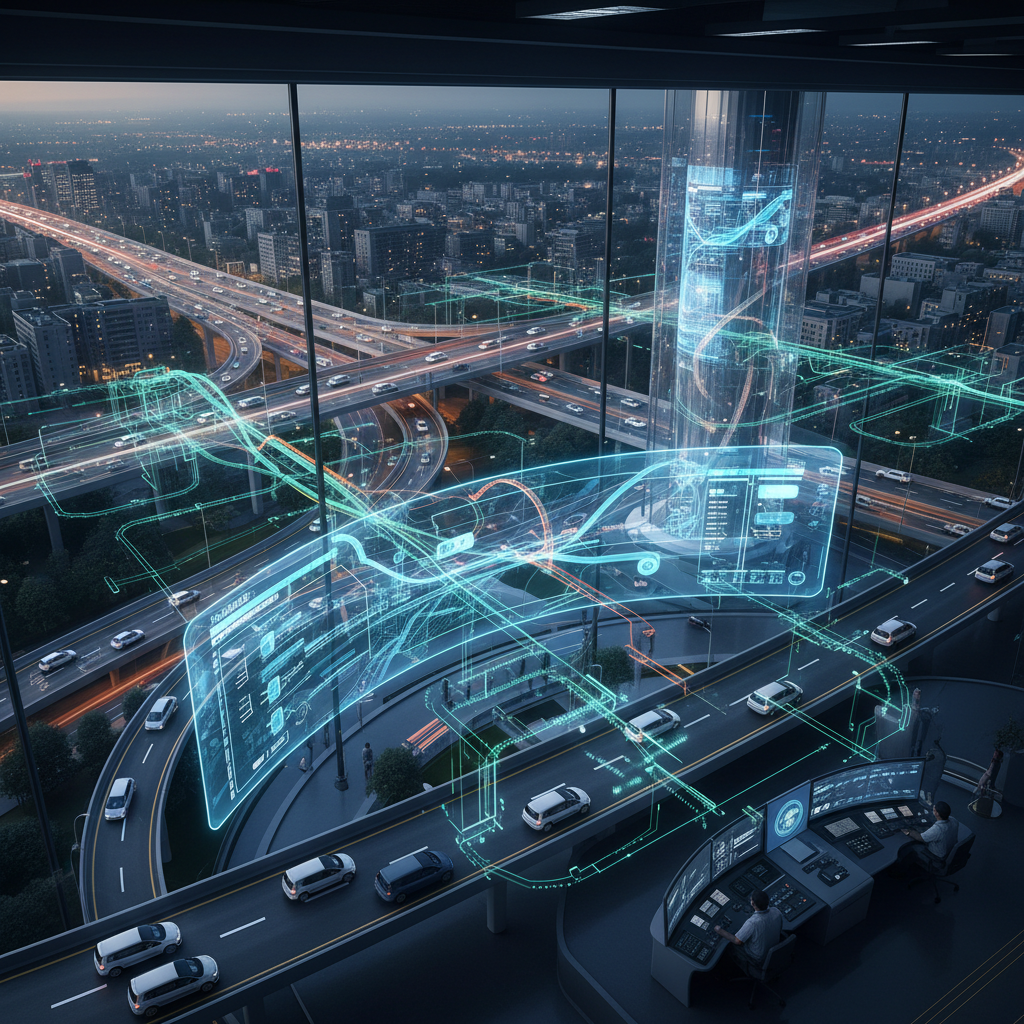
The study's emphasis on the necessity for "greater control over last-mile network infrastructure and data" directly aligns with the core value proposition of a shipment-visibility control tower platform like MGS. In an environment characterized by persistent cost inflation, complex fulfillment networks, and evolving customer expectations, MGS provides the essential tools to transform last-mile challenges into strategic advantages.
Specifically, MGS addresses the lack of control over last-mile data by aggregating real-time information from diverse sources – including multiple carriers, internal fleets, and even IoT devices – into a single, unified platform. This comprehensive data visibility allows operators to precisely track every shipment, from dispatch to final delivery, providing unparalleled transparency into the last-mile journey. This capability is crucial for identifying bottlenecks, monitoring carrier performance against service level agreements, and proactively addressing potential delays before they impact customer satisfaction or incur additional costs.
Furthermore, MGS empowers enterprises to gain control over their last-mile network infrastructure by offering advanced analytics and reporting features. By analyzing historical and real-time data, businesses can optimize routing, consolidate deliveries more effectively, and make data-driven decisions about carrier selection and network design. This level of insight enables companies to respond dynamically to changing conditions, whether it's adjusting to unexpected traffic, re-routing around disruptions, or scaling operations to meet fluctuating demand. By providing this granular visibility and actionable intelligence, MGS helps operators not only navigate the complexities of today's last-mile environment but also build a more efficient, reliable, and cost-effective delivery network, directly contributing to the ability to handle rising business pressures as highlighted in the FarEye study.
Demand–supply analysis & improvement
The FarEye study illuminates a clear disconnect between evolving market demands and the current capabilities of many last-mile supply networks. On the demand side, the research points to "changing expectations around speed, reliability, and control." Consumers and businesses alike are no longer content with standard delivery times; they demand expedited services, precise delivery windows, and real-time updates. This creates immense pressure on last-mile operations, which must become more agile, responsive, and transparent to meet these heightened expectations. The "increasingly complex fulfillment networks" also reflect a demand-side shift, driven by factors such as e-commerce growth, diverse product offerings, and personalized delivery preferences, which necessitate more intricate and flexible delivery solutions.
Conversely, the supply side of the last-mile equation is struggling with "persistent delivery cost inflation." This indicates that the existing infrastructure, operational models, and technological adoption within many last-mile networks are not adequately equipped to absorb or mitigate these rising costs while simultaneously meeting escalating service demands. The study implicitly suggests that the current supply of last-mile services, for many companies, is either too expensive, too inefficient, or lacks the necessary data-driven intelligence to keep pace with demand-side pressures.
Concrete improvement levers, as suggested by the study, revolve around achieving "greater control over last-mile network infrastructure and data." This implies a strategic shift towards leveraging technology for enhanced visibility and operational intelligence. For instance, implementing advanced route optimization software can significantly reduce fuel consumption and driver hours, directly addressing cost inflation. Utilizing predictive analytics based on historical delivery data can help anticipate demand fluctuations, allowing for more efficient resource allocation. Furthermore, establishing robust data governance and integration across the last-mile ecosystem enables a holistic view of performance, allowing businesses to identify underperforming carriers or inefficient processes. By investing in these control mechanisms, companies can bridge the gap between demanding customer expectations and the economic realities of last-mile delivery, transforming their supply capabilities to meet modern demand more effectively and sustainably.
ROI-focused resilience
The FarEye study implicitly frames resilience in terms of return on investment by highlighting that companies with "greater control over their last-mile network infrastructure and data are much better able to handle rising business pressures." This suggests that the investment in such control mechanisms yields tangible benefits by mitigating specific, quantifiable risks, thereby demonstrating a clear ROI for resilience.
One primary risk is "persistent delivery cost inflation." Without control, businesses are exposed to unpredictable and escalating operational expenses in the last mile. An investment in control, such as advanced analytics for route optimization, real-time tracking to reduce failed deliveries, or integrated data platforms for better carrier negotiation, directly translates into cost savings. The ROI here is the reduction in operational expenditure and the avoidance of cost overruns that would otherwise erode profit margins. For example, a 5% reduction in last-mile transportation costs due to optimized routing and improved first-attempt delivery rates can represent a significant financial return, protecting against the inflationary pressures mentioned.
Another critical risk is the impact of "increasingly complex fulfillment networks" and "changing expectations around speed, reliability, and control" on customer satisfaction and brand reputation. A lack of control in the last mile can lead to missed delivery windows, lost or delayed shipments, and poor customer communication, all of which can result in customer churn and negative brand perception. Investing in control—through real-time visibility, proactive exception management, and enhanced customer communication tools—protects against these risks. The ROI in this context is measured not just in retained customers but also in the long-term value of a strong brand reputation and increased customer loyalty, which are invaluable assets in a competitive market. By enabling companies to consistently meet or exceed delivery expectations, these investments safeguard against the financial consequences of customer dissatisfaction and reinforce market position, demonstrating a clear ROI for building operational resilience in the last mile.
Source: DC Velocity — https://www.dcvelocity.com/transportation/trucking/last-mile/study-companies-need-more-control-over-last-mile-delivery-networks-and-data