
Using iPaaS to Connect WMS, ERP, and TMS Across the Supply Chain
Integration platform as a service ties WMS, ERP, and TMS into one orchestrated flow, replacing brittle point-to-point links with low-code, real-time connectivity.
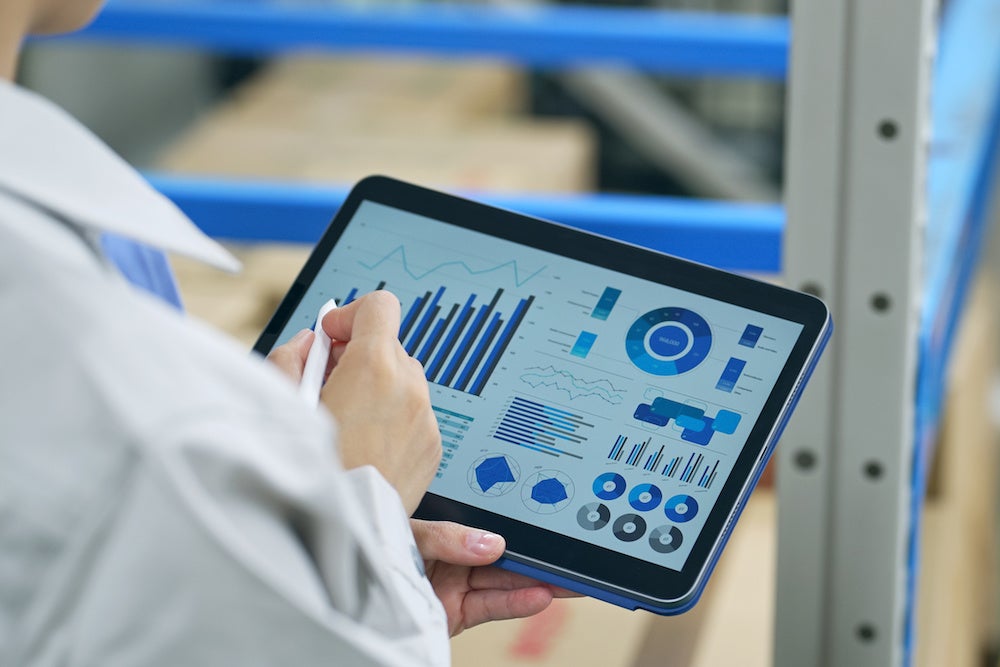
A warehouse management system tracks every unit that moves through a storage facility with a precision that is genuinely impressive in isolation. An ERP system maintains the financial and operational record of the business. A transportation management system governs the movement of goods from origin to destination. Each of these platforms does its job well. The problem is that they were not designed to talk to each other, and the gap between them is where supply chain visibility disappears.
When a warehouse receives an inbound shipment, the WMS records it. Whether that record immediately updates the ERP's inventory position, or triggers the TMS to adjust outbound routing plans, or notifies the customer portal that their order status has changed — none of those downstream actions happen automatically unless the systems are integrated. In their default state, they are islands.
What Happens Without Integration
The manual workarounds that fill the gaps between unintegrated systems are better understood as operational debt. Staff manually export data from one system and import it into another. Paper bills of lading get re-keyed into digital records. Inventory counts in the ERP drift from the actual warehouse position because the WMS update hasn't been transferred yet. Order fulfillment decisions get made on stale data because the OMS doesn't know what the WMS knows.
The scale of this problem tends to be underappreciated until a business tries to grow. At low shipment volumes, manual reconciliation is annoying but manageable. When order volume scales, the reconciliation burden scales with it — but the accuracy degrades, because human data entry does not scale cleanly. The errors, delays, and exceptions that manual integration produces compound with volume.
How iPaaS Changes the Architecture
An integration platform as a service replaces brittle point-to-point connections between specific system pairs with a centrally managed connectivity layer. Rather than building and maintaining a custom integration between the WMS and the ERP, another between the ERP and the TMS, and another between the TMS and the carrier API, an iPaaS platform maintains a single connectivity layer through which all systems exchange data.
Boomi describes this architecture using the analogy of a drag-and-drop interface that allows anyone in the organisation to build connections between systems without writing custom code for each integration. The low-code approach matters not because technical depth is unavailable, but because the operational knowledge of what data needs to flow where often lives with logistics and operations staff rather than software engineers. Integration configuration that requires deep coding expertise creates a bottleneck; visual, configurable integration removes it.
The scalability property is particularly significant. When a business adds a new system — a new carrier connection, a new ecommerce platform, a new analytics tool — an iPaaS-based architecture integrates it by connecting to the existing platform layer rather than building a new point-to-point integration with every existing system. The integration complexity grows linearly with new additions rather than quadratically.
The WMS-ERP-TMS Triangle
For logistics operations, the integration triangle that generates the most immediate value is the connection between WMS, ERP, and TMS. When these three systems share data in real time, several capabilities emerge that are simply not possible in siloed architectures.
Inventory positions in the ERP reflect actual warehouse stock rather than the last batch update. This means ecommerce platforms drawing inventory data from the ERP show accurate availability, and customer commitments are made on real data rather than stale approximations. Order management systems can select fulfillment warehouses based on current inventory rather than yesterday's snapshot.
On the outbound side, the TMS can receive shipment instructions automatically when an order is confirmed in the ERP, rather than waiting for a manual export. Routing optimisation runs against real inventory positions and real delivery commitments. Carrier selection logic can factor in current warehouse workload data from the WMS alongside transit time and cost data from carrier APIs.
Labor Management and Warehouse Execution
The integration value extends beyond the WMS-ERP-TMS core. Labor management systems that compare worker performance data with material handling data can optimise task assignment. Warehouse execution systems governing conveyor systems and picking robots receive more precise instructions when they have access to real-time inventory data from the WMS rather than static schedules.
In food and beverage or pharmaceutical operations, where freshness and temperature tracking are material to product quality and regulatory compliance, the integration between WMS data and ERP financial records allows accurate spoilage cost calculation and triggers reorder logic based on actual stock age rather than estimated turnover.
Visibility as an Integration Output
For teams operating multi-leg supply chains — where goods move from manufacturer to regional warehouse to last-mile carrier before reaching the end customer — WMS-ERP-TMS integration is the infrastructure layer underneath supply chain visibility. Shipment status data that flows automatically from WMS through TMS to carrier integration, and from there into customer-facing portals and exception management systems, produces the real-time visibility that customers and operations teams expect.
Multi-carrier control tower platforms benefit directly from well-integrated ERP and WMS systems upstream. When order and inventory data flows cleanly into the TMS, the shipment records that feed a visibility platform are complete from order creation rather than reconstructed after fulfillment. Exception management and predictive ETA become more reliable when the full order context — not just carrier-reported milestones — is available as input. The iPaaS layer is, in this sense, the connective tissue that makes the supply chain intelligence layer possible.
Source: Boomi