
IndiQube's Q1 Triumph: A Deep Dive into Growth, Efficiency, and Profitability Levers
IndiQube Spaces' Q1 FY27 results showcase remarkable financial and operational strength, with revenue soaring 37% and net profit surging 91%. This brief unpacks the strategic levers driving their success in revenue, margins, and operational performance.
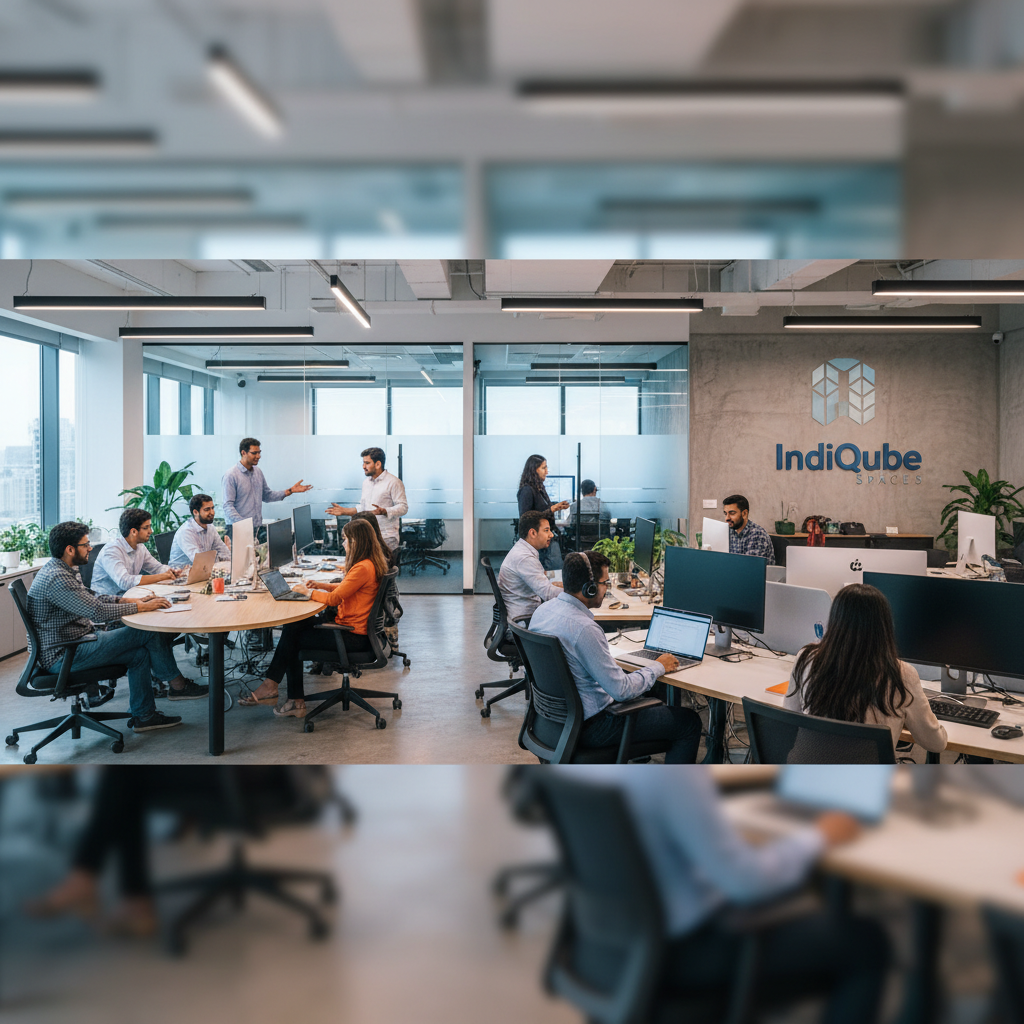
Revenue optimization
IndiQube Spaces delivered a stellar performance in Q1 FY27, achieving a record revenue of ₹428 crore, marking a substantial 37% year-on-year increase. This significant top-line growth is clearly attributable to a multi-faceted approach to revenue optimization. A core driver has been the expansion of their physical footprint, evidenced by the growth in both area under management and seat capacity. This strategic scaling provides the foundational inventory for revenue generation. Crucially, this expanded capacity has been effectively monetized through stronger occupancy rates, indicating robust demand and effective sales strategies in filling available spaces. Furthermore, the company has successfully diversified and enhanced its revenue streams through "rapidly growing value-added services." These services likely include offerings beyond basic workspace, such as meeting rooms, event spaces, F&B, or specialized tech infrastructure, which not only contribute directly to revenue but often carry higher margins, improving the overall revenue quality. The combination of physical expansion, high utilization, and diversified, high-value offerings underscores a comprehensive and effective revenue optimization strategy.
High-growth opportunities
The Q1 FY27 results for IndiQube Spaces unequivocally highlight its pursuit and capture of high-growth opportunities. The headline 37% surge in revenue to ₹428 crore is a testament to aggressive market expansion and effective demand generation. Even more striking is the 91% surge in net profit (PAT) to ₹35 crore, demonstrating that this growth is not merely top-line but deeply impactful on the bottom line. This disproportionately higher profit growth compared to revenue indicates successful leverage of operational and financial structures. The company's strategic decision to expand its area under management and seat capacity directly addresses market demand, positioning them to capitalize on the growing need for flexible workspace solutions. Moreover, the "rapidly growing value-added services" represent a significant high-growth segment. These services likely tap into evolving customer needs and preferences, offering new avenues for revenue generation that can scale quickly and potentially command premium pricing, further fueling the company's impressive growth trajectory.
High-margin opportunities
IndiQube Spaces' Q1 FY27 performance reveals a strong focus on maximizing high-margin opportunities, evident in the dramatic 91% surge in net profit (PAT) to ₹35 crore, significantly outpacing the 37% revenue growth and 34% EBITDA growth. This divergence indicates that the company is not just growing revenue, but actively improving its profitability per unit of revenue. A key contributor to this margin expansion is likely the "stronger occupancy" across its expanded area under management and seat capacity. Higher occupancy rates dilute fixed costs over a larger revenue base, directly improving operating margins. The "rapidly growing value-added services" also play a critical role. These services often come with higher perceived value and lower marginal costs than core space rental, thereby boosting overall gross and operating margins. The exceptional growth in net profit, far exceeding EBITDA growth, further suggests astute management of non-operating expenses such as interest, depreciation, or taxes, effectively converting a larger portion of operating income into net income. This holistic approach to margin enhancement is a hallmark of strategic financial management.
Operation efficiency
The Q1 FY27 results for IndiQube Spaces provide clear indicators of robust operational efficiency, particularly in asset utilization and cost management. The reported "stronger occupancy" across an expanded area under management and seat capacity is a prime example. This suggests that the company is effectively deploying its physical assets, minimizing idle capacity, and maximizing the revenue generated from its real estate footprint. While EBITDA growth at 34% was slightly below the 37% revenue growth, indicating some operational costs may have increased proportionally or the revenue mix shifted, the overall operational machinery is clearly functioning well to support significant expansion. The substantial 91% surge in net profit (PAT) to ₹35 crore, despite the EBITDA growth rate, points to efficiency gains or effective cost control measures below the EBITDA line, such as optimized depreciation schedules, reduced interest expenses, or favorable tax management. This demonstrates an organization capable of scaling operations while maintaining, and even improving, overall profitability.
Cost reduction
While the source text doesn't explicitly detail specific cost reduction initiatives, the financial outcomes strongly suggest effective cost management, particularly below the operational (EBITDA) level. IndiQube Spaces' Q1 FY27 net profit (PAT) surged by an impressive 91% to ₹35 crore, a rate significantly higher than its 37% revenue growth and 34% EBITDA growth. This substantial acceleration in net profit implies that the company has either successfully reduced certain fixed or variable costs, or effectively managed its financial structure. Potential areas of impact could include optimized depreciation and amortization expenses, reduced interest costs through debt restructuring or lower leverage, or effective tax planning leading to a lower effective tax rate. The "stronger occupancy" also contributes indirectly to cost efficiency by spreading fixed operational costs (like facility maintenance, utilities, and administrative overhead) over a larger revenue base, thus reducing the per-unit cost of delivering services. This comprehensive approach to managing the cost structure has clearly been a major contributor to the exceptional bottom-line performance.
Organizational productivity
IndiQube Spaces' Q1 FY27 performance underscores a highly productive organization, effectively translating strategic investments and market demand into superior financial results. The simultaneous expansion of area under management and seat capacity, coupled with achieving "stronger occupancy," demonstrates the organization's ability to efficiently scale its operations and maximize the output from its physical assets. This indicates effective resource allocation and management, from property acquisition and development to sales and facility operations. The impressive 37% revenue growth and particularly the 91% surge in net profit (PAT) to ₹35 crore are direct reflections of enhanced organizational productivity. It suggests that the workforce, processes, and systems are optimized to handle increased volume and complexity without a proportional increase in costs, leading to significant leverage. The success of "rapidly growing value-added services" further highlights the organization's agility and capacity to innovate and deliver new, profitable offerings efficiently.
Cash flow optimization
The dramatic 91% surge in net profit (PAT) to ₹35 crore for IndiQube Spaces in Q1 FY27 is a powerful indicator of strong underlying cash flow generation. While the source text does not provide a direct cash flow statement, a near-doubling of net income typically translates into significantly improved operating cash flows, assuming stable or improving working capital management. Higher profitability means more cash retained from operations before financing and investing activities. The "stronger occupancy" and "rapidly growing value-added services" contribute to this by ensuring consistent and potentially upfront revenue streams, which are favorable for cash flow. Furthermore, effective management of non-operating expenses, as inferred from the PAT surge relative to EBITDA, would also conserve cash. For a capital-intensive business like co-working spaces, robust profitability and effective asset utilization (stronger occupancy) are critical for funding ongoing expansion and reducing reliance on external financing, thereby optimizing overall cash flow.
Sales effectiveness
IndiQube Spaces' Q1 FY27 results clearly demonstrate highly effective sales strategies and execution. The company achieved a record revenue of ₹428 crore, representing a substantial 37% year-on-year increase. This top-line growth is directly supported by the successful expansion of both area under management and seat capacity, which the sales team has evidently been adept at filling. The reported "stronger occupancy" is a key metric indicating the sales team's success in converting available inventory into revenue-generating leases and contracts. Furthermore, the "rapidly growing value-added services" point to the sales team's ability to not only secure core workspace agreements but also to upsell and cross-sell additional, higher-value offerings. This suggests a sophisticated sales approach that maximizes customer lifetime value and revenue per client, contributing significantly to the overall financial performance and market penetration.
Source: The Economic Times Markets — https://economictimes.indiatimes.com/markets/stocks/earnings/indiqube-spaces-q1-revenue-jumps-37-to-record-rs-428-crore/articleshow/133205891.cms